Grab Bars for the Bathroom: A Zone by Zone Buying Plan

Last updated: August 20, 2026

Some links on this page are affiliate links. If you buy through them we may earn a commission at no extra cost to you. See our affiliate disclosure.

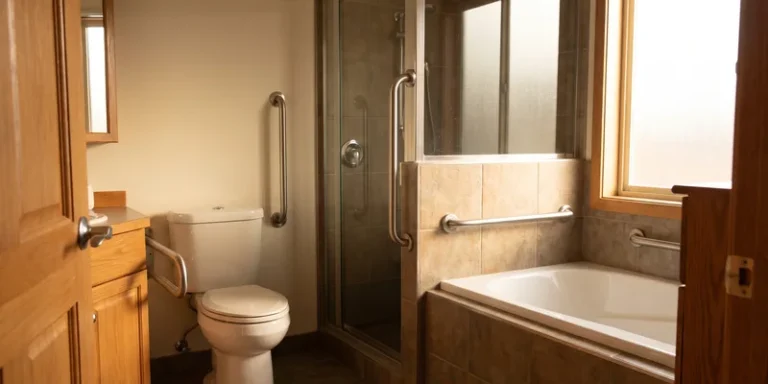
A bathroom is not one place, it is four or five small ones. The doorway and threshold, the sink, the toilet, the tub or shower entry, and the wet area inside it. Each has its own footing, its own movement, and its own reason someone might reach for something solid. Buying a single grab bar and hoping it covers all of them is the most common way a bathroom project ends up half finished.

This guide walks the room zone by zone, so you end up with a short, specific list rather than a general sense that grab bars would probably help. It also covers the mounting realities that decide whether the list is achievable in your particular bathroom, and where the honest limits of the no drill options sit.

Quick Answer

Where do grab bars go in a bathroom?

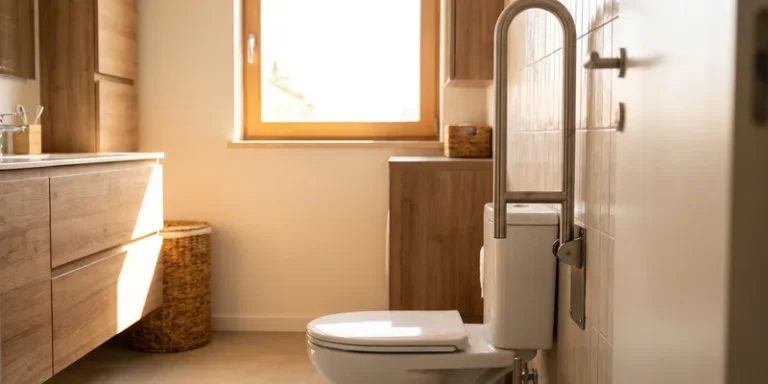
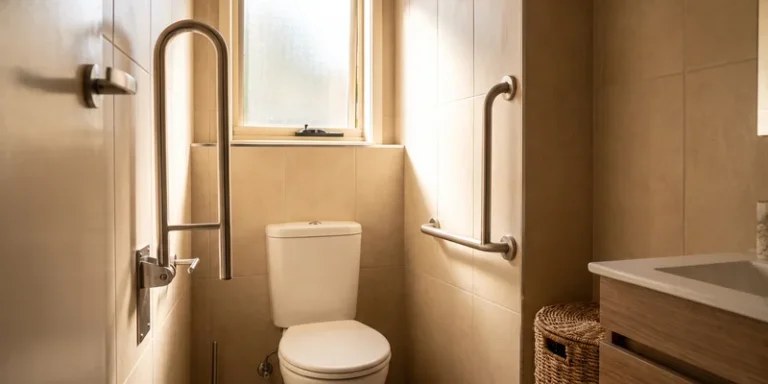
  • Beside the toilet, for the sit to stand movement, usually on the nearest side wall or as a flip up bar where there is no wall.
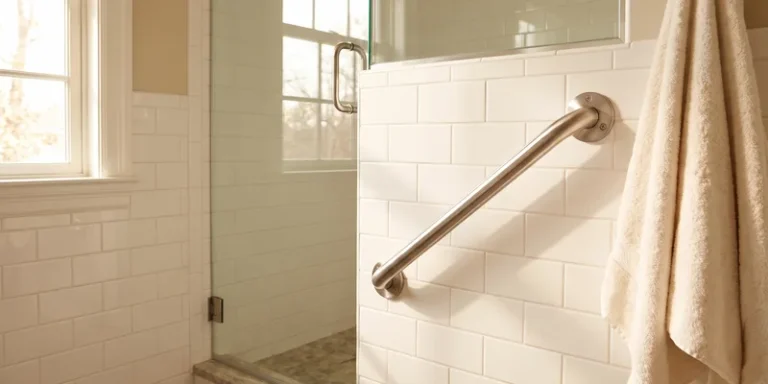
  • At the tub or shower entry, ideally a vertical bar the hand can hold while a foot crosses the threshold.
  • Inside the wet area, a longer horizontal or angled bar the hand can travel along while turning.
  • Optionally at the doorway or beside the sink, where a wet floor and a turn happen in the same step.

Bottom line: plan the route through the room first, then place a bar wherever the route asks someone to change position.


Plan the Route, Not the Wall

The most useful thing you can do before shopping is walk the bathroom the way the person using it does. Note every point where they steady themselves on a countertop, a towel rail, or a door frame. Those improvised handholds are the map, because they mark exactly where a real bar belongs.

This approach beats copying a diagram, because bathrooms differ enormously in layout and the person differs even more. Someone who struggles most with standing up needs a very different set of bars than someone whose difficulty is the tub threshold, even in an identical room.

Watch for the Improvised Handholds

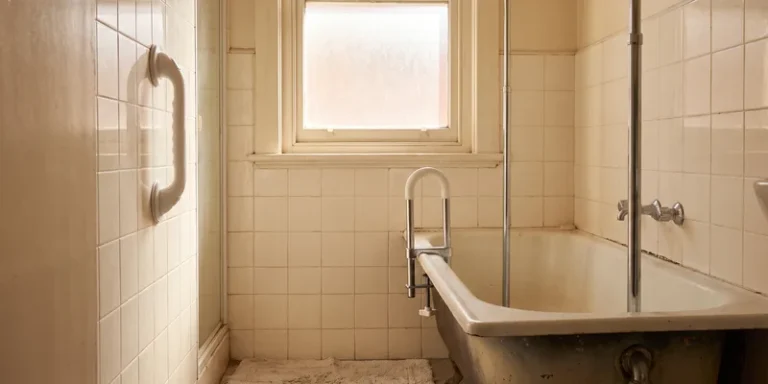
A towel bar bent slightly out of the wall, a wobbling toilet paper holder, or a countertop edge worn smooth in one spot are all signs of a handhold that is already in use and not built for it. Replacing a well used towel bar with a properly mounted grab bar in the same position is often the single highest value change in the room.


Zone by Zone: What Belongs Where

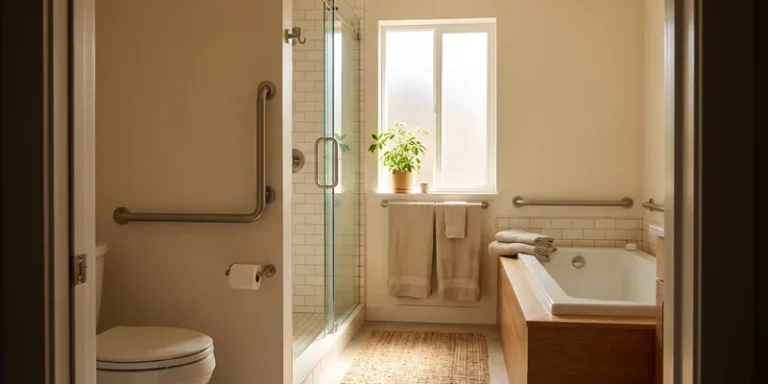
The zones below cover almost every home bathroom. Most households need two or three bars in total, and the combination matters more than the individual choice.

Beside the Toilet

Standing up from a low seat is the movement that most often prompts a family to start looking. A horizontal or angled bar on the wall beside the toilet gives something to push and pull against. Where there is no adjacent wall, a flip up bar mounted behind the toilet swings down into position and folds away afterwards.

At the Tub or Shower Entry

Crossing a tub wall or a shower curb is a one legged movement with a wet foot, and it wants a vertical bar at roughly chest height so the hand can pull upward and forward. Shorter bars are typical here because the hand holds one point rather than traveling.

Inside the Wet Area

Once inside, the hand needs to move with the body during turning, reaching, and bending. A longer horizontal or gently angled bar on the back or long wall covers that. Satin or brushed stainless with a textured gripping section handles constant water and soapy hands better than polished chrome.

At the Sink and Doorway

These are the zones people skip, and sometimes rightly so. A bar here earns its place if the floor gets wet, if the person turns sharply between the sink and the toilet, or if the threshold into the room has a lip. A short vertical bar near the door frame is usually enough, and it does not have to look clinical in a modern finish.


Matching the Bar to the Wall You Have

Placement should lead and mounting should follow, but you still need to know what you are working with. Tiled walls over cement board with wood framing behind are the straightforward case. One piece fiberglass and acrylic surrounds, plaster and lath, and masonry each need their own approach.

Wall typePractical approach
Tile over stud wallCarbide or diamond bit at low speed, screws into framing, silicone around the flange
Drywall, no stud where neededHeavy duty anchors made for grab bars, following the anchor maker’s rating
Fiberglass or acrylic surroundShell flexes; needs backing or a method suited to the gap behind the shell
Plaster and lathLocate framing carefully; plaster crumbles and does not hold anchors well on its own
Masonry or concreteMasonry bit and sleeve anchors rated for the load
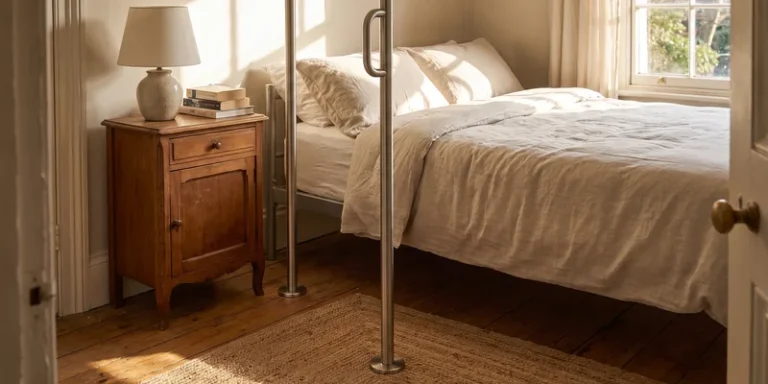
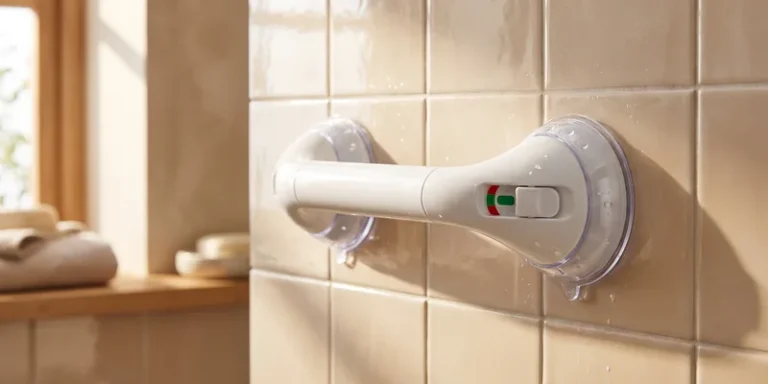
Rented homeClamp on tub rails, tension poles, and freestanding frames avoid permanent changes

If your framing does not line up with your plan, that is normal rather than a dead end. Our guide to mounting grab bars without studs covers anchors and blocking in detail.


Heights and the ADA Reference Points

The ADA Standards for Accessible Design apply to public and commercial facilities, not private homes, but they are the clearest published reference available and manufacturers design their bars around them. The standard specifies the top of the gripping surface 33 to 36 inches above the floor, 1 and 1/2 inches of clearance between bar and wall, and a bar diameter of 1 and 1/4 to 2 inches.

For the toilet specifically, the standard specifies a side wall bar at least 42 inches long positioned no more than 12 inches from the rear wall, and a rear wall bar at least 36 inches long. Home bathrooms rarely have the wall space for both, which is fine; the numbers are a reference, not a rule for your house. Our breakdown of ADA grab bar height covers the details.

Adjusting for the Person

A shorter or taller person, or someone who transfers from a wheelchair, may be better served outside the published range. If you are unsure what fits your situation, ask your doctor or an occupational therapist. An occupational therapist can watch the actual movement in the actual room, which is worth more than any published figure.


Common Mistakes in Bathroom Grab Bar Projects

The first is buying before measuring. Bars arrive, the studs turn out to be somewhere else, and the bar goes up where it fits rather than where it helps. Locate framing and confirm the plan before ordering, and buy anchors in the same trip if the plan needs them.

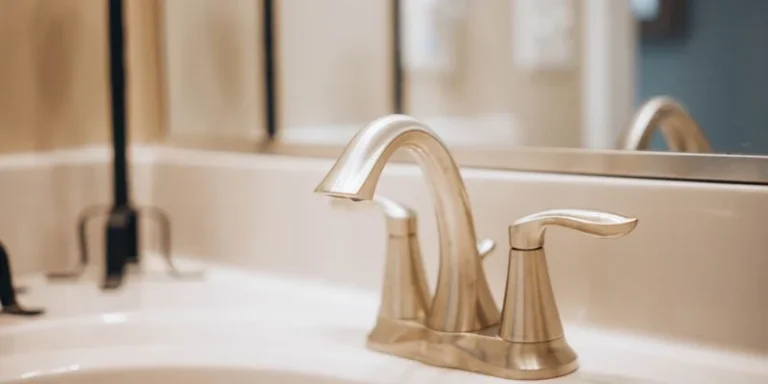
The second is choosing everything to match the faucet finish and only then checking the grip surface. Finish is worth caring about, and most lines offer the same bar in several, so you rarely have to trade appearance for a textured gripping section.

Skipping the Sealant

Every screw through tile or a shower surround is a hole in a waterproof layer. Sealing around each flange with silicone takes a minute and prevents water tracking into the wall cavity, which is the failure that turns a good installation into a repair job a year later.


Frequently Asked Questions

How many grab bars does a bathroom need? Most homes end up with two or three: one beside the toilet, one at the tub or shower entry, and one inside the wet area. Our planning guide walks through how to decide.

What height should bathroom grab bars be? The ADA standard for public facilities specifies the top of the gripping surface 33 to 36 inches above the floor. At home, adjust within or around that range to suit the person actually using the room.

Can a grab bar be installed next to the toilet if there is no side wall? Yes. A flip up or fold down bar mounts behind the toilet and swings into position, and a floor mounted toilet safety frame is another route. Both concentrate the load on fewer fixings, so check the weight rating on the listing.

Do I need a plumber or a handyman to install grab bars? Not usually. It is a drilling and anchoring job rather than a plumbing one. If you are not confident locating framing, or the wall is fiberglass, masonry, or plaster, a handyman or contractor is a reasonable call.

Can grab bars be installed in a rental bathroom? Often yes with permission, and there are non permanent options too. See our guide to grab bars for renters for both the product options and how to raise it with a landlord.

Are decorative grab bars as strong as institutional ones? Many are, since the strength comes from the tube, flange, and mounting rather than the styling. Check the stated weight rating on the specific product listing rather than assuming from appearance.

Should the bar beside the toilet be horizontal or angled? Angled bars follow the arc of a hand rising during the sit to stand movement and many people find them more comfortable, while horizontal bars are simpler to mount and better for steadying. Either is a reasonable choice.

Can I mount a grab bar on the outside of a tub? Yes, and a clamp on tub rail that grips the tub rim is another option where no wall is within reach. See our guide to the bathtub safety rail.


The Bottom Line

A bathroom grab bar plan starts with the route through the room and the spots where someone already improvises a handhold, then assigns a bar to each. Toilet, entry, and wet area cover most homes, with the sink and doorway added if the layout calls for it. Confirm what is behind the wall before ordering, and see our grab bar buying guide for choosing between types.


Related Reading