Last updated: August 20, 2026
Some links on this page are affiliate links. If you buy through them we may earn a commission at no extra cost to you. See our affiliate disclosure.
You have marked exactly where the bar needs to go, run a stud finder across the wall, and found nothing but empty cavity behind the mark. This is one of the most common moments in a grab bar project, and it is where a lot of good plans quietly turn into a compromise: the bar goes up wherever the stud happens to be, and nobody uses it.
It does not have to end that way. There are three legitimate ways to mount a grab bar where no stud exists, all of them used routinely by professionals, and none of them involve hoping a drywall plug will hold. This guide covers what each one is, when it applies, and what to check.
Quick Answer
Can you install a grab bar without a stud?
- Yes. Heavy duty anchors made specifically for grab bars spread the load behind the drywall and carry a published weight rating.
- Adding blocking, a piece of plywood or lumber fixed between the studs behind the wall, is the strongest option when the wall is open during a remodel.
- A mounting plate or backer board fixed across two studs lets a bar sit anywhere along its length.
- Standard drywall plugs, toggle bolts sold for pictures, and self drilling anchors are not suitable for a grab bar.
Bottom line: use anchors sold and rated specifically for grab bars, and follow the anchor maker’s method exactly, since the rating depends on correct installation.
Why Studs Are the Default in the First Place
A grab bar has to resist a sudden, angled, full body load rather than a steady hanging weight. Wood framing gives a screw something solid to bite into that transfers that force straight into the structure of the house, which is why manufacturers write their instructions and their weight ratings around it.
Drywall on its own cannot do that. It is a gypsum panel around half an inch thick, and a screw in it has almost nothing to hold. That is the gap the purpose built anchor closes: instead of gripping the drywall face, it clamps against the back of the panel and spreads the load over a much larger area.
Find the Framing First Anyway
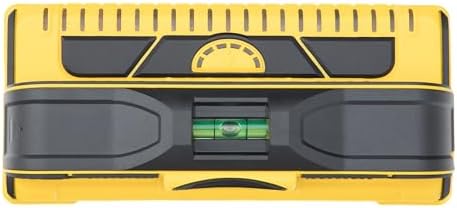
Even when you expect to use anchors, locate the studs before drilling. If one flange lands on framing and the other needs an anchor, that is a perfectly good hybrid installation and it is stronger than two anchors. Framing is commonly spaced 16 inches on center, sometimes 24, and a stud finder with metal and live wire detection is worth using in a bathroom wall.
Option One: Heavy Duty Grab Bar Anchors
These are a distinct product category, not an upgraded wall plug. They are sold specifically for grab bar installation, they install through a single hole, and they expand or toggle behind the drywall to clamp against the back of the panel across a wide bearing surface. Reputable brands publish a load rating for them.
They install with a hole saw or a stepped bit rather than a twist drill, and the hole size is not negotiable, because the clamping mechanism depends on it. Follow the anchor maker’s method exactly rather than the bar maker’s, since it is the anchor that is carrying the load.

What to Check Before Buying Anchors
Three things: that the anchor is rated for grab bar use rather than general household fixing, that it suits your wall thickness, and that it works through tile if your wall is tiled. Some designs need a specific drywall thickness range and will not clamp correctly outside it.
Option Two: Adding Blocking Behind the Wall
Blocking is a piece of plywood or solid lumber fixed between the studs inside the wall cavity, so the bar can be screwed into solid wood anywhere along it. It is the strongest and most flexible option, and the reason it is not always used is that it needs the wall open.
That makes it the obvious choice during a bathroom remodel, and a good idea even if no grab bar is going in yet. Fitting blocking across the likely positions while the wall is open costs very little and leaves complete freedom later, which is why it is standard practice in accessible building.
Retrofitting Blocking
Where the wall is closed, blocking can still be added from the other side if that wall backs onto a closet, a hallway, or an unfinished space. Cutting a section of drywall from the non bathroom side, fitting the blocking, and patching that side is far easier than opening tile.
Option Three: A Mounting Plate Across Two Studs
A backer plate or mounting board spans two studs and is screwed into both, giving a continuous solid surface between them. The bar then mounts anywhere along the plate, which decouples the bar position from the framing without opening the wall.
Manufacturers sell metal plates designed for this, and a piece of hardwood or plywood finished to match can work as a visible feature. It is a common answer in bathrooms where the ideal position sits squarely between two studs and the wall is not coming apart.
What Not to Use
The failures in this category are almost always a fixing that was never intended for the job. The list below is worth reading before a trip to the hardware aisle, because several of these look convincing on the packaging.
| Fixing | Why it is not suitable for a grab bar |
|---|---|
| Plastic expansion plugs | Grip only the drywall face; pull straight out under an angled load |
| Self drilling drywall anchors | Rated for light static loads such as pictures and shelves |
| Standard toggle bolts | Better than plugs, but not rated for grab bar loads unless the maker says so |
| Adhesive alone | Only within the exact surface and curing conditions a maker specifies |
| Screws into tile only | Tile is a finish layer, not a structural one |
| Longer screws into nothing | Screw length does not help if there is no material to bite into |
Testing and Knowing When to Stop
Once installed and the sealant has cured, pull hard on the bar in several directions, including downward and outward, and watch the flange for any gap, flex, or movement. Anything that moves comes down. A bar that gives slightly under load is more dangerous than no bar at all, because someone will trust it.
If you cannot get a solid result, that is information rather than failure. A handyman or contractor deals with this weekly, and on plaster, masonry, or fiberglass walls it is often the sensible first call rather than the last. Our guides to installing grab bars and fiberglass showers cover those cases.
The Other Question Worth Asking
Whether the bar is in the right place at all is a separate question from whether it is well fixed. If you are unsure what fits your situation, ask your doctor or an occupational therapist, who can look at the movement and the room together before any holes are made.
Frequently Asked Questions
Can you install a grab bar into drywall only? Only with anchors sold and rated specifically for grab bars, installed exactly as the anchor maker specifies. Ordinary drywall plugs and picture hanging anchors are not suitable.
How much weight can a grab bar anchor hold? Each anchor brand publishes its own rating, and that figure applies only when the anchor is installed with the correct hole size in a wall of the right thickness. Read the anchor’s own documentation rather than the bar’s.
What is blocking in a wall? A piece of plywood or lumber fixed between the studs inside the wall cavity, giving solid material to screw into anywhere along its length. It is the strongest option and needs the wall open, which makes a remodel the natural time to add it.
Can I use toggle bolts for a grab bar? Only if the specific product is rated for grab bar use by its manufacturer. General purpose toggle bolts sold for shelving are not, even though they look substantial.
Do grab bar anchors work through tile? Some do and some do not, since the tile adds thickness the clamping mechanism has to account for. Check the anchor’s stated compatibility before drilling, and drill the tile with a carbide or diamond bit at low speed.
What if only one end of the bar reaches a stud? That is a good outcome. Screw that flange into the framing and use a rated anchor at the other end, which is stronger than two anchors.
How do I know if my anchor installation is solid? Pull hard in several directions and watch the flange for any gap or movement. Any flex means it comes down and gets re done with a different method.
Is a tension pole better than anchoring into drywall? Different job. A tension pole needs no wall fixing at all and suits a vertical handhold beside a tub, bed, or chair, while a properly anchored wall bar is what you want in a shower.
The Bottom Line
No stud where you need one is a solvable problem, not a reason to move the bar. Heavy duty anchors made for grab bars are the everyday answer, blocking is the strongest option when the wall is open, and a plate across two studs frees the position without opening anything. Skip the general purpose plugs entirely, test hard before anyone leans on it, and see our guides to installing grab bars and choosing a grab bar.