Last updated: August 20, 2026
Some links on this page are affiliate links. If you buy through them we may earn a commission at no extra cost to you. See our affiliate disclosure.
Most households buy one grab bar, put it in the shower, and consider the bathroom handled. It is an understandable place to start and it usually leaves a gap, because support is not a single point. It is a chain of handholds covering every moment when someone has to change position, and a chain with a missing link breaks exactly where you did not look.
Working out how many bars a home actually needs takes about ten minutes and no measuring. This guide covers the counting method, what a typical bathroom ends up with, and how to know when you have enough without turning the room into a clinic.
Quick Answer
How many grab bars does a home need?
- Most bathrooms end up with two or three: one at the tub or shower entry, one inside the wet area, and one beside the toilet.
- The right number is however many it takes to keep a hand in contact at every moment when balance shifts.
- Count the transitions rather than the walls, then check whether any transition leaves both hands free.
- Bars outside the bathroom, beside a bed or at a staircase, often matter as much as the third bathroom bar.
Bottom line: count the moments when someone changes position, not the number of rooms or the size of the budget.
Count Transitions, Not Rooms
A transition is any moment when the body changes position or support: sitting to standing, standing to stepping over an edge, turning on a wet floor, stepping up or down. Each transition is a point where balance is briefly loaded onto one leg or shifted forward, and each one is a candidate for a handhold.
Walk the route with the person who will use it and count those moments out loud. A typical bathroom visit contains four to six of them, and the ones without something solid nearby are your shopping list. This method beats a generic diagram because it is anchored to a real person in a real room.
The Gap Test
Once you have marked candidate positions, walk the route again and ask a simpler question at each step: is there a moment here when both hands are free with nothing to reach? Those gaps are what a fall happens in, and closing them is the point of the whole exercise. Our guide to where to place grab bars covers how to mark each spot.
What a Typical Bathroom Needs
Numbers vary by layout and by person, but a pattern shows up in most homes. The table below is a starting point to correct against your own walkthrough rather than a prescription.
| Situation | Typical number of bars |
|---|---|
| Walk in shower, no seat | Two: vertical at the entry, horizontal or angled inside |
| Walk in shower with a seat | Two or three: entry, wall bar, and one within reach when seated |
| Bathtub used for showering | Two or three: at the threshold, along the long wall, and often a tub rail |
| Toilet with a side wall | One wall bar, placed forward enough for the rise |
| Toilet with no side wall | One flip up bar, or a freestanding frame giving support on both sides |
| Small bathroom, one wet area | Often two total, if the same bar serves the toilet and the entry |
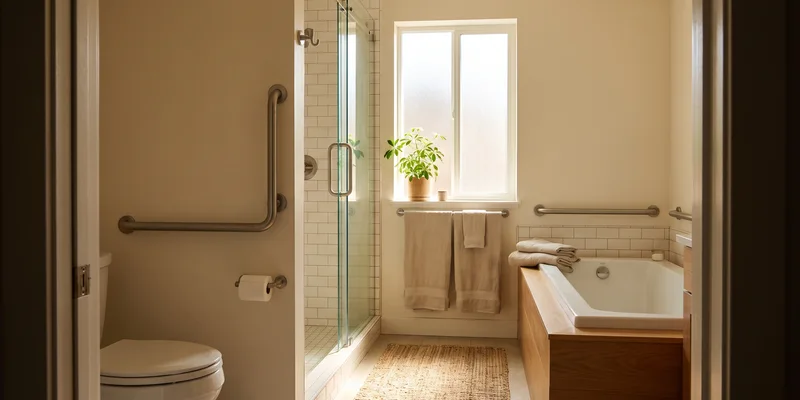
Two to three bars covers a large majority of home bathrooms. If your count comes out at six, that is worth a second look, since it usually means bars are being added instead of fixing something else, such as a low toilet or poor footing.
When More Bars Is the Wrong Answer
Grab bars solve one specific problem: the hand needs something fixed to hold. When the actual difficulty is something else, adding bars produces a cluttered bathroom that still does not work, and the underlying issue stays unaddressed.
If standing for a full shower is the problem, a seat changes the movement more than a fourth bar does. If rising from a low toilet is the problem, raising the seat shortens the distance the body travels. If the floor is slippery, better footing does more than another handhold.
The Three Substitutes Worth Considering First
A shower chair turns a standing task into a seated one. A raised toilet seat shortens the sit to stand movement. Non slip mats and treads improve the surface underfoot. Each of these can remove the need for a bar rather than supplementing it, and often costs less trouble to fit.
Counting Beyond the Bathroom
The bathroom gets the attention, and it is not the only room with transitions. Getting out of bed, standing from a favourite chair, negotiating a staircase, and stepping over an entry threshold are all the same kind of moment, and they happen more often than a shower does.
A bar beside the bed, at the top and bottom of a staircase, or by the front step is frequently more useful than a third bathroom bar. Where there is no suitable wall, a tension mounted floor to ceiling pole covers the same job without a permanent fixing.

Budgeting Bars Over Time
Not everything has to happen at once, and doing it in stages often produces a better result than a single afternoon of installation. Fit the highest value bar first, which is almost always the tub or shower entry, then live with it for a couple of weeks and watch what still gets improvised.
That observation period is genuinely useful. Habits shift once a good handhold exists, and the second bar you would have bought on day one is not always the second bar you actually want on day fifteen.
Getting a Second Opinion
Counting bars is a judgement call, and the person best placed to make it has seen a lot of bathrooms. If you are unsure what fits your situation, ask your doctor or an occupational therapist, who can watch the movement and often spots a transition the family has stopped noticing because it has been worked around for years.
Frequently Asked Questions
How many grab bars should a bathroom have? Most end up with two or three: one at the tub or shower entry, one inside the wet area, and one beside the toilet. The right number is whatever keeps a hand in contact at every moment when balance shifts.
Is one grab bar enough? Sometimes, in a small bathroom where a single well placed bar serves both the entry and the toilet. More often one bar leaves a gap somewhere in the sequence, which the walkthrough method will reveal.
Can you have too many grab bars? Practically, yes. A bathroom crowded with bars is harder to move through and usually means something else needs solving, such as a low toilet seat or a slippery floor.
Do I need a grab bar in the shower if I have a shower chair? Usually still yes, because sitting down and standing up are themselves transitions. A bar within easy reach of the seated position is the one that matters most in that setup.
Should grab bars go outside the bathroom too? Often, and they are frequently skipped. Beside a bed, at a staircase, and by an entry step are all high value positions, with a tension pole covering spots that have no suitable wall.
What order should I install grab bars in? Start with the tub or shower entry, since that transition carries the most risk, then watch for a couple of weeks and let the next position reveal itself.
Does a bathtub need a bar as well as a tub rail? Often both, since a clamp on rail helps at the rim and a wall bar helps once the person is inside. It depends on how the tub is used and whether it is for bathing or showering.
How do I know when the bathroom has enough? Walk the route and look for any moment when both hands are free with nothing solid to reach. When there are none, you are done.
The Bottom Line
Count transitions rather than walls, and the number takes care of itself: two or three bars in most bathrooms, plus whatever the bedroom, stairs, and entry call for. If the count climbs past four in one room, look at whether a seat, a raised toilet, or better footing would do the job instead. Our placement guide covers marking the positions and the grab bar buying guide covers choosing the bars.