Last updated: August 20, 2026
The staircase is usually the part of a house that families worry about first and change last, because every idea that comes to mind sounds like a construction project. It does not have to be. Most of what makes a flight of stairs hard to use is fixable in an afternoon with a screwdriver, a tape measure, and a couple of ordered parts.
This guide works through the changes in the order they are worth doing: what to look at first, then traction, then something to hold, then light, then the flight itself. It does not cover stairlifts or structural remodeling, which are separate decisions with their own trade offs and their own installers.
This article contains affiliate links. If you buy through them, we may earn a commission at no extra cost to you. Learn more.
Quick Answer
How do you make stairs safer without remodeling?
- Work through three things in order: grip on the treads, something to hold on both sides, and light that reaches the edge of every step.
- Clear the flight completely, since anything stored on a step, including the basket waiting to go up, is part of the problem.
- Then reduce the number of trips, by moving the items that cause them rather than by treating each trip as unavoidable.
Bottom line: traction, handrails, and lighting cover most of it, and none of the three requires a contractor.
Step One: Walk the Flight and Write Down What Fails
Go up and down once, slowly, in ordinary shoes, and note the specific failures rather than a general impression. Where does the hand have nothing to hold? Which step feels slick? Where does the light stop? Which tread is uneven, loose, or worn at the nosing? A written list of four or five specifics turns into an order and an afternoon.
Do it a second time in the dark with only the usual lighting on, because a staircase that works fine at noon can be a different proposition at eleven at night. Our home safety assessment walkthrough covers the same method for the rest of the house.
Ask the Person Who Uses Them
The most useful information is not on your list, it is the one step they always hesitate on. Ask directly and without turning it into a discussion about moving. People generally know exactly which part of their own staircase they dislike.
Step Two: Fix the Grip
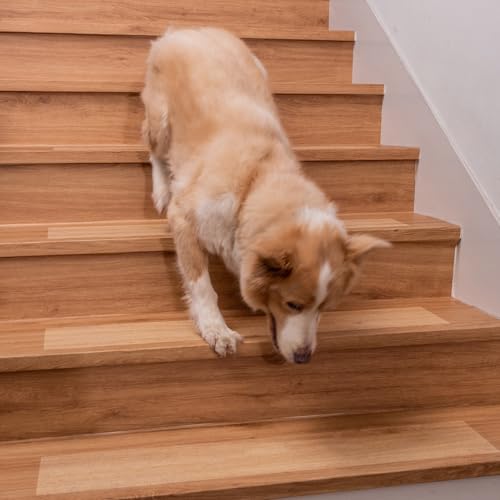
Bare wood and worn carpet are the two usual traction problems, and they take different products. Wood takes an adhesive tread or a clear grit strip. Worn carpet takes a tread with hook style gripper backing, because a rubber backing slides on pile. Either way, clean the step properly first and respect the stated curing time before the stairs go back into normal use.
Loose carpet, a lifting stair nose, or a tread that flexes underfoot is a repair rather than a covering job. Putting a tread on top of a loose step hides a problem instead of solving it, and the loose step is the more urgent of the two.
Mark the Edges While You Are There
A contrasting strip along the front of each step makes the edge easier to pick out on the way down, which is the direction that catches people. Some treads come in a contrasting color for exactly this reason, and our stair tread guide covers the options.
Step Three: Sort Out What There Is to Hold
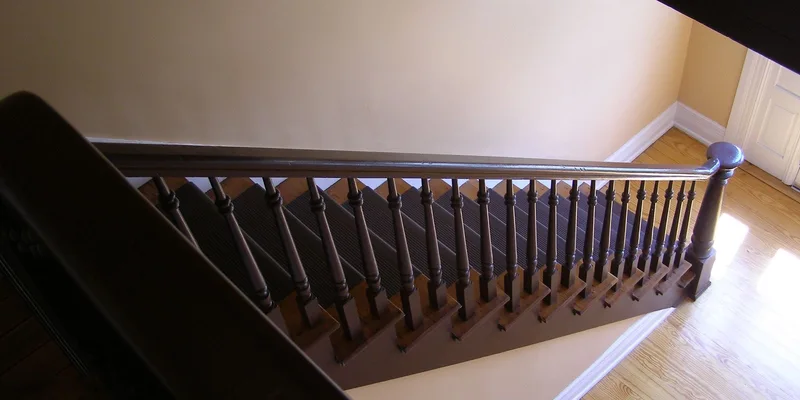
Count the rails. One rail on one side is the standard build, and adding a second on the empty wall means a hand is available whichever way somebody is traveling and whichever arm is stronger. Wall mounted kits handle this without touching the structure of the stairs.
Check the existing rail too. Can a hand close around it, or is it a wide flat board? Is there room behind it for knuckles? Does it stop short at the top or bottom? A rail that releases the hand at the exact moment of the transition is doing half a job, and extending it is usually simpler than replacing it.
Fastening Is the Whole Job
Brackets must land in studs or in blocking added between them. Drywall anchors alone are not intended for what a handrail carries. Stair walls are awkward for stud finding, so take the time, and call a carpenter for plaster, masonry, or anything uncertain. Our handrail options guide covers the kits and the dimensions.

Step Four: Get Light on Every Step
A staircase needs a switch at the top and the bottom, so nobody crosses a dark flight to reach a light. Where rewiring is not practical, battery operated remote switches and smart bulbs achieve the same result, and adhesive motion strips along the stringer light the treads directly.
Aim for light that lands on the front edge of each step rather than a bright bulb visible from the stairs, since a bare bulb in the line of sight creates glare that makes the flight harder to read. Our lighting guide covers glare and contrast in more detail.

Step Five: Clear the Flight and Change the Trips
Nothing lives on the stairs. Not the laundry basket waiting to go up, not the stack of mail, not the shoes. A step used as storage is a step that has to be negotiated around, usually while carrying something.
Then look at why the trips happen. A second phone charger upstairs, a set of cleaning supplies on each floor, a laundry hamper that does not have to be carried down, and reading glasses in both places each remove a trip permanently. Our guide to two story home options covers the larger version of this question.
Carrying Things Up and Down
Both hands on the rails beats one hand on a rail and one on a basket. A small bag worn over the shoulder, a basket left at the top of the flight to be collected in a second trip, or simply asking somebody else to carry it all remove the conflict between holding on and carrying.
What to Do in What Order
| Order | Change | Effort |
|---|---|---|
| 1 | Clear everything off the steps | Minutes, no cost |
| 2 | Repair loose treads, carpet, or nosings | Handyman if not a DIY job |
| 3 | Add traction and contrasting edges | An afternoon |
| 4 | Add or extend a handrail | An afternoon, or a carpenter |
| 5 | Add light and a second switch | An afternoon |
| 6 | Duplicate items to remove trips | Ongoing habit |
What This Guide Does Not Cover
Stairlifts, structural remodeling, and moving a staircase are outside the scope here. They are significant installed projects, they are sold through dealers rather than as products, and whether they suit a particular household is not something a guide can judge from a distance.
If the changes above do not make the stairs manageable, that is the point to bring in an occupational therapist, who can assess the person and the staircase together and advise on what comes next. A doctor is the right first call if the difficulty is new, if there has been a stumble, or if something has changed recently. Our guide to what a home assessment involves explains how that visit usually works.
Frequently Asked Questions
What is the first thing to change on a staircase? Clear everything off the steps, then repair anything loose. Traction, handrails, and lighting come next, and none of those three requires a contractor in most homes.
Is one handrail enough? A rail on both sides is better, because it gives a hand whichever direction somebody is traveling and whichever arm is stronger. Adding a second wall mounted rail is a common weekend project.
Do stair treads work on carpeted stairs? Only the versions made for carpet, which use hook style gripper backing. A rubber backed tread intended for hardwood slides on pile instead of holding.
How do I light stairs without an electrician? Battery or rechargeable motion strips mount along the stringer with adhesive, and smart bulbs with a remote switch add a second control point without new wiring.
Should things be stored on the stairs? No. A step in use as storage has to be negotiated around, usually by somebody carrying something else, which is exactly the situation to avoid.
What about a stairlift? That is an installed product sold through dealers and outside what this guide covers. If the changes here are not enough, an occupational therapist is the right person to advise on next steps.
Are grab bars useful on stairs? A short grab rail helps at a single step or a landing where a full handrail does not fit. It supplements a handrail rather than replacing one.
How often should the stairs be checked? Add them to a monthly walkthrough. Press the corners of any treads, check the rail is still tight, and confirm the lights at both ends still work.
The Bottom Line
Walk the flight, write down the specific failures, then work the list in order: clear the steps, repair anything loose, add traction and contrasting edges, add or extend a handrail into solid framing, and get light onto every tread with a switch at both ends. Then remove trips by duplicating the items that cause them. If that still is not enough, an occupational therapist is the next call. Our stair safety guide covers the products behind each step.