
Last updated: August 20, 2026
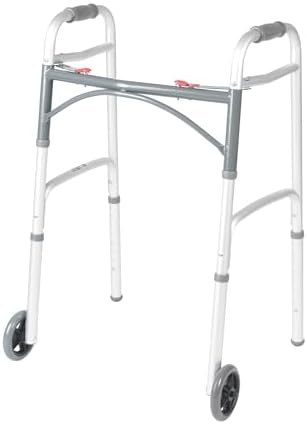
The front wheeled walker is the plain aluminum frame with two small wheels at the front and two rubber tips at the back, the one most people picture when someone says walker. It gets overlooked in a market full of rollators with seats and cup holders, which is a shame, because for a lot of households it is the more useful device by a wide margin.
This guide covers what the two front wheels actually change, how a front wheeled walker differs from a rigid walker and from a four wheel rollator, which variations exist, and the handful of measurements to take before ordering. No seat, no brakes, and far fewer decisions than a rollator requires.
This article contains affiliate links. If you buy through them, we may earn a commission at no extra cost to you. Learn more.
Quick Answer
What is a front wheeled walker and who is it for?
- It is a folding frame with two wheels at the front and non slip tips at the back, so it rolls forward when pushed and stops as soon as weight goes onto it.
- Compared with a rollator it is lighter, narrower, and simpler to maintain, but it has no seat and no hand brakes, and it is not meant to be leaned on while moving fast.
- Sizing comes down to two numbers from the listing: handle height range against the user’s wrist height, and overall width against the narrowest doorway in the home.
Whether a walker, a rollator, or a cane suits best is a question for a doctor or an occupational therapist, not a product page.
What the Two Front Wheels Change
A rigid walker with four rubber tips has to be lifted and set down with every step. That is stable, and it is tiring. Putting wheels on the front legs means the frame can be pushed forward instead of lifted, while the rear tips still grip the floor the moment weight comes onto the frame. You get most of the stability of a rigid walker without lifting it a thousand times a day.
The trade is that a front wheeled walker still stops with every step, by design. It is not a rolling device the way a rollator is, and it does not suit someone who wants to walk continuously at a normal pace. It suits someone who needs something solid to push into, particularly when standing up and settling their balance between steps.
Two Wheels Versus Four
Four wheel rollators roll all the time and are stopped with hand brakes, which requires the grip strength and the reaction to use those brakes. A front wheeled walker needs no brakes because the rear tips do the stopping automatically. For anyone who finds brake levers awkward, that is the whole argument in one sentence.
Front Wheeled Walkers by Situation
The Standard Starting Point: A Folding Two Wheel Walker
A plain folding aluminum frame with 5 inch front wheels and rear glide tips covers most indoor use. It folds flat against a wall, weighs little enough that most people can move it one handed, and has almost nothing on it to break. If nobody has specified anything unusual, this is the device the description usually means.
Higher Listed Weight Capacity
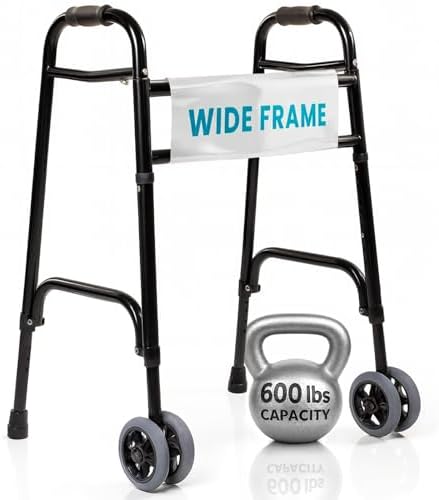
Standard walker frames carry a manufacturer stated capacity, and bariatric or heavy duty versions are built wider and reinforced with a higher listed figure. Read the capacity from the specific listing rather than assuming a category number, because it varies between models even within one brand, and a wider frame also needs checking against doorways.
Tall or Short Users
Every walker has a stated handle height range, and standard frames are built around average adult heights. Tall and petite versions exist precisely because the standard range runs out, and a walker used outside its adjustment range is one of the most common reasons someone ends up hunched or reaching. Check the range against wrist height before anything else.

Outdoor Paths and Rough Ground
Small front wheels are fine on tile, wood, and low pile carpet, and they catch on sidewalk seams and sink into grass. Larger front wheels, generally in the 5 to 8 inch range on walker frames, roll over uneven ground more readily. If most walking is outdoors, though, it is worth asking whether a rollator with proper outdoor wheels is the better device rather than pushing a walker beyond what it was built for.

How the Three Walker Types Compare
| Type | Best suited to | Watch out for |
|---|---|---|
| Rigid, no wheels | Maximum stability, short indoor distances | Must be lifted with every step |
| Front wheeled, two wheels | Indoor walking with frequent pauses | No seat, no brakes, stops at every step |
| Four wheel rollator | Continuous walking, longer distances | Needs hand strength for the brakes |
| Three wheel rollator | Tight indoor turns in small homes | No seat, less side to side stability |
| Knee walker | Keeping weight off one foot | Single purpose, needs good balance |
Glides, Tips, and Wheels
What sits on the bottom of the rear legs matters more than most buyers expect. Rubber tips grip firmly and are the default. Glide caps, sometimes sold as walker skis or glide tips, let the rear legs slide over carpet and vinyl instead of catching, which suits users who shuffle the frame rather than lifting it. Tennis ball style glides are the improvised version of the same idea and wear unevenly.
All of these are consumables. Worn tips lose grip long before they look worn out, and a walker that has started to skid on a smooth floor almost always needs new tips rather than a new frame. Our guide to walker glides and replacement tips goes through the sizes and the differences.

Measuring Before You Order
Two measurements settle most walker returns. Handle height: with the user standing upright in their usual shoes, arms relaxed at their sides, measure from the floor to the crease of the wrist, and confirm that number sits inside the model’s adjustable range rather than at the very top or bottom of it. Overall width: measure the narrowest interior doorway with the door fully open, and compare it against the listed frame width with a margin for knuckles.
A third check is worth doing if space is tight. Walkers need turning room at the end of a hallway and in a bathroom, and a frame that fits through a door can still be awkward to turn around inside a small room. Our guide to indoor mobility aids for small apartments covers the turning and storage side.
Folding, Weight, and Storage
Most front wheeled walkers fold flat by pressing two buttons on the side frames, which makes them easy to store behind a door or slide into a car. Frame weight is listed, and the range is narrow compared with rollators, so it is rarely the deciding spec here. What does vary is how easily the folding buttons work for arthritic hands, which is worth checking in person if you can.
Common Mistakes When Buying a Front Wheeled Walker
The most frequent one is buying the simpler walker when the person actually wants to walk continuously and sit down partway. That user ends up frustrated within a week. The reverse also happens: buying a rollator with a seat for someone who really needs a frame to push into and cannot manage brake levers reliably.
The second mistake is ignoring the rear tips. They are the part that stops the walker moving under load, and they are the simplest thing on it to replace. Checking them every few months takes seconds and is the single highest value maintenance habit for this type of device.
Adding Accessories That Change the Balance
Trays, bags, and baskets exist for walkers, and hanging a heavy bag from the handles raises the center of gravity in exactly the wrong place. Keep loads low and centered, and be wary of anything that makes the frame wider than the doorway it has to clear.
A Note on Choosing Between Devices
Deciding between a rigid walker, a front wheeled walker, a rollator, and a cane depends on gait, balance, hand strength, endurance, and the layout of the home, none of which a listing can see. If you are unsure what fits your situation, ask your doctor or an occupational therapist, who can watch someone walk and recommend a type and a handle setting. Our walker versus rollator comparison covers the general differences if you want context before that conversation, and our rollator walker guide covers the rolling side of the family.
Frequently Asked Questions
What is a front wheeled walker? A folding walker frame with two wheels on the front legs and non slip tips on the rear legs. It is pushed forward rather than lifted, and the rear tips grip the floor as soon as weight goes onto the frame.
Is a two wheel walker better than a four wheel rollator? Neither is better in general. A two wheel walker is more stable at each step and needs no brakes; a rollator suits continuous walking and longer distances but requires the hand strength to use its brakes.
Do front wheeled walkers have brakes? No, and they do not need them. The rear tips stop the frame as soon as the user puts weight onto it, which is why this type suits people who find brake levers awkward.
What height should a walker be? Set the handles to about the crease of the wrist with the user standing upright in normal shoes and arms relaxed, which puts the elbows at a slight bend. Confirm that height sits within the model’s stated adjustment range.
Can a front wheeled walker be used outdoors? On smooth paved paths, yes. Small wheels catch on sidewalk seams and sink into grass and gravel, so regular outdoor walking is usually better served by a rollator with larger wheels.
How often should walker tips be replaced? Whenever the tread is worn smooth or the walker starts to skid on a hard floor, which comes sooner than most people expect. They are a consumable part and the easiest thing on the frame to keep fresh.
What weight capacity do walkers have? Each model lists its own manufacturer stated capacity, with bariatric versions built to a higher figure. Read it from the specific product listing rather than assuming a category number.
Does Medicare cover a walker? Coverage differs by plan, by situation, and by how equipment is prescribed and supplied, so no general answer applies to everyone. Check current rules at medicare.gov and with the specific plan.
The Bottom Line
A front wheeled walker is the right answer when someone wants a solid frame to push into and pause on, without brakes to operate or a seat to manage. Check the handle height range against wrist height, the frame width against the narrowest doorway, and the listed weight capacity, then keep the rear tips fresh. If continuous walking and resting matter more than stability at each step, look at a rollator walker instead.