Last updated: August 20, 2026
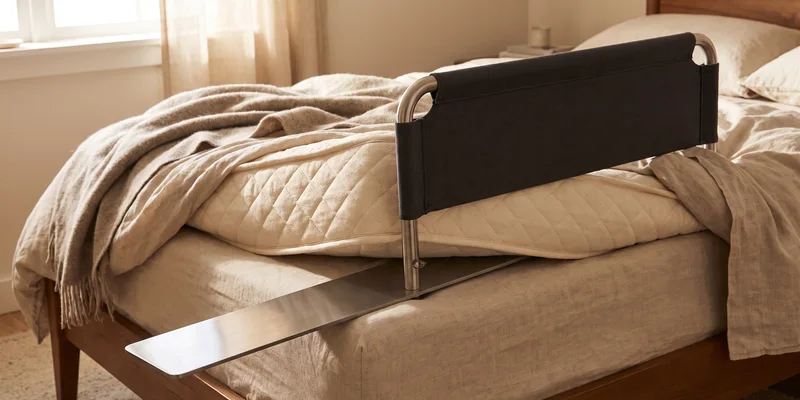
Most bed rails sold for adults anchor the same way: a flat steel plate slides between the mattress and the foundation, and the weight of the mattress plus a strap around the frame holds the rail upright. It is a clever design because it needs no tools and leaves no marks, and it is also the design that fails most often when the bed is not what the manufacturer assumed.
This guide explains how the under mattress plate actually holds, which beds it suits, and what to check after installation. If you have not yet decided which type of rail you need, start with our main guide to bed rails for elderly adults.
This article contains affiliate links. If you buy through them, we may earn a commission at no extra cost to you. Learn more.
Quick Answer
How does an under mattress bed rail hold?
- A steel plate sits between mattress and foundation. Mattress weight presses down on the plate and a frame strap stops it sliding out.
- It needs a firm, flat surface under the mattress and enough clearance for the plate, which rules out some platform beds, storage beds, and mattresses on the floor.
- Mattress thickness must fall inside the range the manufacturer states, since that range is what the rail height and gap dimensions were designed around.
Bottom line: the plate is only as good as what it rests on, so check the bed before choosing the rail.
How the Plate Actually Works
The plate converts downward mattress weight into resistance against the rail tipping outward. Push on the top of the rail and the force tries to lever the inside edge of the plate upward; the mattress lying on top of it resists that. The frame strap adds the second half of the job by stopping the plate from sliding sideways out from under the mattress over time.
| Part | What it does |
|---|---|
| Steel plate | Sits under the mattress, resists the rail tipping outward |
| Frame strap | Anchors the plate so it cannot creep sideways |
| Mattress weight | Provides the downward force the plate depends on |
| Foundation surface | Must be firm and flat for the plate to sit level |
| Rail height | Designed around a stated mattress thickness range |
Beds That Suit an Under Mattress Plate
A traditional box spring or a foundation with a firm, flat top is the ideal case. The plate lies flat, the mattress presses evenly on it, and the strap has a frame rail to loop around. Metal bed frames with side rails and most standard bed sets fall into this category without difficulty.
Slatted platform beds sit in the middle. If the slats are close together and rigid, the plate can bridge them acceptably; if they are widely spaced or flexible, the plate rocks and the rail feels loose no matter how tight the strap. Check by sliding the plate in and pressing down on it before committing.
Beds Where It Does Not Work
Mattresses on the floor leave nowhere for the plate. Storage beds with drawers often have a solid deck and no accessible frame to strap to. Futons and thin mattresses may fall below the stated thickness range, which means the rail sits too high relative to the sleeping surface. Adjustable bases are a separate case, covered in our guide to bed rails for adjustable beds, because the plate would span a hinge.
Under Mattress Rails by Situation
The Standard Case
A rail with a full width plate and a frame strap is the default choice for a conventional bed with a box spring or firm foundation. Look for a plate with a reasonable footprint rather than a narrow tongue, since a wider plate spreads the load and resists rocking on a slatted base.

Standing Up Rather Than a Barrier
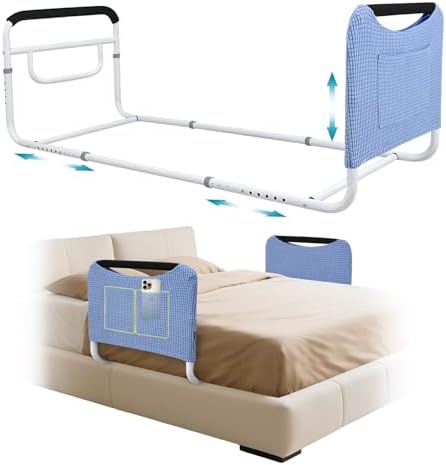
Assist handles use the same plate principle in a smaller package, with a single vertical grip instead of a horizontal barrier. Because the plate is shorter, seating it properly matters more, and a strap becomes close to essential. See our guide to the bed assist handle.
Beds That Change Rooms
Plate rails are also what most travel and guest room rails use, since the design needs no tools. Our guide to the portable bed rail covers what changes when the same rail is installed and removed repeatedly across different beds.
Installing and Checking the Fit
Slide the plate fully under the mattress until the rail sits where the instructions specify, then fasten the frame strap so the plate cannot travel sideways. Lower the mattress back down and press it into place along the rail so the edge is not bunched or riding up, which is a common cause of a gap that appears later.
Then test. Push the rail outward, pull it inward, and lean weight on the bed beside it. The rail should not tilt, creep, or lift the mattress edge. If it does any of those, the plate is either not seated, not strapped, or resting on a surface that cannot support it.
The Gap Check
Bed rails carry a known entrapment hazard, and with an under mattress rail the space that matters most is between the rail and the mattress side. Check it with someone sitting on the bed near the rail rather than with an empty mattress, because a soft edge compresses under body weight and opens a space that was not there a moment earlier. Our bed rail safety guide covers each opening in turn.
Why Plate Rails Loosen Over Time
Three things cause the classic complaint that the rail was fine at first and now wobbles. The plate has crept because the strap was never fitted or has slackened. The mattress has been rotated or replaced and now presses differently. Or the rail has simply been leaned on thousands of times and the hardware needs retightening.
A monthly push and pull test catches all three, and takes under a minute. Re-check after any mattress rotation, new topper, or bedding change, since each of those alters the load the plate is carrying and can change the gap dimensions at the same time.
When to Ask an Occupational Therapist
A rail suits some people and not others, and the mounting method does not change that. If someone has become unsteady, is having difficulty at night, or has had a fall, that belongs with a doctor or an occupational therapist before it becomes a purchase. They can look at bed height, lighting, and the route out of the room together.
They can also tell you plainly whether a rail is appropriate at all. If it is not, our overview of alternatives to bed rails describes what families use instead, from lowering the bed to a floor mat beside it.
Frequently Asked Questions
How does an under mattress bed rail stay in place? Mattress weight presses down on a steel plate under the mattress, resisting the rail tipping outward, while a strap around the bed frame stops the plate sliding sideways. Both parts matter, so fit the strap even when the rail seems steady without it.
Will an under mattress rail work on a platform bed? Sometimes. Rigid, closely spaced slats can support a plate; widely spaced or flexible slats let it rock. A solid deck with no accessible frame to strap to usually rules it out.
Does the mattress need a box spring? Not necessarily, but the plate needs a firm, flat surface beneath the mattress and enough clearance to slide in. A mattress directly on the floor leaves nowhere for the plate to go.
Can I use one on a memory foam mattress? Check the stated thickness range first, and expect the soft edge to compress more under body weight, which makes the gap check with weight on the bed especially important.
My rail wobbles. What should I check? In order: is the plate fully seated, is the frame strap fitted and tight, is the surface under the plate firm and flat, and is the hardware tight. If it still moves, that rail is not right for that bed.
Do I need the safety strap if the mattress is heavy? Yes. Mattress weight resists tipping, but only the strap stops the plate creeping sideways over weeks of use, and creep is the most common reason a rail that was solid becomes loose.
The Bottom Line
An under mattress rail depends on three things: a firm flat surface for the plate, a mattress inside the stated thickness range, and a frame strap that keeps the plate from creeping. Get those right and the design works well; get any of them wrong and no feature on the rail compensates. For the wider comparison of rail types, see our guide to bed rails for elderly adults.