
Last updated: August 21, 2026
The mobility scooter market runs on two separate tracks. On one, established medical equipment names reach buyers through mobility dealers who measure, deliver, set up, and service the machine in person. On the other, direct sellers ship a boxed scooter to a doorstep with an instruction sheet. VEVOR belongs firmly to the second track, and understanding what that track does and does not include is more useful than any model by model rundown.
This guide covers that. What a direct online scooter purchase actually includes, how to read the listings so you are comparing like with like, which questions to settle before ordering, and where this route makes sense compared to a dealer. We are not affiliated with any manufacturer, and every specification mentioned here is something to read off the listing rather than a figure we can supply.
This article contains affiliate links. If you buy through them, we may earn a commission at no extra cost to you. Learn more.
Quick Answer
What do you actually get with a VEVOR mobility scooter?
- A boxed scooter shipped directly, with assembly and setup left to the household rather than handled by a fitter.
- Specifications published on the listing itself, which is where capacity, width, unit weight, tire size, and battery details have to be read.
- Support and parts handled through the seller’s own channels rather than through a local mobility retailer.
- No in person fitting, so seat height, tiller angle, and armrest position are adjusted by you, ideally with guidance from an occupational therapist.
Bottom line: direct online buying trades hands on service for convenience, so the listing has to do the work a fitter would otherwise do.
Who VEVOR Is, and Where It Sits
VEVOR is a direct to consumer equipment brand that sells a broad catalog across many categories through its own site and through large online marketplaces. Mobility scooters are one line among many rather than the company’s sole focus, which is the defining characteristic of this segment and the source of both its advantages and its limitations.
The practical consequence is that a scooter arrives the way any other online purchase arrives: in a carton, partially assembled, with a manual. Nobody comes to the house to check the seat height or explain the freewheel lever. For a confident household with someone able to assemble it, that is fine. For a buyer who needs setup support, a dealer is the better route.
The Other Track, for Comparison
Names most often seen in the dealer channel, including Pride, Golden, Drive, EV Rider, and Journey, generally reach buyers through mobility retailers who handle delivery, assembly, adjustment, and service, and many of their models are not sold as boxed online purchases at all. Neither route is better in the abstract. They sell different things: one sells a machine, the other sells a machine plus a service relationship.
What the Listing Has to Tell You
When there is no fitter involved, the specification block replaces the fitting appointment. Six figures do most of the work: listed weight capacity, overall width, total unit weight, weight of the heaviest removable piece, tire size and type, and turning radius. A listing that omits several of these is not ready to be compared.
Battery details deserve their own look. Chemistry, voltage, and whether the pack is removable all matter for charging, for future replacement, and for airline travel. Our battery guide covers what to record before ordering so a replacement can be matched later.
| What to look for | Why it matters online |
|---|---|
| Capacity in the specification block | No fitter will catch a mismatch for you |
| Overall width and turning radius | Fit is confirmed by your tape measure alone |
| Heaviest single piece | Decides whether one person can load it |
| Battery type and voltage | Charger matching and future replacement |
| Parts listed separately | Whether the scooter can be kept running |
| Assembly and manual details | What arrives in the box and who assembles it |
Direct Online Scooters by Situation
The Common Case: A Four Wheel Model for Daily Use
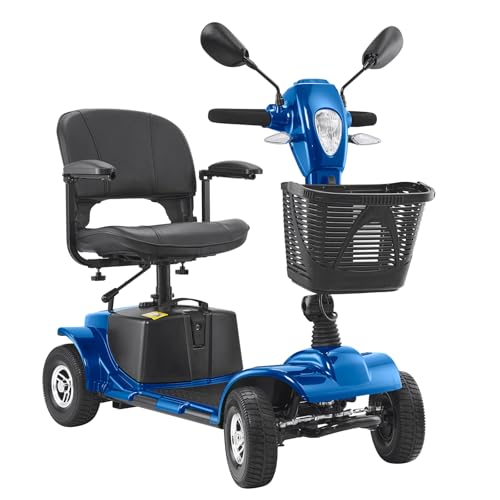
A four wheel scooter from a direct seller covers sidewalks, stores, and neighborhood trips, and it is the configuration most households in this segment end up with. Compare capacity, width, and tire size across listings, and prefer pages that publish a full specification block over ones that lead with photographs.
When the Scooter Has to Travel
Folding models are well represented in the direct online market, and they are often the reason people shop this way at all. Check the folded dimensions against the trunk, and the heaviest single piece against what one person can lift. Our folding scooter guide covers the compromises involved.

When a Higher Capacity Is Needed
Higher rated models appear in this segment too, and the capacity figure has to come from the specification block for the exact variant rather than from the title. Seat width is a separate specification, so compare it directly if comfort matters. Our heavy duty overview maps out the bands.

When the Route Leaves the Pavement
Direct sellers list outdoor oriented models with larger tires and more ground clearance. Read tire diameter, tire type, and the stated climbing grade rather than trusting the setting in the product photo, and see our all terrain guide for what those numbers mean on grass and gravel.

What to Settle Before You Order
Assembly is the first question. Find out what arrives assembled, what tools are needed, and whether the manual is available to view before purchase. Handlebar, seat, and basket fitting are usually straightforward, but a heavy scooter needs somewhere to work and often a second pair of hands.
Returns and support are the second. Direct sellers vary in how returns on large items work, and shipping a scooter back is not the same as returning a small parcel. Read the return terms for the specific listing rather than assuming the marketplace default applies.
Parts Availability Is the Quiet One
Batteries, chargers, tires, and controllers all wear or fail eventually. Before ordering, check whether the seller lists those parts separately for the model you are buying. A scooter that cannot be given a new battery in a few years is a shorter term purchase than it appears at the point of sale.
Where This Route Makes Sense, and Where It Does Not
Direct online buying works well for a household that can measure accurately, assemble a boxed product, and adjust a seat without help, and where the scooter is one of several devices rather than the only thing standing between someone and their front door. Convenience and choice are real advantages.
It works less well where setup support matters, where the rider has complex seating needs, or where a breakdown would be more than an inconvenience. In those cases a local mobility dealer offers something a carton cannot, and that is worth weighing before comparing machines on features alone.
Insurance Runs on Its Own Rules
Where equipment is bought can matter for coverage, and the rules differ by plan, by situation, and by how equipment is prescribed and supplied. We cannot answer that for a specific household. Check medicare.gov, read your plan documents, and use the free counseling every state offers through the State Health Insurance Assistance Program. Our Medicare and scooters article covers where to ask.
A Note on Fit and Professional Advice
Buying without a fitter puts the setup on the household, and seat height, tiller angle, armrest position, and mirror placement all affect how a scooter is used day to day. If you are unsure what fits your situation, ask your doctor or an occupational therapist, who can assess posture, reach, and hand function and advise on the adjustments after the scooter arrives.
Frequently Asked Questions
Are VEVOR mobility scooters sold through dealers? No. VEVOR is a direct to consumer brand, so scooters arrive boxed from an online order rather than through a mobility retailer. Assembly, setup, and adjustment are handled by the household.
What arrives in the box? That depends on the model, so read the listing’s assembly details before ordering. Typically a scooter ships partially assembled with a manual, tools, and a charger, but the specifics vary and should be confirmed on the product page.
How do I compare a direct online scooter to a dealer model? Compare the specification blocks for capacity, width, unit weight, tire size, and battery details, then compare the service separately. A dealer sells fitting, delivery, and support alongside the machine, which does not appear in a feature list.
Where do I find the weight capacity? In the specification block for the exact variant selected, not the product title. If a page sells several sizes under one dropdown, choose the configuration first and read the specifications again.
Can I get replacement batteries and parts? Check before ordering whether the seller lists batteries, chargers, and tires separately for that model. Parts availability is one of the main practical differences between buying direct and buying through a dealer.
Do direct online scooters come assembled? Usually partially. Seat, tiller, and basket fitting are common tasks, and a heavy model may need two people. The listing should describe what assembly is required, and the manual is worth reading before the box arrives.
Is a direct online scooter suitable for someone with complex seating needs? Often not without help. Complex positioning is what a fitter and an occupational therapist handle, so seek that advice first rather than relying on the adjustments a boxed scooter offers.
Does Medicare cover a scooter bought online? Coverage differs by plan, by situation, and by how equipment is prescribed and supplied, including where it is obtained. Check current rules at medicare.gov, ask your plan directly, and use the free SHIP counseling in your state before assuming anything.
The Bottom Line
Buying a scooter from a direct seller like VEVOR means the listing has to do the job a fitter would otherwise do, so read the specification block properly and measure before you order. Confirm capacity, width, unit weight, battery details, and whether parts are sold separately, and be honest about who will assemble and adjust the machine. If setup support matters more than convenience, a local mobility dealer is the better route, and our step by step guide works through the rest of the decision either way.