
Last updated: August 20, 2026
Standard shower chairs are built around a fairly narrow set of assumptions about seat width, frame tubing, and load. When those assumptions do not match the person using the chair, the result is a seat that feels unstable long before anything actually fails, which is why heavy duty models exist as a separate category rather than as a variation.
This guide covers what actually differs in a bariatric shower chair, how to read the weight capacity figure properly, and how to check that a wider chair will still fit the bathroom you have. Width is the constraint people underestimate most, because a chair that supports the load can still be too wide for the enclosure.
This article contains affiliate links. If you buy through them, we may earn a commission at no extra cost to you. Learn more.
Quick Answer
How do you choose a bariatric shower chair?
- Take the weight capacity from the listing for the exact model, not from the category or the brand, and leave headroom rather than buying to the limit.
- Measure seat width separately from frame width: the seat is what has to be comfortable, the frame is what has to fit the shower.
- Look for a wide-stance frame, thicker tubing, cross-bracing under the seat, and wide rubber tips, since those are what make a heavy duty chair feel solid.
Bottom line: capacity comes from the listing, comfort comes from seat width, and fit comes from measuring the enclosure.
What Makes a Chair Heavy Duty
Four things separate a bariatric shower chair from a standard one: a wider seat, thicker frame tubing, a wider stance between the legs, and additional bracing under the seat. The stance and the bracing matter as much as the tubing, because a wide seat on a narrow leg spread feels unstable even when the materials are more than adequate.
Seat design changes as well. Heavy duty seats are usually deeper front to back and often have a reinforced center section, since the middle of a wide seat is where flex shows up first. Drainage holes and a textured surface remain just as important as on a standard chair.
Weight Capacity Is a Model Number, Not a Category
Capacities in this category vary widely between models that look almost identical in photographs, and the figure is published on the product listing for a reason. Use that number, from the specific model, rather than a general assumption about what bariatric chairs hold. Buying with headroom above the actual requirement is the sensible approach.
![360 Swivel Shower Chair with Arms and Back, Heavy Duty [300 lbs] ...](https://m.media-amazon.com/images/I/41oUEbQuBrL._AC_.jpg)
Seat Width Versus Frame Width
These are two different measurements and both appear on good listings. Seat width decides comfort and whether the person sits fully supported rather than perched. Frame width, measured at the widest point including the legs and any armrests, decides whether the chair fits through the shower opening and inside the enclosure.
A useful order of operations: establish the seat width that works for the person, then check whether a chair with that seat width still fits the shower. If it does not, the answer is usually a different type of seat rather than a narrower bariatric chair.
Measuring the Bathroom First
| Measurement | Why it matters |
|---|---|
| Shower opening width | The chair has to pass through it, arms included |
| Internal floor width and depth | Decides whether the frame fits with room to sit down |
| Seat height to back of knee | Feet flat, knees roughly level with hips |
| Distance to the valve | A wider chair sits further from the controls |
| Doorway width | Bathroom doors are often the narrowest point |
Choosing by Situation
A Walk-In Shower With Space
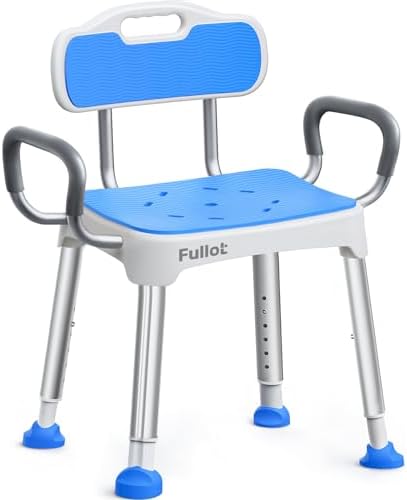
A wide freestanding chair with a back and arms is the default. Prioritize a wide leg stance and cross-bracing, and check that the height pins are substantial rather than the thin push-buttons used on lighter chairs.
A Bathtub Rather Than a Shower
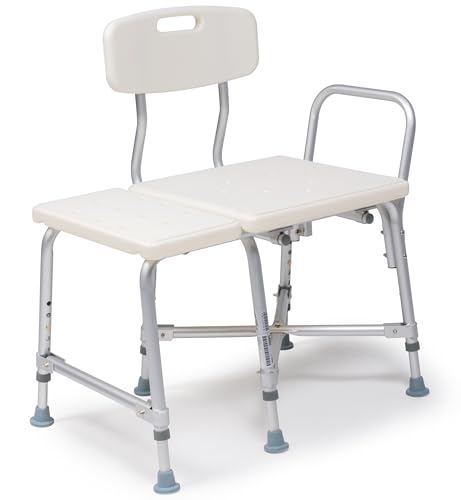
Where the difficulty is stepping over a tub rim, a heavy duty transfer bench is the product, not a chair standing inside the tub. Bariatric benches are wider and braced differently, and the rim clamping arrangement has to suit the tub. Our transfer bench guide covers fitting.
When a Backless Stool Is Preferred
Wide backless stools exist for enclosures where a full chair simply will not fit. Losing the back means losing trunk support, so it is worth pairing a stool with a well-positioned grab bar so there is something solid to hold while sitting and standing.
Details That Show Up in Daily Use
Wide rubber tips are the contact patch between a heavier load and a wet floor, so check whether replacements are sold separately and inspect them regularly for glazing. Frame material matters too: coated aluminum stays lighter and resists corrosion, while steel frames are heavier to move but often carry higher stated capacities.
Assembly quality is worth a moment as well. Heavy duty chairs usually arrive with more fasteners than standard ones, and a chair that develops play at the joints after a few months is often one that was never fully tightened. Recheck the fixings after the first few weeks.
Grab Bars and the Rest of the Setup
A wider chair changes the geometry of the whole shower: where the user sits, what they can reach, and where a grab bar needs to be to be useful. Plan the bar position with the chair actually in place rather than from a diagram, and note that bars also carry their own stated load ratings.
Suction-mounted bars are not designed to carry a person’s weight and are not the right choice here. A properly anchored bar fixed into solid structure is, and our guides on installing grab bars and where to place them cover both questions.
Common Mistakes
- Buying right at the stated limit. Leave headroom above the actual requirement rather than matching it exactly.
- Reading seat width as frame width. The two differ by several inches on most models, and only one of them has to fit the shower.
- Ignoring the leg stance. A wide seat on a narrow frame feels unsteady even when the materials are adequate.
- Skipping the doorway measurement. A chair that fits the shower still has to reach it.
- Pairing it with a suction grab bar. Suction cups are not designed to take a person’s weight; use a properly anchored bar.
- Never rechecking the fasteners. Heavy duty frames need their fixings retightened after the first weeks of use.
When to Ask for Guidance
Sizing equipment for a heavier user involves more than the seat: how the person gets into the bathroom, how they sit down, and how they stand again all shape the right answer. Occupational therapists commonly assess exactly this and suggest a setup based on what they observe. If you are unsure what fits your situation, ask your doctor or an occupational therapist.
Frequently Asked Questions
What weight can a bariatric shower chair hold? It varies by model, and the figure is published on each product listing. Use the number for the exact model you are buying and leave headroom rather than choosing a chair rated right at the requirement.
How wide is a bariatric shower chair? Seat widths in this category are noticeably wider than standard chairs, and frame widths are wider again. Listings state both, so compare the frame width against your shower opening and the seat width against the user.
Will a heavy duty chair fit a standard shower? Sometimes, but not always. Measure the internal floor area and the opening first. If it does not fit, a wide backless stool or a transfer bench arrangement is usually the alternative.
Is a steel or aluminum frame better? Aluminum is lighter and does not rust, which helps if the chair moves in and out. Steel frames are heavier but often carry higher stated capacities. Compare the published capacity rather than assuming from the material.
Do bariatric shower chairs come with arms? Many do, and armrests are worth having because they give something to push down on when standing. Check the seat width measured between the arms, not just the overall seat.
Can a bariatric chair be used in a bathtub? A chair can stand inside a tub, but it does not address stepping over the rim. A heavy duty transfer bench is designed for that, and the clamping arrangement has to suit the tub.
How often should the frame be checked? Retighten the fasteners after the first few weeks and then periodically, and replace the rubber tips when they feel smooth rather than tacky.
The Bottom Line
A bariatric shower chair is a wider seat on a wider, better braced frame, and the two numbers that matter are the stated weight capacity for that exact model and the frame width against your shower. Measure the enclosure and the doorway before ordering, prefer a wide leg stance with cross-bracing, and pair the chair with a properly anchored grab bar rather than a suction one. For the full range of seat types, see our shower chair guide.