Last updated: August 20, 2026
Some links on this page are affiliate links. See our affiliate disclosure.
Reaching and twisting behind you is a surprisingly demanding movement. It asks for shoulder rotation, trunk flexibility, grip, and balance while seated, and any one of those getting harder can turn a routine part of the day into something a person needs help with. A bidet attachment removes most of that reaching by putting the job on a nozzle and a control the user operates from the front.
The category runs from a simple non-electric attachment that slides under the existing seat to a full replacement seat with a warm water supply and a remote. This guide covers what separates those options, which control layouts suit limited hand strength, and the fitting details that decide whether the unit works with the toilet and the bathroom you already have.
Quick Answer
Which bidet attachment suits an older adult best?
- A non-electric attachment with a side-mounted lever is the simplest option, needs no outlet, and installs under the existing seat in about twenty minutes.
- A large lever or dial beats a small knob when hand strength or dexterity is limited, and a remote suits users who cannot turn to reach a side control.
- An electric bidet seat adds warm water and a warm air dryer, and needs a grounded outlet within reach of the toilet.
- Check the bowl shape, the space beside the tank for the control panel, and whether the seat height changes once the unit is fitted.
Bottom line: the control layout matters more than the feature list, and the outlet decides whether an electric model is even possible.
Why a Bidet Comes Up in Aging-in-Place Conversations
The appeal is straightforward. A bidet handles the cleaning without the user needing to reach behind, twist, or grip, which is why the topic comes up so often when shoulder range or hand strength has changed. Many families describe it as the change that let someone keep managing the bathroom independently.
It is worth being plain about scope. A bidet is a plumbing fixture, not a piece of medical equipment, and it is designed to make one task easier rather than to address any underlying condition. Anything involving skin that is broken, sore, or not healing well is a conversation for a doctor or nurse rather than a shopping decision.
The Four Types
Every bidet does the same basic job, and the differences are in the plumbing, the power supply, and where the control sits. That last point is the one most product pages underplay and the one that matters most here.
Non-Electric Attachments
A thin plastic plate slides between the existing seat and the bowl, with a hose running to the toilet’s cold water supply and a control panel on one side. There is no outlet involved, installation is a straightforward tap into the fill line, and there are few parts to go wrong. The water arrives at supply temperature, which is the main trade-off.
Warm Water Non-Electric Models
These run a second hose to the hot supply under a nearby sink and mix the two, giving warm water without electricity. They need a sink close enough for the hose to reach, and the installation is a little more involved, but they suit a bathroom with no outlet near the toilet.
Electric Bidet Seats
These replace the toilet seat entirely and run on mains power, heating water on demand and usually adding a heated seat, adjustable nozzle position, and a warm air dryer. The dryer is the feature that matters most for someone who struggles to reach, since it removes the drying step as well. They need a grounded outlet within cord reach of the toilet.
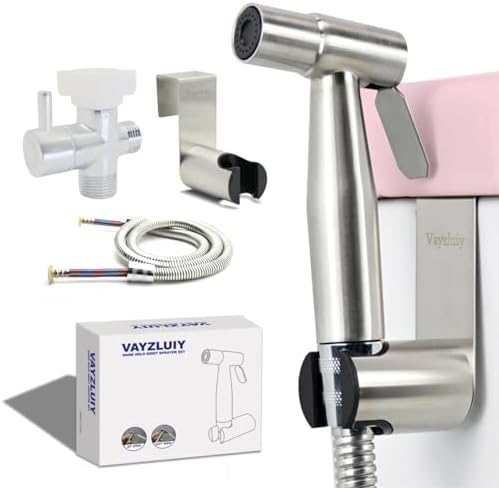
Handheld Sprayers
A hose and trigger sprayer mounts beside the toilet, giving full control over aim. That control is an advantage for some and a disadvantage here, since using it still requires reaching and gripping, which is exactly what the other three types are designed to avoid.
Bidet Options by Situation
The Simplest Starting Point
A non-electric attachment with a wide side lever covers most situations, needs no electrician, and can be removed if it does not suit. Look for a lever rather than a small round knob, since a lever can be moved with the side of the hand rather than a pinch grip.

When Cold Water Is a Deal-Breaker
A warm water attachment that mixes from the sink supply gives a comfortable temperature without needing an outlet. Measure the distance from the toilet to the nearest sink shutoff before ordering, since the supplied hose has a fixed length.

When Reaching Any Control Is Hard
An electric bidet seat with a remote puts the controls wherever the user can reach, including a wall-mounted holder beside the toilet. The warm air dryer removes the drying step too, which is often the harder half of the task.

When a Caregiver Assists
A handheld sprayer gives precise aim, which suits a setup where someone else is helping rather than the user managing alone. It also doubles for rinsing a commode bucket, which is a practical bonus in a household using both.
Comparing the Types
| Type | Needs | Suits |
|---|---|---|
| Non-electric attachment | Cold supply line only, no outlet | Simplest install, lowest cost, most bathrooms |
| Warm water attachment | Hot line from a nearby sink | No outlet available but warm water wanted |
| Electric bidet seat | Grounded outlet near the toilet | Remote control, warm air dryer, heated seat |
| Handheld sprayer | Cold supply line, wall mount | Caregiver-assisted use, rinsing equipment |
Fitting Checks Before You Order
Start with bowl shape, round or elongated, measured from the seat bolts to the front of the rim. Then look at the space between the tank and the seat bolts, since attachment control panels need a few inches of clearance there and some low-tank or skirted designs do not offer it.
Check the water supply too. Most attachments connect with a T-valve at the toilet’s fill line, which needs a standard shutoff valve underneath. And for electric models, confirm there is a grounded outlet within the cord length, since running an extension cord across a bathroom floor creates a trip hazard that undoes the point of the exercise.
The Height Question
Both attachments and electric seats change the seat height slightly, an attachment by a small amount and a bidet seat by rather more. If the user also relies on a riser, work out the combined finished height before ordering, using the method in our guide to choosing raised toilet seat height. An electric seat that sits high on its own may reduce or remove the need for a separate riser.
Common Mistakes When Buying
The first is choosing on features rather than controls. A model with every setting available is no help if the dial is small, stiff, and mounted where the user cannot see it. Try the movement in the air before ordering: can the user rotate their hand that way, with that much force?
The second is forgetting that a bidet does not address getting on and off the toilet at all. If sitting down and standing up is also difficult, that is a separate fix, handled by a riser, a frame, or a grab bar. Our guide to toilet safety rails covers those, and a bidet works fine alongside most of them.
A Note on Getting Advice
Which control layout suits, and whether a bidet addresses the actual difficulty, depends on the user’s range of movement and grip. If you are unsure what fits your situation, ask your doctor or an occupational therapist. Anything involving irritated or broken skin belongs with a clinician rather than with a product page.
Frequently Asked Questions
Do bidet attachments need electricity? Non-electric attachments do not, and they run entirely off the toilet’s cold water supply. Electric bidet seats need a grounded outlet within cord reach of the toilet, which is the main constraint in older bathrooms.
Are bidet attachments hard to install? Most non-electric attachments take around twenty minutes with an adjustable wrench: shut off the supply, fit a T-valve at the fill line, slide the plate under the seat, and connect the hose. Warm water models add a second connection at a nearby sink.
Will a bidet fit any toilet? It needs the right bowl shape and enough clearance between the tank and the seat bolts for the control panel. Measure both before ordering, since skirted and low-tank designs sometimes leave too little room.
Does a bidet raise the toilet seat height? Slightly for an attachment, more noticeably for an electric bidet seat. If the user also uses a riser, add up the finished height rather than fitting both and hoping.
Which control is easiest with weak hands? A large side lever that moves with the side of the hand, or a remote that can sit within easy reach. Small round knobs that need a pinch grip and a twist are the hardest layout for most users.
Can you still use a raised toilet seat with a bidet? Often yes, though not every combination fits, since a riser can block the nozzle path on some attachments. Check the riser and bidet instructions together, and consider whether a taller electric seat removes the need for the riser.
Is a handheld sprayer a good option for someone with limited reach? Usually not on its own, since aiming it still requires reaching and gripping. It suits caregiver-assisted use, or as a second fixture alongside an attachment.
The Bottom Line
A bidet attachment takes the reaching and twisting out of one daily task, and the right choice comes down to the control layout and the power supply rather than the feature list. A non-electric model with a wide side lever fits most bathrooms, a warm water version solves the temperature issue without an outlet, and an electric seat with a remote and a dryer suits users who cannot reach a side control. Check bowl shape, tank clearance, and the combined seat height before ordering, and pair it with a raised toilet seat or frame if getting up is also difficult.