
Last updated: August 20, 2026
Almost every complaint about a lift chair comes back to size. The mechanism works, the upholstery is fine, but the seat is too deep or too high and the person spends their day perched on the front edge with their feet dangling. Getting the size right is a twenty minute job with a tape measure, and it decides more about how the chair feels than any feature on the specification sheet.
This walkthrough covers the four measurements that matter, how to take each one properly, how to read them against a product listing, and what to do when the person falls between two model sizes. You will need a tape measure, a firm dining chair, and the person the chair is for.
This article contains affiliate links. If you buy through them, we may earn a commission at no extra cost to you. Learn more.
Quick Answer
How do you choose a lift chair size?
- Take four seated measurements: floor to back of knee, hip to back of knee, seat to shoulder, and width across the hips.
- Match those to the chair’s seat height, seat depth, back height, and seat width in the product specifications.
- Use the manufacturer’s stated user height range and weight capacity as a cross-check, and size down on depth rather than up when you are between two models.
Bottom line: measure the person seated, compare against the listed specifications, and let fit decide before features do.
Before You Measure: Set Up Properly
Sit the person on a firm chair with a flat seat, feet flat on the floor, back against the backrest, and knees bent at roughly a right angle. A sofa or an armchair will distort every number because the cushion gives way. A dining chair is the reliable choice.
Have them wear the shoes they normally wear indoors, since a slipper or a supportive shoe changes the floor to knee measurement by an inch or more. Write each number down as you go rather than trying to remember four figures at once.
Measurement One: Seat Height
Measure from the floor to the back of the knee, at the crease. That number is the seat height you want, so the feet rest flat and the thighs sit level rather than sloping. A seat that is too high leaves the feet dangling; one that is too low makes standing up harder, which is the opposite of the point.
Listings state seat height as floor to the top of the cushion, usually with the chair upright and unoccupied. Cushions compress under weight, so a chair listed slightly above your measurement often sits right once someone is in it. If the numbers are equal, that is a good match.
Measurement Two: Seat Depth
Measure from the back of the hip, where it meets the backrest, forward to the back of the knee. Then subtract roughly two inches. That gives the seat depth you want, leaving a small gap between the seat edge and the back of the knee so the cushion does not press there.
Depth is the measurement people most often get wrong, and it is the one that causes the most discomfort. Too deep and the lower back never touches the backrest, so the person slides forward and loses support. There is no cushion or accessory that properly fixes an over-deep seat.
Why Subtracting Two Inches Matters
Pressure behind the knee from a seat edge is uncomfortable within minutes and becomes a reason to stop using the chair. Leaving a small gap means the weight is carried by the thighs and hips rather than the back of the knee, which is why the subtraction is standard practice rather than a rough approximation.
Measurement Three: Back Height
Measure from the seat surface up to the top of the shoulder while the person sits upright. The chair’s back height should be at least that, so the backrest supports the shoulders rather than stopping partway up. Taller backs that reach the head are a preference rather than a requirement, though many people find them more comfortable for napping.
Listings usually state back height separately from overall chair height. Read the specification carefully, because overall height includes the base and tells you nothing useful about back support.
Measurement Four: Seat Width
Measure across the widest point at the hips while seated, then add a few inches so the arms of the chair are not in contact. A seat that is too narrow is uncomfortable and makes shifting position awkward; one that is far too wide removes the arm support people use when standing.
Seat width is listed separately from overall width. Overall width is the number to compare against doorways and hallway turns, and it can be six or more inches greater than the usable seat.
Matching Measurements to a Listing
| Your measurement | Listing specification | Target |
|---|---|---|
| Floor to back of knee | Seat height | Equal, or listed height slightly higher |
| Hip to back of knee, minus two inches | Seat depth | Equal or slightly less |
| Seat to top of shoulder | Back height | Equal or greater |
| Widest point at hips, plus clearance | Seat width | Equal or greater |
| Standing height | User height range | Inside the stated range |
| Body weight | Weight capacity | Comfortably below the rating |
Every chair publishes these figures. Where a listing omits one, ask before ordering rather than estimating, since returns on furniture this heavy are difficult.
What to Do When You Fall Between Sizes
Prioritize depth. If one model is slightly too shallow and the next is clearly too deep, choose the shallower one: a small gap behind the back can be filled with a cushion, while an over-deep seat cannot be corrected. Height comes second, since a footstool can compensate for a seat that sits a little high.
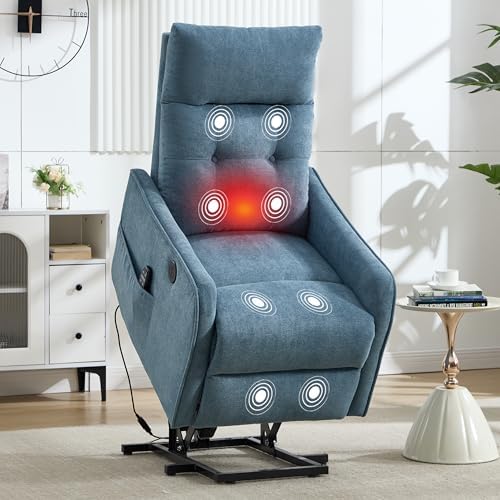
If the measurements point clearly toward the small end of the range, look at petite lift chairs, which use a lower and shallower seat rather than a scaled-down version of a standard frame.
Tall Users and Wide Users
At the other end, tall frames raise the seat height and deepen the seat, and wider or heavy duty frames raise both the seat width and the stated capacity. Those are separate axes: a tall person is not necessarily a heavy one, and the specifications are listed independently. Our heavy duty guide covers the capacity side.

Do Not Forget the Room
Two more measurements belong on the list, and both concern the house rather than the person. Measure the wall clearance the chair needs to recline, which the listing states, and measure the narrowest doorway or hallway turn the chair must pass through on delivery day.
Wall-hugger designs slide forward as they recline and need only a few inches behind them; traditional frames can need a foot or more. If the chair is going against a wall in a small room, that specification can rule out otherwise suitable models.
A Note on Getting Advice
Measuring for a chair is practical work, but how someone stands up is not always a measurement question. If you are unsure what fits your situation, ask your doctor or an occupational therapist. Occupational therapists commonly help families work out seat heights and transfers at home and can watch the person move in a way a specification sheet cannot capture.
Frequently Asked Questions
What size lift chair do I need for a five foot two person? Most likely a petite frame, but confirm it with the four seated measurements rather than height alone, since leg length and torso length vary a good deal between people of the same height.
How do I measure seat depth? Sit upright on a firm chair, measure from the back of the hip to the back of the knee, then subtract roughly two inches so the seat edge does not press behind the knee.
Should I size up or down if I am between two chairs? Down on depth. A seat that is slightly too shallow can be improved with a back cushion, while a seat that is too deep leaves the lower back unsupported and cannot be corrected.
Does the user height range in the listing matter? It is a useful cross-check, not a substitute for measuring. Two people of the same height can need different seat depths, so use the range to confirm rather than to decide.
How much wall clearance does a lift chair need? It depends on the frame. Wall-hugger models often need only a few inches, traditional frames can need a foot or more, and the figure appears in the specifications.
Do cushions compress enough to change the seat height? Yes, which is why a chair listed slightly above your floor to knee measurement often sits correctly once occupied.
What if the person’s weight is close to the chair’s capacity? Choose a model with clear headroom above their weight. The lift action places the greatest load on the mechanism, so the rating should not be approached in daily use.
The Bottom Line
Four seated measurements decide whether a lift chair works: floor to knee for seat height, hip to knee minus two inches for seat depth, seat to shoulder for back height, and hip width plus clearance for seat width. Compare them against the listed specifications, cross-check the user height range and weight capacity, and measure the wall clearance and doorway before ordering. Then move on to features with our lift chair recliner guide.