Last updated: August 20, 2026
The moment a shower chair or a transfer bench goes into a bathroom, the fixed overhead shower head becomes a problem. It sprays at standing height, past a seated user, onto the wall behind them. A handheld shower head on a long hose is the small, inexpensive change that makes the seat actually usable, and it is often the piece people forget to buy.
This guide covers the features that matter when a handheld unit is being used from a seated position or by someone with limited grip, how the mounting options differ, and what to check before ordering. It applies whether the user is showering independently or with help.
This article contains affiliate links. If you buy through them, we may earn a commission at no extra cost to you. Learn more.
Quick Answer
What should a handheld shower head for elderly users have?
- A long hose, commonly 72 inches or more, so it reaches comfortably to a seated position at the far end of a bench.
- A pause or on and off control on the handle itself, so the water can be stopped without reaching for the valve.
- A lightweight handle with a grippy, textured surface, and a slide bar or adjustable bracket so the head can be parked at seated height.
Bottom line: hose length, a control on the handle, and a low mounting point are what make a handheld unit work for a seated user.
Why a Handheld Head Changes a Seated Shower
A fixed head assumes a standing body. Sitting drops the head and shoulders by a foot or more, which means the spray arrives at chest height at best and misses entirely at worst. Rinsing shampoo then requires standing up, which is exactly what the seat was bought to avoid.
A handheld head puts the water where the user points it, which also means less time spent under a stream while balancing. For a caregiver assisting, it means being able to rinse one area at a time without the person having to turn repeatedly.
Hose Length Is the First Specification
Measure from the shower outlet to the furthest point the user will sit, then add slack for movement. On a walk-in shower with a chair, a 60 inch hose is often enough. With a transfer bench spanning a tub, the far end of the seat can be several feet from the outlet, and 72 inches or longer is usually the sensible choice.
Too long is a minor nuisance, too short is a daily problem. Hoses are also sold separately, so a good head with a short hose can often be paired with a longer one rather than being ruled out.
Hose Material and Kinking
Stainless steel braided hoses resist kinking better than plain plastic ones and tend to last longer in daily use. A hose that kinks reduces flow and, more practically, becomes stiff and awkward to handle with one hand, which matters when the other hand is holding a grab bar.
Controls on the Handle
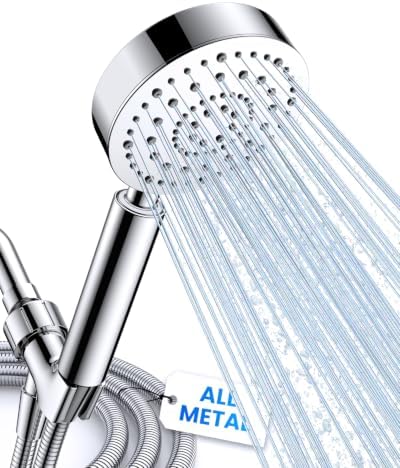
A pause button or an on and off switch on the handle lets the user stop the water while soaping without touching the main valve. That is useful for anyone, and genuinely important for a seated user who cannot easily reach the valve, or for someone who wants to control when the water is running during assisted washing.
Note the difference between a true shut-off and a pause. A pause trickle keeps the mixed temperature set at the valve, so the water comes back at the same temperature. A full shut-off at the handle can send the first burst back at a different temperature on some plumbing systems, which is worth knowing before it happens.
Grip, Weight and Spray Settings
| Feature | What to look for |
|---|---|
| Handle weight | Lighter units are easier to hold through a full shower |
| Grip surface | Textured or rubberized, usable with wet soapy hands |
| Spray settings | A gentle setting matters more than a long list of modes |
| Setting control | A dial or lever that turns easily beats a stiff twist collar |
| Head size | Larger heads are heavier; a moderate face is easier to aim |
| Finish | Should match existing fittings if appearance matters in the room |
Mounting: Bracket, Slide Bar or Both
The cheapest handheld units replace the existing head with a bracket at the original height, which is fine if the head is only ever held. If it needs to be parked where a seated user can reach it, that bracket is too high, and the answer is either a low secondary bracket or a slide bar.
A slide bar lets the head park anywhere along its length, which suits a household where one person sits and another stands. Slide bars need fixing to the wall, so the same backing question applies as with a grab bar, and in a rented home an adjustable bracket on the existing arm may be the simpler route.

Diverters and Dual Heads
Dual systems keep a fixed overhead head and add a handheld unit on a diverter, so the shower works normally for everyone else and switches to handheld when needed. In a shared bathroom that is usually the arrangement that keeps everyone happy.

Water Temperature and Seated Users
A seated person cannot step out of a stream that suddenly runs hot, so temperature control deserves a moment. A handle control lets the water be paused rather than redirected, and pointing the head away before restarting is a simple habit worth building into the routine.
If the home’s water temperature swings when another tap is used, that is a plumbing question rather than a shower head one. A licensed plumber can advise on the options for the specific system, and it is worth raising rather than working around.
Where the wider question is whether sitting and rinsing independently still works, that goes beyond hardware. If you are unsure what fits your situation, ask your doctor or an occupational therapist.
Installation and Fit
Most handheld heads thread onto the standard shower arm, and installation is usually a matter of unscrewing the old head, cleaning the threads, wrapping thread tape, and hand tightening the new fitting. No specialist tools are typically needed for the head itself.
Slide bars and secondary brackets are a different job, since they fix into the wall. That raises the same question as any other bathroom wall fixing: know what is behind the surface, and involve a professional where the wall build-up is unknown or where the shower is a solid surround.
Common Mistakes
- Buying a short hose. Measure to the furthest seated position and add slack rather than guessing.
- Choosing a heavy metal handle. A unit that feels solid in the hand at the store feels heavy after five minutes of holding it.
- Leaving the bracket at standing height. A seated user needs somewhere to park the head within reach.
- Prioritizing spray modes. One comfortable, gentle setting is worth more than eight aggressive ones.
- Fixing a slide bar without checking the wall. The backing question is the same as for a grab bar.
- Forgetting the shared user. A diverter setup keeps the shower normal for everyone else in the house.
Frequently Asked Questions
How long should the shower hose be? Measure from the outlet to the furthest seated position and add slack. Around 60 inches often covers a shower chair, while a transfer bench across a tub usually calls for 72 inches or more.
What is a pause button on a shower head? A control on the handle that cuts the flow to a trickle without touching the main valve, so the mixed temperature stays set. It is one of the more useful features for a seated user.
Can I install a handheld shower head myself? The head itself usually threads onto the existing shower arm and needs no specialist tools. A slide bar fixes into the wall, so that part is a different job with the usual backing question.
Do handheld shower heads reduce water pressure? A long or kinked hose can affect flow. A braided stainless hose that resists kinking helps, and cleaning limescale from the head face restores flow more often than people expect.
What if the shower is shared with someone who stands? A diverter system keeps a fixed overhead head alongside the handheld unit, or a slide bar lets the head park at whichever height suits the person using it.
Is a metal or plastic handle better? Plastic handles are lighter and easier to hold for a full shower, which usually outweighs the more solid feel of metal in this situation. Look for a textured grip either way.
Does a handheld head work with a shower chair and a grab bar? Yes, and that combination is the usual setup. Plan the park position and the bar position together so both are within reach from the seat.
The Bottom Line
A handheld shower head is the cheapest change that makes a seated shower work properly. Get the hose length right for the furthest seated position, insist on a control at the handle, choose a light textured grip over a heavy one, and give the head somewhere to park within reach of the seat. Paired with a chair or bench and a grab bar, it completes the setup described in our shower safety guide.