Last updated: August 20, 2026
Some links on this page are affiliate links. If you buy through them we may earn a commission at no extra cost to you. See our affiliate disclosure.
Standing up from a toilet is the most repeated difficult movement in the house. It happens several times a day, it starts from a seat that is lower than most chairs, and the surrounding floor is often the smallest and most cluttered patch of space in the home. It is no surprise that this is where families most often start looking for support.
The complication is that toilets frequently sit in a spot with no usable side wall, which rules out the obvious answer before you begin. This guide covers all the toilet support options, wall mounted and otherwise, and how to decide between them based on the layout you actually have.
Quick Answer
Which grab bar works best beside a toilet?
- If there is a side wall within reach, a horizontal or angled wall mounted bar is the strongest and tidiest answer.
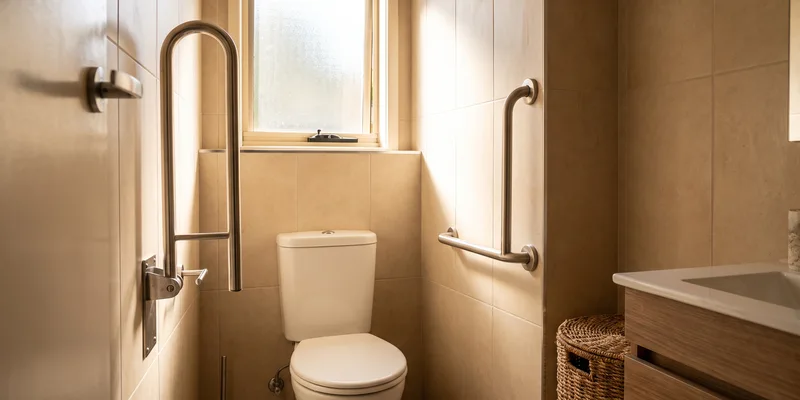
- If there is no side wall, a flip up bar mounts to the wall behind the toilet and folds away when it is not needed.
- If neither wall works, a freestanding toilet safety frame stands on the floor and needs no wall contact at all.
- Two supports, one on each side, suit anyone who pushes up with both arms rather than pulling with one.
Bottom line: the layout of the walls around the toilet decides the product, so measure before you shop.
What the Sit to Stand Movement Needs
Rising from a seated position is a push and a pull at the same time. The legs push, the arms either pull forward and up on something ahead or push down on something beside. Which of those a person does naturally determines whether they want a bar to grip or an arm to press on, and that is the first thing to observe.
Someone who pulls wants a bar within easy reach of the hand, often angled so the wrist stays comfortable as the hand rises. Someone who pushes wants a horizontal arm at roughly forearm height that takes downward force, which is what a toilet safety frame provides on both sides.
Height Matters as Much as the Bar
If the toilet itself is low, a bar is solving only part of the problem. Raising the seat shortens the distance the body has to travel, and pairing a modest riser with a support often works better than either alone. Our guide to the raised toilet seat covers how to choose the height.
The Options, by Wall Layout
Rather than ranking products, sort them by what your bathroom offers. Almost every toilet falls into one of the situations below.
A Side Wall Within Reach
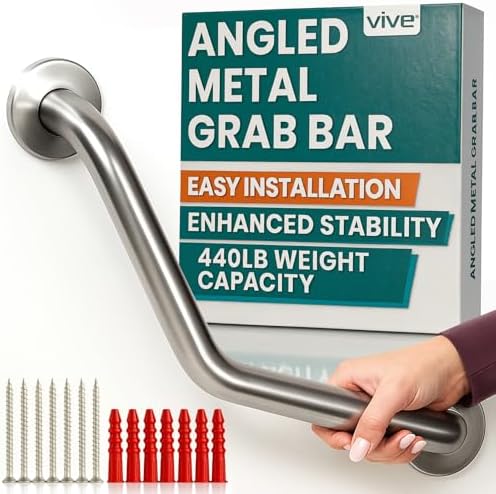
This is the easy case. A horizontal or angled bar mounted on the side wall gives a strong, permanent handhold that stays out of the way. Angled versions follow the arc of a rising hand, which many people find more comfortable at the top of the movement than a strictly horizontal bar.
No Side Wall, but a Wall Behind
A flip up or fold down bar mounts to the wall behind the toilet, swings down into position for use, and folds up vertically afterwards. Because all the load lands on one mounting plate, this is the installation where solid framing or proper blocking matters most, and where the stated weight rating is worth reading carefully.

No Usable Wall at All
A freestanding toilet safety frame stands on the floor around the toilet with arms on both sides, or attaches to the toilet’s existing seat bolts. It needs no wall, it usually adjusts for height and width, and it gives support on both sides, which suits people who push up with both arms. Our guide to toilet safety rails and frames compares the versions.

A Bar With a Second Function
Some bars combine a support with a toilet paper holder or a small shelf, which appeals in bathrooms where wall space is genuinely scarce. Check that the load rating applies to the bar itself and that the accessory does not sit where a hand would naturally land.

What the ADA Standard Says About Toilet Grab Bars
The ADA Standards for Accessible Design cover public and commercial facilities rather than homes, but they are the clearest published reference and manufacturers build to them. For a water closet, the standard specifies a side wall grab bar at least 42 inches long, positioned no more than 12 inches from the rear wall, and a rear wall grab bar at least 36 inches long.
It also specifies the top of the gripping surface 33 to 36 inches above the floor, with 1 and 1/2 inches of clearance to the wall. Very few home bathrooms have the wall space for the full arrangement, and that is fine. Use the numbers as a reference point, and see our detailed breakdown of ADA grab bar height.
Adapting the Numbers at Home
The published heights assume an average adult and a standard toilet. A raised seat changes the geometry, and so does the height of the person. If you are unsure what fits your situation, ask your doctor or an occupational therapist, who can watch the movement in the actual bathroom before anything is drilled.
Comparing the Toilet Support Options
| Option | Best where, and what to check |
|---|---|
| Wall bar, horizontal | Side wall within reach; simplest to mount, good for steadying |
| Wall bar, angled | Side wall within reach; suits the arc of a rising hand |
| Flip up bar | No side wall; needs solid backing behind one plate, check the rating |
| Toilet safety frame | No usable wall; support on both sides, check floor clearance |
| Seat mounted rail | Attaches to the toilet’s seat bolts; check it fits your toilet shape |
| Vertical bar | Where the movement is more of a pull up than a push; needs a tall clear wall |
Common Mistakes Beside the Toilet
The most frequent is mounting the bar too far back. A bar level with the middle of the toilet is behind the hand at the moment the person is actually rising, and it goes unused. Watch where the hand reaches during a real attempt, and mark that spot before drilling.
The second is relying on a towel bar or the toilet paper holder, both of which get grabbed in this position constantly and neither of which is built for it. If one of them is already showing movement in the wall, that is a clear sign of where a proper bar belongs.
Forgetting the Floor
A support helps only if the footing under it is sound. A loose mat, a slippery tile, or a cluttered corner undermines the best mounted bar. Clearing the floor around the toilet is free, and it belongs in the same afternoon as the installation.
Frequently Asked Questions
How high should a grab bar be next to a toilet? The ADA standard for public facilities specifies the top of the gripping surface 33 to 36 inches above the floor. At home, adjust to the person and remember that a raised toilet seat changes the geometry of the movement.
What if there is no wall beside the toilet? A flip up bar mounted on the wall behind, or a freestanding toilet safety frame that stands on the floor, both solve this. The frame also gives support on both sides, which suits people who push up with both arms.
Should a toilet grab bar be horizontal, angled, or vertical? Angled bars suit the arc of a rising hand and are a common choice, horizontal bars are simpler and good for steadying, and vertical bars suit a pulling movement. Watching the actual movement is the best way to decide.
How far from the toilet should a grab bar be? Close enough to reach without leaning. The ADA standard positions the side wall bar no more than 12 inches from the rear wall in public facilities, which is a useful starting reference for the front to back position at home.
Are toilet safety frames sturdy enough? Quality frames publish a weight rating and are widely used, and the practical checks are that all legs sit flat on the floor and the height is set so the arms take a comfortable downward push.
Can I install a grab bar on the wall behind the toilet? Yes, and that is exactly where flip up bars mount. Because the load concentrates on one plate, that wall needs solid framing or blocking, or heavy duty anchors rated for the job.
Do I need a bar on both sides of the toilet? Not always, but two supports suit anyone who pushes up with both arms rather than pulling with one, which is why toilet safety frames are so widely used.
Is a raised toilet seat better than a grab bar? They solve different halves of the problem, and many households use both. A riser shortens the distance the body travels; a bar gives the hands something to work against.
The Bottom Line
Toilet support comes down to your walls: a side wall gets a horizontal or angled bar, a rear wall gets a flip up bar, and no usable wall gets a freestanding frame. Watch whether the person pulls or pushes to rise, place the support where the hand actually reaches, and consider pairing it with a raised seat. See our grab bar buying guide for the wider picture and where to place grab bars for the layout.