Last updated: August 20, 2026
Bath mats look like the least interesting purchase in a bathroom, and they are the one people most often get wrong. The mat inside the tub and the mat on the floor outside it are doing completely different jobs, need completely different construction, and a soft absorbent rug placed where a suction mat should go can end up being the least stable thing in the room.
This guide separates the two, covers which surfaces suction mats actually stick to, and explains why the backing on an outside mat matters more than anything printed on the front of it.
This article contains affiliate links. If you buy through them, we may earn a commission at no extra cost to you. Learn more.
Quick Answer
Which non slip bath mats should you buy?
- Inside the tub or shower: a rubber or PVC mat with suction cups and drain holes, sized to cover where the feet actually stand.
- Outside on the floor: a mat with a bonded rubber or latex backing that grips the floor, not a loose woven rug.
- Suction cups only hold on smooth, non-porous surfaces. On a textured or non-slip shower floor they will not grip, and an adhesive strip or tread is the alternative.
Bottom line: two mats, two jobs, and the shower floor texture decides whether suction is even an option.
Inside and Outside Are Different Products
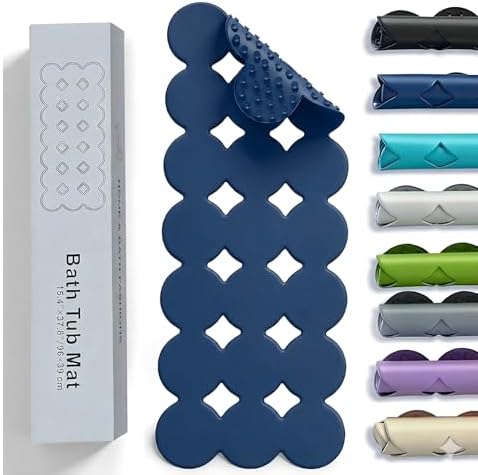
The mat inside the tub sits on a wet, smooth, sloped surface and needs to stay put while someone stands, turns, and shifts weight on it. That calls for a rubber or PVC mat with suction cups on the underside and holes through it so water drains rather than pooling underneath.
The mat outside sits on a bathroom floor and catches feet coming out of the shower, still wet. It needs a backing bonded to the mat that grips tile, and enough absorbency to stop a puddle forming. Those two requirements have almost nothing in common, which is why one mat cannot cover both.
Suction Mats and What They Stick To
Suction cups need a smooth, non-porous, continuous surface to seal against. A standard acrylic or enameled tub floor is ideal. A shower tray with a molded anti-slip texture, a stone-effect surface, or a tiled floor with grout lines running through it is not, because the cups cannot form a seal across the texture or the grout.
Check the shower or tub floor before buying. If you can run a finger across it and feel a pattern, suction is unlikely to hold, and an adhesive-backed mat or a set of adhesive treads is the option that will.
Sizing and Coverage
Buy for where the feet stand, not for the look of the tub. Extra long mats exist for full length tubs, and they matter more when someone showers standing at one end and steps in at the other. A mat that covers half the standing area leaves the other half exactly as it was.
Textured Shower Floors and Adhesive Options
Where suction will not work, adhesive treads and adhesive-backed mats bond directly to the floor. They are effectively permanent, they cannot be lifted out for cleaning, and removing them later can leave residue, so they suit a bathroom that is not going to change.
Adhesive strips are the lower commitment version: individual treads laid where the feet land rather than a full mat. They also let you cover an irregular or shaped shower floor that no rectangular mat would fit.

The Mat Outside the Shower
This is the one most households get wrong, because a decorative bathroom rug is what tends to be in the cupboard already. A loose woven rug on tile can slide under a wet foot, and the classic curling corner is a trip point in exactly the spot where someone is stepping out with wet feet.
Look for a bonded rubber or latex backing that covers the whole underside, a mat that lies genuinely flat with no curl at the corners, and a size that covers the landing area. Chenille and memory foam mats can work well provided the backing is bonded rather than a printed dot pattern.

Choosing by Surface
| Surface | What works |
|---|---|
| Smooth acrylic or enameled tub | Suction cup mat with drain holes |
| Textured shower tray | Adhesive mat or adhesive treads |
| Tiled shower floor with grout lines | Adhesive treads, since cups cannot seal over grout |
| Stone or stone-effect base | Adhesive treads, or a mat rated for the surface |
| Bathroom floor outside | Bonded rubber or latex backed mat |
| Floor under a transfer bench | Backed mat where the outer legs and feet land |
Cleaning and Replacing
Mats need lifting and drying regularly. A suction mat left in place permanently traps water underneath, which is how mildew starts and how the cups lose their grip. Lift it after showers, rinse both sides, and let it dry properly at least a few times a week.
Replace a mat when the cups no longer hold after cleaning, when the surface has gone slick or shiny, or when the backing on an outside mat starts separating from the fabric. Mats are consumable items rather than permanent fittings, and a worn one gives false confidence.
What Machine Washing Does to Backing
Many outside mats are machine washable, but hot washes and tumble drying degrade rubber and latex backings over time. Follow the care label, wash cool, and air dry where the label allows it. A backing that has gone hard and cracked no longer grips the floor.
Where Mats Fit in the Wider Setup
A mat handles the surface underfoot. It does nothing about balance, about the step over a tub rim, or about standing for the length of a shower, and it is worth being clear about that rather than assuming the mat has covered the bathroom.
The usual companions are something to sit on and something solid to hold. Our guides on shower chairs and shower grab bars cover both, and the whole room is pulled together in our bathroom safety checklist.
Common Mistakes
- Buying a suction mat for a textured floor. The cups cannot seal, and the mat will move.
- Using a decorative rug outside the shower. Without a bonded backing it can slide under a wet foot.
- Choosing a mat that is too short. Cover where the feet actually stand, including at both ends of a long tub.
- Leaving the mat down permanently. Water trapped underneath causes mildew and kills the suction.
- Hot washing a backed mat. Heat degrades rubber and latex backings faster than anything else.
- Assuming the mat is the whole answer. It handles the surface, not balance or getting in and out.
When to Ask for Guidance
If the concern is unsteadiness rather than a slippery surface, a mat is only part of the picture. Occupational therapists commonly look at a whole bathroom and suggest the combination that fits the person rather than a single product. If you are unsure what fits your situation, ask your doctor or an occupational therapist.
Frequently Asked Questions
Do suction bath mats work on textured shower floors? No. Suction cups need a smooth, non-porous surface to seal against. On a textured tray or over grout lines they will not hold, and adhesive treads are the alternative.
What is the best mat to put outside the shower? One with a bonded rubber or latex backing across the whole underside, sized to cover where feet land, and flat enough that the corners do not curl.
How often should a bath mat be replaced? When the cups stop holding after cleaning, when the top surface goes slick, or when an outside mat’s backing starts separating or cracking. They are consumable items rather than permanent fittings.
Can bath mats be machine washed? Many can, but heat degrades rubber and latex backings. Follow the care label, wash cool, and air dry where permitted so the backing keeps its grip.
Are adhesive shower treads better than a mat? They are the answer where suction cannot grip, and they suit irregular shower floors. The trade-off is that they are effectively permanent and cannot be lifted for cleaning.
Do I need a mat if there is already a shower chair? The chair handles standing; the floor still gets stepped on getting in and out. A backed mat outside is worth having either way.
Why does mildew keep appearing under the mat? Because the mat stays down between showers and traps water. Lifting and drying it regularly is the fix, and it also keeps the cups gripping.
The Bottom Line
Buy two mats, not one. Inside, a suction mat with drain holes if the floor is smooth, or adhesive treads if it is textured. Outside, a mat with a bonded rubber backing sized to the landing area. Lift and dry both regularly, replace them when the grip goes, and see them as one layer of a bathroom setup rather than the whole of it. The rest of the room is covered in our shower safety guide.