Last updated: August 20, 2026
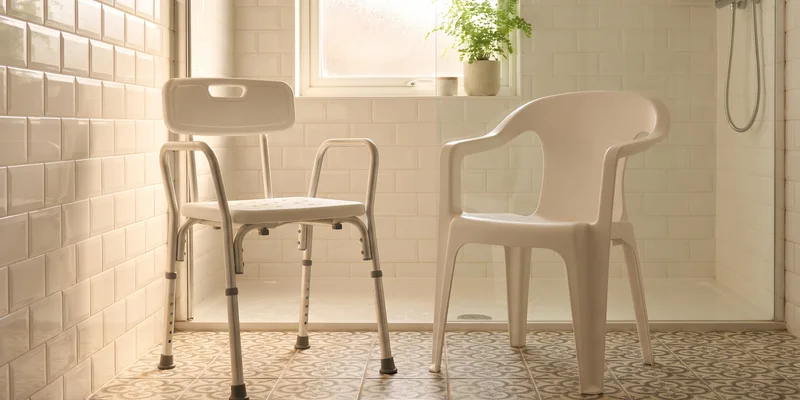
Almost every shower chair sold today is one of two things: an aluminum tube frame with a molded plastic seat bolted on top, or a single piece of molded plastic with plastic legs. Listings describe both as durable and rust proof, which is true enough that it does not help anyone choose.
The real differences show up in weight, in how the height adjusts, in how each one behaves once soap and hard water get involved, and in what happens when a part eventually breaks. This comparison lays those out so the choice comes down to the bathroom rather than the marketing copy.
This article contains affiliate links. If you buy through them, we may earn a commission at no extra cost to you. Learn more.
Quick Answer
Aluminum or plastic: which shower chair frame is better?
- Aluminum frames are lighter for their strength, adjust in height through push button legs, and take apart for storage or travel.
- All plastic chairs have no metal to corrode at all, wipe clean easily, and often feel more solid because there are fewer joints to loosen.
- Aluminum wins where the chair moves in and out or needs fine height adjustment; plastic wins where it stays put and cleaning matters most.
Bottom line: both survive a wet room; choose on weight, adjustment, and how often the chair has to move.
What Each Construction Actually Is
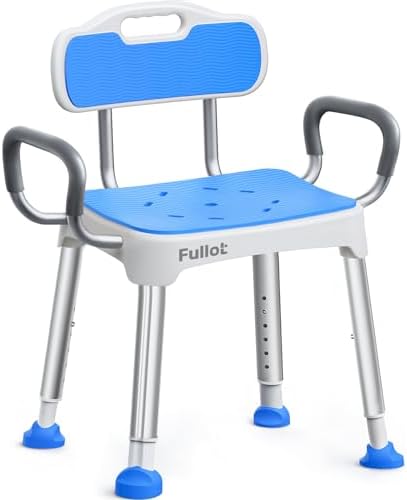
An aluminum chair is a set of anodized tube legs, usually telescoping with spring loaded pins, carrying a molded plastic seat and sometimes a plastic back and arms. The metal does the structural work and the plastic does the sitting. Most adjustable chairs on the market are built this way.
An all plastic chair is molded in larger sections, with the legs either part of the same molding or heavy plastic tubes that slot in. There is less hardware, fewer holes for water to enter, and generally a chunkier look, though the height range is often narrower or fixed.
Hybrids Are Common
Plenty of chairs blur the line: plastic legs with a metal cross brace, or aluminum legs with a full plastic shell rather than a bolted seat. When comparing, look at what is holding the load rather than what the listing headline says, and check whether any metal hardware is stainless.

Weight, Handling, and Storage
Aluminum is the lighter of the two for a given strength, which matters in exactly one scenario: when the chair has to be lifted in and out of a tub, carried to a different bathroom, or packed for a trip. Many aluminum models also break down into a few flat pieces without tools.
All plastic chairs are usually heavier and rarely dismantle. In a bathroom where the chair simply stays where it is, that is irrelevant and sometimes an advantage, since a heavier chair shifts less when someone leans on the edge of the seat.
Travel and Second Bathrooms
If the chair follows the user between a home and a family member’s house, aluminum is the practical answer, and some models are designed specifically to fold flat for a car. Our travel shower chair guide covers the models built around that.
Height Adjustment
This is where the two diverge most. Aluminum telescoping legs adjust in fine steps across a wide range, and that adjustment is the single most useful feature on a shower chair because it decides how hard standing up feels.
All plastic chairs sometimes offer adjustment through slotted legs and sometimes offer none at all. A fixed height chair that happens to suit the user is fine; a fixed height chair that does not is a permanent compromise. Our guide to setting the legs covers why the range matters.

Side by Side
| Factor | Aluminum frame | All plastic |
|---|---|---|
| Weight to lift | Lighter, easier to move | Heavier, tends to stay put |
| Height adjustment | Fine steps, wide range | Limited or fixed |
| Corrosion | Aluminum does not rust, check hardware | Nothing to corrode |
| Cleaning | Joints and pin holes need attention | Wipes down in one pass |
| Storage and travel | Often breaks down flat | Rarely dismantles |
| Spare parts | Tips, seats, and pins widely sold | Fewer separate parts available |
Cleaning and Hygiene
Plastic has the simpler surface story: one continuous shell, no pin holes, and nowhere for soap residue to hide in a joint. That is a real advantage in a shared bathroom where the chair gets cleaned often and quickly.
Aluminum is not difficult to keep clean, but it has more places to check. Adjustment holes, the gap where the seat bolts to the frame, and the inside of the leg ends all collect residue and hold water. Our cleaning guide covers the specific spots on each construction.
Hard Water
Mineral scale builds up around joints and inside adjustment holes on an aluminum frame, which is what makes pins stiff over time. On a plastic chair, hard water mainly leaves surface deposits that wipe off. Neither is a durability problem if the chair gets rinsed and dried.
Strength, Capacity, and Repair
Neither material is automatically stronger. Stated weight capacity is a property of the specific model and its bracing, not of the category, so read it from the listing rather than assuming metal beats plastic. Wide seat and heavy duty versions exist in both constructions.
Repairability differs though. Aluminum chairs are usually made from parts that are separately available: tips, seats, backs, arms, and pins. All plastic chairs tend to be replaced rather than repaired when something cracks. Our guide to replacement parts covers what is normally on offer.
Which One for Which Bathroom
Choose aluminum when the height needs tuning, when the chair moves in and out of a tub, when it travels, or when you want to be able to buy a spare seat or set of tips in a few years. That covers most households.
Choose all plastic when the chair stays in one place, when several people use the same bathroom and cleaning speed matters, or when you simply prefer a shape with fewer joints. In either case, the support level you need matters more than the material. If you are unsure what fits your situation, ask your doctor or an occupational therapist.
Frequently Asked Questions
Does an aluminum shower chair rust? Aluminum itself does not rust. What can corrode is any steel hardware holding the seat, back, or arms, so listings that specify stainless or rust resistant fittings are worth noting.
Are plastic shower chairs strong enough? Capacity depends on the model and its bracing rather than on the material. Read the stated figure on the listing, as covered in our capacity explainer.
Which is easier to clean? All plastic, generally, because there are fewer joints and no pin holes to trap residue. Aluminum chairs are not hard to clean, they just have more specific spots to check.
Which is better for a bathtub? Aluminum, in most cases, because it is lighter to lift over the rim and adjusts finely to a tub floor that sits higher than a shower tray.
Can either type be taken apart for storage? Aluminum models frequently break down into flat pieces without tools; all plastic chairs usually do not. That matters most for travel or a small bathroom with no storage.
Which lasts longer? Both last for years if rinsed and dried. Aluminum chairs stay serviceable longer in practice, because tips, seats, and pins can usually be replaced individually.
Is there a difference in how they feel to sit on? Slightly. A single molded plastic shell often has a contoured seat and feels more solid underneath, while a bolted seat on a tube frame is flatter and lighter.
The Bottom Line
Aluminum and plastic both survive a wet room, so the choice comes down to how the chair is used. Aluminum for adjustability, lower weight, travel, and replaceable parts. All plastic for a chair that stays in one place, cleans in one pass, and has nothing metal to worry about. Read the stated weight capacity from the specific listing either way, and pick the support level first. The formats themselves are compared in our shower chair guide.
Related Reading
- Best Shower Chair: Which Type Fits Your Bathroom and Needs
- Waterproof Shower Chair: Materials That Survive Daily Use
- Teak Shower Bench: Warmth, Drainage, and Upkeep
- Adjustable Height Shower Chair: Setting the Legs Right
- Portable Shower Chair for Travel: Folding and Packing
- How to Clean a Shower Chair Properly