Last updated: August 20, 2026
Dual motor is one of those specifications that sounds like an upgrade without explaining what it upgrades. Two motors instead of one reads as more power, which is not what it means at all. Both single and dual motor chairs lift the same way and hold the same rated loads. What changes is control: which parts of the chair can move without dragging the other parts along with them.
This guide explains what the second motor actually drives, when that independence is worth having, and when it is a feature that will be used twice and then forgotten. It also covers the practical consequences, because a second actuator adds weight, adds handset buttons, and adds a component that can eventually need servicing.
This article contains affiliate links. If you buy through them, we may earn a commission at no extra cost to you. Learn more.
Quick Answer
What does a dual motor lift chair do differently?
- One motor drives the backrest and the other drives the footrest, so the two move independently rather than together along a single linked arc.
- That is what makes legs-up-back-upright possible, and it is what allows the deep or flat recline positions that single motor chairs cannot reach.
- It does not mean more lifting power: the lift action and the listed weight capacity are separate specs on both types.
Bottom line: dual motor buys posture control, not strength, so choose it if the chair is lived in rather than visited.
What the Second Motor Actually Drives
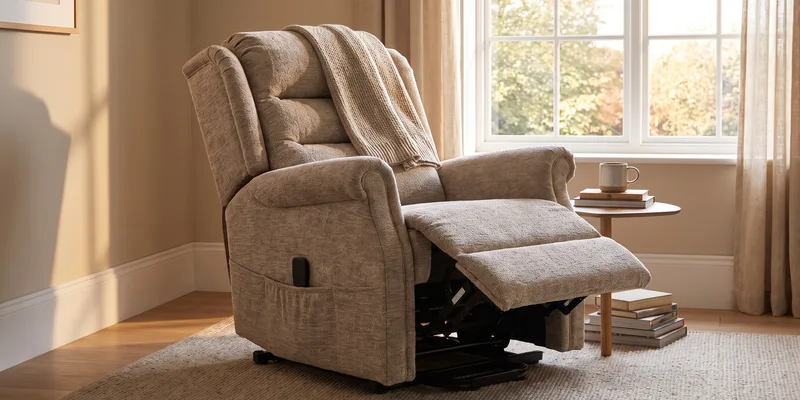
In a single motor chair, one actuator moves a linkage that carries both the backrest and the footrest. Recline the back and the legs come up with it, in a fixed relationship set by the mechanism. A dual motor chair splits that job: one actuator for the back, one for the footrest, each with its own pair of buttons on the handset.
The result is a chair that can hold combinations the linked version cannot. Legs elevated with the back upright is the obvious one. So is a slight back recline with the footrest still down, which is a position people use far more than they expect once it is available.
Dual Motor and Infinite Position Are the Same Thing
These two terms describe the same chairs from different angles. Dual motor names the hardware; infinite position names the result, which is that the chair can stop anywhere in its range rather than at preset stops. If a listing uses one term you can generally assume the other, though it is worth confirming rather than inferring. Our guide to the infinite position lift chair approaches the same category from the position side.
When the Independence Is Genuinely Useful
The second motor earns its keep when someone is in the chair for long stretches. Sitting for hours means shifting position repeatedly, and small independent adjustments to back angle or leg height are exactly what a linked arc cannot provide. That is the clearest case for dual motor, and it is the one most owners describe.
It also matters when the chair doubles as a bed. Reaching a flat or nearly flat position requires the back to travel much further than the footrest linkage allows on a single motor model, so lay-flat and sleeper chairs are essentially always dual motor.
Comfort, Not Treatment
Product listings sometimes attach health language to elevated-leg positions. That is not something a chair specification can support, and whether a particular position suits a particular person is a clinical question. If leg elevation has come up for medical reasons, ask your doctor or an occupational therapist rather than choosing a chair on that basis.
Dual Motor Lift Chairs by Situation
The Broad Starting Point
A standard dual motor lift chair with a four-button handset, a padded seat, and a conventional width covers the range most households use. It handles upright sitting, independent leg elevation, deep recline, and everything in between without any specialized feature.

When the Chair Sits Near a Wall
Dual motor chairs recline further, which means they need more space behind them. Wall hugger versions solve this by sliding the seat forward as the back lowers, keeping the whole arc within a much smaller footprint. In a small living room this feature does more for usability than any other option on the list.

Higher Listed Capacity and Wider Seats
Heavy duty dual motor chairs come with reinforced frames, wider seats, and higher listed weight capacities. Capacity differs by model even inside one brand, so take the figure from the specific listing rather than a category assumption. Our article on lift chair weight capacity covers how those numbers are presented.

Long Frames for Taller Users
A taller user needs a longer footrest and a taller back to get any benefit from the independent motors, since a short footrest simply leaves the calves unsupported at any angle. Tall-specific models exist for exactly this reason and are worth filtering for rather than adjusting around.

Single Motor Against Dual Motor
| Aspect | Single motor | Dual motor |
|---|---|---|
| Back and legs | Move together on one arc | Move independently |
| Handset | Two buttons | Four buttons |
| Deepest recline | Television angle | Often flat or near flat |
| Clearance needed | Less | More unless wall hugger |
| Weight | Lighter to shift | Heavier, second actuator |
| Lifting action | Same | Same |
What the Second Motor Costs You
Weight is the main one. A second actuator, its mounting, and the heavier frame that supports the extra travel add real mass, and these chairs are awkward to move for cleaning or vacuuming behind. Check the shipping weight on the listing if the chair will ever need to be repositioned by one person.
Complexity is the second. Two motors mean two things that can eventually need service, and four handset buttons instead of two. Neither is a reason to avoid dual motor, but both belong in the decision, especially if the chair is for someone who wants the simplest possible control.
Power and Outages
Both motors run from household power, and a chair left reclined during an outage stays reclined. Most models include a battery backup that returns the chair to upright, typically running on ordinary batteries in a box behind the frame. Confirm it is included and check it occasionally, as our guide to lift chair battery backup explains.
Common Mistakes When Buying Dual Motor
Reading dual motor as extra lifting strength is the most common error. The lift action is driven the same way on both types, and the listed weight capacity comes from the frame and the rating on that specific model. A single motor chair with a higher listed capacity carries more than a dual motor one with a lower rating.
The second mistake is buying the mechanism and then placing the chair somewhere it cannot use it. A dual motor chair pushed tight against a wall reclines about as far as a two position model. Measure the clearance behind the intended position before ordering, or choose a wall hugger.
Assuming Dual Motor Means Lay Flat
Independent motors make a flat position possible, not guaranteed. Some dual motor chairs stop well short of horizontal. If sleeping in the chair is the reason for the purchase, look for a stated flat range on the listing, which our sleeper lift chair guide covers in more detail.
A Note on Getting the Right Chair
A lift chair is powered furniture rather than medical equipment, and choosing between single and dual motor depends on how long someone sits, how they stand up, and what the room allows, none of which a listing can see. If you are unsure what fits your situation, ask your doctor or an occupational therapist, who can watch an actual stand-up before anything is ordered.
Frequently Asked Questions
Is a dual motor lift chair more powerful? No. The second motor adds independent control of the footrest, not lifting strength. Rated weight capacity comes from the frame and the specific model, and it should be read from the listing rather than inferred from the motor count.
Is dual motor the same as infinite position? In practice yes. Dual motor describes the hardware and infinite position describes the resulting range, and chairs marketed under either term generally have both. Confirm on the listing rather than assuming.
Do dual motor chairs break down more often? There are more moving parts, which is a fair consideration, but both configurations are widely used and serviceable. What matters more is what the manufacturer’s warranty covers on the motors and handset and for how long.
How much space does a dual motor chair need behind it? More than a single motor model, because the back travels further. The listing usually gives a clearance figure, and wall hugger versions cut that requirement substantially.
Can you use only one motor at a time? Yes, that is the point of the design. The handset has separate buttons for the back and the footrest, so either can be adjusted without moving the other.
Are dual motor chairs harder to operate? They have four buttons instead of two. Most people adapt quickly, but a simpler two-button handset is genuinely easier for someone who prefers minimal controls.
What happens in a power outage? Most models include a battery backup that returns the chair to the upright position. Check that it is included and replace the batteries periodically rather than waiting to find out.
Does Medicare cover a dual motor lift chair? Coverage differs by plan and situation, and it generally relates to specific components rather than the whole chair. Check the current rules at medicare.gov and with the plan directly.
The Bottom Line
A dual motor lift chair buys posture control rather than power. If the chair is somewhere a person spends hours, changes position often, or sleeps, the independent back and footrest earn their weight several times a day. If the chair is used for an evening and then left, a single motor model does the same job with less mass and a simpler handset. Check clearance, listed capacity, and whether a flat position is actually stated. Our guide to choosing a lift chair size covers the measurements that come next.
Related Reading
- Best Lift Chair Recliner: How to Choose the Right One
- Infinite Position Lift Chair: Who Actually Needs One
- Two Position vs Three Position Lift Chairs Compared
- Sleeper Lift Chair: Chairs That Lie Fully Flat
- Lift Chair Weight Capacity Explained
- Lift Chair Battery Backup: What Happens in an Outage
- Power Lift Recliners: What to Check Before You Buy