Last updated: August 20, 2026
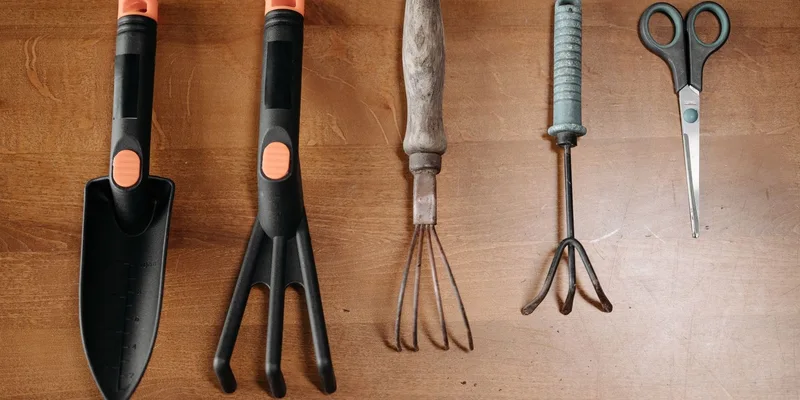
Gardening is usually the last hobby anyone wants to give up, and it is often given up for reasons that have nothing to do with interest. Kneeling becomes hard to get up from, a full watering can becomes too heavy, pruners need a squeeze the hand no longer has, and weeding at ground level means bending for an hour.
Every one of those is an equipment problem before it is anything else. This guide covers the tools built around them: long handles that remove the bend, grips and ratchets that reduce the squeeze, kneelers that give something to push up from, and the layout changes that bring the garden up to a workable height.
This article contains affiliate links. If you buy through them, we may earn a commission at no extra cost to you. Learn more.
Quick Answer
Which adaptive gardening tools make the most difference?
- Long-handled and telescopic tools remove the bend, which is the action that ends most gardening sessions early.
- Ratchet pruners and loppers cut in stages, so a stem that needs one strong squeeze becomes three light ones.
- A kneeler with side rails gives something solid to push up from, and flips over to become a low seat.
- Raised beds, tall planters, and a rolling seat bring the work up to a height that can be done sitting.
If you are unsure what fits your situation, ask your doctor or an occupational therapist before changing how you work in the garden.
Three Obstacles, Not One
Gardening difficulty almost always breaks down into reach, grip, and getting up and down. Reach is about bending and stretching to ground level. Grip is about squeezing, twisting, and holding a handle for a long time. Getting up and down is about the transition between standing and kneeling, which is a different problem from either.
The reason this matters is that the tools are not interchangeable. A beautiful set of ergonomic hand tools does nothing about kneeling, and a kneeler does nothing about a squeeze. Identify which of the three ends the session, and buy for that first.
Time Is the Fourth Factor
Most people can still do most garden tasks; what has changed is how long they can do them for. Splitting a job across three short sessions, keeping a seat nearby, and putting tools where they do not have to be fetched changes more than a purchase does. Equipment extends the session, it does not replace pacing.
Long-Handled and Telescopic Tools
Long-handled weeders, cultivators, bulb planters, and grabbers do one job: they let ground-level work happen from a standing position. Stand-up weeders are the clearest example, using a foot lever and a claw to pull a dandelion root out without anyone getting near the ground.
Telescopic handles are worth paying attention to because they suit more than one user and more than one task. Look at the locking mechanism rather than the extended length, since a twist lock needs wrist rotation and a lever clamp does not. Weight matters too, as a long aluminum handle is far easier to hold out than a long wooden one.

Handle Angle and Arm Support
Some tools add a forearm cuff or a second grip partway down the shaft, which shifts the load from the wrist to the forearm and stops the tool twisting in the hand. Angled or bent handles keep the wrist straighter through a digging or raking motion. Both are cheap features on ordinary tools rather than specialist equipment, so they are worth looking for on any replacement.

Cutting Without the Squeeze
Pruners are the tool most often abandoned first, because cutting a woody stem needs a firm, sustained squeeze at the exact moment the hand is least able to give one. Ratchet pruners solve this mechanically: the blade holds its position between squeezes, so a thick stem is cut in two or three light closes instead of one hard one.
Beyond ratchets, look at three things: the handle opening, since a pruner that opens too wide cannot be started by a small hand, a rolling handle that rotates with the fingers as they close, and total weight. Battery-powered pruners exist as well and remove the squeeze entirely, at the cost of weight in the hand and a charger to remember.

Kneelers, Seats, and Getting Back Up
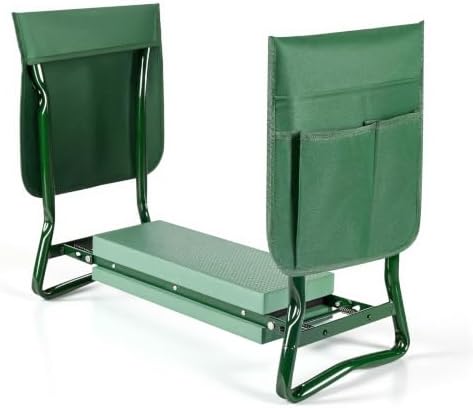
A garden kneeler with tall side rails is one of the best-value items in this category, because the rails give both hands something solid to push up from. Flipped over, the same frame becomes a low bench, so it does two jobs and folds flat for storage.
Check the frame material and the listed weight capacity in the product description rather than assuming, and look at how wide the feet are, since a narrow frame is less steady on soft ground. A thick foam pad matters more than it looks: a thin one compresses to nothing on gravel or a hard path.
Rolling Seats and Scoots
A wheeled garden seat lets someone work along a border while sitting, pushing along with their feet, usually with a tray underneath for tools. It suits flat, firm ground and level paths, and it is much less useful on a slope, on gravel, or on wet grass. Try it on the actual surfaces in the garden before assuming it will roll.
Bringing the Garden Up to Height
The most effective change is often not a tool at all. Raised beds, tall planters, and table-height growing troughs move the soil to somewhere it can be reached from a standing or seated position, which removes bending from the whole activity rather than one task within it.
Height and width are the two decisions. Waist height suits standing work, and roughly table height suits seated work with knees underneath, which needs a bed with an open frame rather than a solid box. Keep the width to about twice a comfortable arm reach if it can be worked from both sides, and about one reach if it stands against a wall.
Containers and Vertical Growing
Where a raised bed is too much, large containers on pot feet or a plant stand achieve much of the same thing, and pots on wheeled saucers can be moved without lifting. Vertical planters, wall pockets, and hanging systems with a pulley put growing space at chest height, which suits small yards and balconies as well as it suits limited bending.
Watering Without the Weight
A full watering can is one of the heaviest things anyone lifts in a garden, and it is lifted repeatedly and at arm’s length. Smaller cans filled part way, a lightweight hose on a reel near the beds, or a simple drip system on a hose timer each remove that load in a different way.
Hose weight varies enormously. Expandable and lightweight hoses are far easier to drag than reinforced rubber, and a wall-mounted reel near the working area saves walking as well as carrying. Tap turners, the same lever-style aids used on kitchen taps, make an outdoor faucet manageable when a round handle is not.
Comparing the Main Aids
| Aid | Obstacle it addresses | Check before buying |
|---|---|---|
| Long-handled weeder | Bending to ground level | Total weight and handle length |
| Telescopic tool set | Reach, shared use between people | Lock type: lever rather than twist |
| Forearm cuff handle | Wrist load and tools twisting | Cuff size and whether it detaches |
| Ratchet pruners | Sustained squeeze on woody stems | Handle opening width for small hands |
| Kneeler with rails | Getting down and back up | Pad thickness, frame width, stated capacity |
| Rolling garden seat | Standing for long periods | Wheel size and the actual ground surface |
| Raised bed or planter | Bending as a whole activity | Working height and reachable width |
| Lightweight hose or timer | Carrying water | Hose weight and reel position |
Practical Notes for the Garden Itself
Paths do as much work as tools. A firm, even surface that stays walkable when wet makes the difference between a garden that gets used and one that gets looked at, and loose gravel is the usual offender. Somewhere to sit within sight of the work, and a shaded spot for hot afternoons, keep sessions from being cut short.
Storage is the other quiet obstacle. Tools stored at the back of a low shed shelf cost a crouch and a stretch before any gardening begins, so hanging the frequently used ones at chest height near the door removes a task that nobody counts. A small wheeled cart or a bag with a shoulder strap saves carrying them out one at a time.
A Note on Working Comfortably
Gardening puts the body into positions that are held for a long time, and only the person doing it knows what feels manageable. If a particular movement has become painful, or if getting up from the ground has become difficult, that is worth raising with a doctor or an occupational therapist, who can suggest working positions and equipment suited to the individual situation rather than a general rule.
Frequently Asked Questions
What are ratchet pruners? Pruners with a mechanism that holds the blade position between squeezes, so a thick stem can be cut in two or three light closes instead of one strong one. They are the usual first upgrade when squeezing has become the obstacle.
Are long-handled tools worth buying? If bending is what ends a gardening session, yes. Stand-up weeders, long-handled cultivators, and bulb planters let ground-level jobs happen from standing. Check the weight, because a long handle held out from the body is tiring in itself.
What height should a raised bed be? Roughly waist height for standing work, and roughly table height with an open frame underneath for seated work so the knees fit. Keep the width within about two comfortable arm reaches if both sides are accessible.
Do garden kneelers help you get back up? That is the main reason to buy one with tall side rails: they give both hands something solid to push against. The same frame flips over into a low seat, which makes it useful twice.
What is the easiest way to water a garden without carrying cans? A lightweight hose on a reel near the beds, or a drip line on a hose timer. If cans are preferred, use a small one filled part way rather than a large one filled to the top.
Can gardening be done from a wheelchair or a seat? With the right layout, often yes. Table-height beds with open frames, firm level paths, and long-handled tools are the three things that make it workable, and an occupational therapist can advise on the specific setup.
What is a faucet turner? A lever-shaped grip that fits over a round tap handle and turns it with much less pinch and rotation. The same type used on kitchen taps works on an outdoor faucet.
Which single item helps the most? It depends which obstacle is in play, but for most households it is either a kneeler with rails or a pair of ratchet pruners, because those two address getting up and squeezing, which are the difficulties that stop a session soonest.
The Bottom Line
Decide whether reach, grip, or getting up and down is what ends the gardening, then buy for that one. Long handles and raised beds deal with reach, ratchet pruners and cuffed handles deal with grip, and a railed kneeler or rolling seat deals with the transitions. Firm paths, chest-height tool storage, and a seat within sight of the work quietly extend every session. For reaching in general, our guide to reacher grabbers explains what a reaching tool can and cannot do.