Last updated: August 20, 2026
A jar that will not open is a small problem with an outsized effect, because it turns a simple meal into something that needs another person. It is also one of the easiest problems in the kitchen to solve, since the difficulty is almost entirely mechanical: a lid needs a certain amount of twisting force, and the tools below supply it in different ways.
This guide covers the main types of jar opener for weak or stiff hands, explains which one suits which kind of difficulty, and notes the free techniques that solve a stuck lid before any tool is needed.
This article contains affiliate links. If you buy through them, we may earn a commission at no extra cost to you. Learn more.
Quick Answer
Which jar opener works best for weak or stiff hands?
- If the problem is grip, a rubber pad or a wide-handled clamp opener adds friction and leverage while the hand still does the turning.
- If the problem is turning force in the wrist, an under-cabinet opener holds the lid while both hands turn the jar.
- If neither hand can supply useful force, a battery-powered opener does the turning on its own.
- Match the tool to which part of the movement is difficult, not to how strong it looks.
Many stuck lids are a vacuum problem rather than a strength problem, and break loose with a tap or warm water.
The Types Compared
There are four practical categories, and they solve different halves of the same problem. Grip aids add friction, leverage tools multiply force, mounted openers remove one hand from the job entirely, and powered openers replace the movement. Most kitchens end up with two of them.
| Type | How it helps | Best when |
|---|---|---|
| Rubber grip pad | Adds friction so the hand does not slip on the lid | The grip slips but the wrist can still turn |
| Clamp opener with handle | Extends the lever arm so less hand force is needed | Grip is weak but one hand can hold the jar |
| Under-cabinet opener | Grips the lid so both hands can turn the jar | One hand cannot do a job on its own |
| Battery-powered opener | Turns the lid without any twisting from the user | Neither hand can supply useful turning force |
| Multi-opener tool | Handles ring pulls, bottle caps, and small twist tops | The difficulty is with several kinds of packaging |
Grip Pads and Cones
The simplest option is a textured rubber disc or cone that sits between the hand and the lid. It does nothing about strength, but it removes slipping, and slipping is what defeats a lot of lids. They are cheap, take no storage space, and work on bottle caps and door knobs as well.
The cone-shaped versions add a small amount of shape-matching, so one tool covers several lid sizes. If the hand can generate reasonable force and simply loses purchase on a smooth or wet lid, this is often the only tool needed.

Clamp Openers With a Long Handle
Handled openers work on leverage. The jaws grip the lid and the handle extends the distance from the center of the lid, so the same turning effect is produced with less force from the hand. It is the same principle as a longer wrench, and it is why a large handle can make a striking difference.
The trade is that the hand still has to close around the handle and hold it while turning. Look for a wide, cushioned handle rather than a thin one, and for an adjustable jaw that covers small spice lids as well as large preserve jars, since a fixed jaw suits a narrow band of sizes.

Under-Cabinet Mounted Openers
A mounted opener is a V-shaped metal jaw screwed to the underside of a cabinet. You push the lid up into the V, which bites into it and holds it, then turn the whole jar with both hands. It changes the problem from a one-handed twist into a two-handed one, and that is often the single biggest change available.
Two practical notes. It has to be mounted at a height that can be reached without stretching upward, since pushing a jar up into it takes some force. And it needs a cabinet with a solid bottom panel to screw into. Once installed, it needs no hand strength at all in the traditional sense.

Battery-Powered Openers
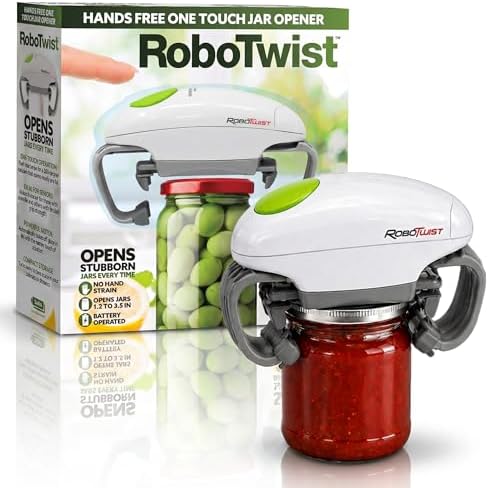
Electric openers sit on the jar, clamp themselves to the lid, and turn it with a motor. The user presses a button and holds the jar steady. When turning force is the thing that has gone, rather than grip, this is the category that solves the problem outright.
Check three things in the listing: the range of lid sizes the model handles, whether it needs batteries or charges, and how heavy it is, because it has to be lifted onto the jar and held there. Some models are noticeably bulky, which matters if the same hands also struggle to lift.
Beyond Jars: Bottles, Cans, and Ring Pulls
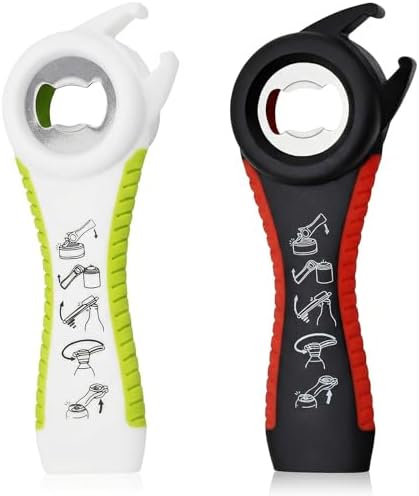
Jars are rarely the only packaging causing trouble. Ring-pull cans, plastic bottle caps, blister packs, and milk carton seals all need pinch grip, which often fades before whole-hand strength does. Multi-openers combine several of these into one tool, usually with a hook for ring pulls and a couple of graduated openings for caps.
One of those in a kitchen drawer covers a surprising amount of daily frustration. If the difficulty extends to holding cutlery comfortably as well, our guide to adaptive utensils with built-up handles covers that side of the kitchen.
Techniques That Cost Nothing
Before buying anything, two old tricks solve a large share of stuck lids. Run the lid under hot tap water for twenty seconds, which expands the metal slightly more than the glass beneath it. Or break the vacuum by tapping the edge of the lid against a hard surface, or by prying up one edge with a spoon handle until you hear the seal release.
Both work because most stubborn lids are held by a vacuum rather than by tightness. Once the seal breaks, the lid usually turns with very little force, and that is worth trying first regardless of which tool is in the drawer.
Storing Jars Somewhere Sensible
A jar that has to be lifted down from a high shelf before it can be opened has two problems, not one. Keeping everyday jars between waist and shoulder height removes the reaching part, and a reacher grabber covers whatever stays high up. Our kitchen safety guide covers what else is worth relocating.
Frequently Asked Questions
What is the easiest jar opener to use for weak hands? An under-cabinet mounted opener asks the least of the hands, because it holds the lid while both hands turn the jar. A battery-powered opener asks even less, since the motor does the turning.
Do rubber jar grips actually work? Yes, when the problem is slipping rather than strength. They add friction between hand and lid and cost very little, so they are worth trying before anything more elaborate.
Are electric jar openers worth it? They are, when turning force rather than grip is the limitation. Check the range of lid sizes in the listing and the weight of the unit, since it has to be lifted onto the jar.
How do you open a jar without any tool? Run the lid under hot water for about twenty seconds, or break the vacuum by tapping the lid rim on a hard surface or prying gently under the edge with a spoon handle. Most stuck lids turn easily once the seal releases.
What size lids do jar openers handle? It varies by model, and adjustable jaws cover a wider range than fixed ones. If there is a specific jar causing the trouble, measure its lid and check that figure against the listing.
Can one tool open bottles and cans as well? Multi-openers combine a ring-pull hook with graduated openings for bottle caps and small twist tops. They are a good drawer tool when several kinds of packaging are difficult.
Where should an under-cabinet opener be mounted? Low enough to reach without stretching upward, since you have to push the jar up into the jaws, and on a cabinet with a solid bottom panel that will hold the screws.
The Bottom Line
Choose the opener that matches the part of the movement that is difficult. Slipping calls for a rubber pad, weak grip calls for a long-handled clamp, a job that needs two hands calls for an under-cabinet opener, and absent turning force calls for a powered one. Try hot water and a broken vacuum seal first, because they are free. If handling cutlery is difficult too, built-up handle utensils address the same underlying issue at the table.