Last updated: August 20, 2026
Every household knows the moment: somebody flushes a toilet or starts the dishwasher, the cold supply drops away, and the shower turns hot without warning. For most people that means a quick step sideways and a mutter. For somebody who is sitting on a shower seat, who does not move quickly, or whose skin does not register temperature the way it used to, the same few seconds are a much bigger problem.
Anti scald devices exist to take that surprise out of the plumbing. They range from a valve a plumber fits behind the wall down to an adapter that screws onto the shower arm in two minutes. This guide covers what each type actually does, which standards appear on the listings, and how to decide which one belongs in your bathroom.
This article contains affiliate links. If you buy through them, we may earn a commission at no extra cost to you. Learn more.
Quick Answer
What anti scald device should you choose for a shower?
- An inline anti scald adapter screws between the shower arm and the head and cuts the flow to a trickle when the water passes a set temperature, which suits renters and quick fixes.
- A thermostatic or pressure balancing shower valve holds the temperature steady behind the wall and is the fuller solution, though it is a plumbing job rather than a purchase.
- A thermostatic mixing valve at the water heater limits the temperature reaching the whole house, which suits households with more than one bathroom.
- Look for the standard quoted in the listing, commonly ASSE 1016 for shower valves and ASSE 1017 or 1070 for mixing valves, and follow the manufacturer’s setting instructions.
Bottom line: match the device to how much plumbing work is realistic, and set the temperature limit the way the manufacturer describes.
What Anti Scald Devices Do
They all address the same two problems in different places. The first is temperature surge, where a change in the cold supply lets hot water dominate the mix. The second is delivered temperature, meaning how hot the water can get at the shower head even when everything is working normally.
Some devices respond to the surge, some cap the maximum, and the more capable ones do both. Which matters more depends on the household: an older single-bathroom home with a well-set water heater has a surge problem, while a house where the heater runs hot for a dishwasher has a delivered temperature problem as well.
Why This Matters More When Someone Showers Seated
A person standing in a shower moves out of the stream in a second. A person seated on a shower chair or a transfer bench has a slower route out, often needs a hand on something to stand, and may be facing away from the controls. The same surge that is a nuisance standing is a genuine difficulty seated.
Skin sensitivity also changes with age and with a number of common conditions, and water can feel comfortable at a temperature that is not. That is a question for a doctor rather than a product page, and it is one of the reasons families choose to cap the temperature at the fixture instead of relying on how the water feels.
Anti Scald Devices by Type
The Easiest Starting Point: An Inline Anti Scald Adapter
These screw between the shower arm and the shower head, with no tools beyond a wrench and some tape. Inside is a temperature-sensitive element that closes the flow down to a thin trickle once the water passes its set point, then reopens as it cools. Nothing is cut, nothing is opened, and the whole thing unscrews when somebody moves out.

Thermostatic Shower Valves Behind the Wall
A thermostatic valve holds the mixed water at the temperature you dialled in, adjusting continuously as supply pressures move around. It is what most people picture when they think of a modern shower that simply does not go hot when the toilet flushes. Listings typically quote ASSE 1016, the standard for individual shower control valves, and fitting one means opening the wall, so it is a licensed plumber’s job in most homes.

Mixing Valves at the Water Heater
A thermostatic mixing valve fitted at the heater outlet lets the tank sit at its own temperature while the water leaving toward the fixtures is blended down to a set limit. Households with several bathrooms often prefer this because it covers every tap at once rather than one shower. Listings for these commonly reference ASSE 1017, and point-of-use versions reference ASSE 1070.
Thermometers and Temperature Indicators
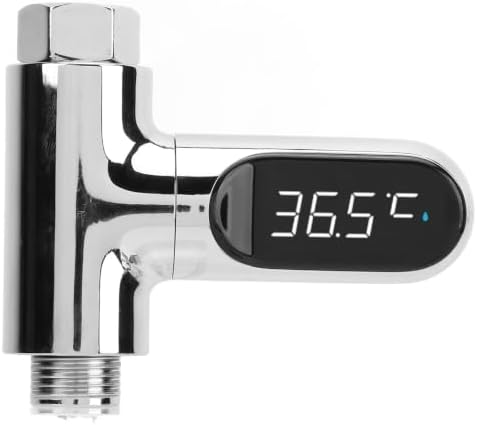
A simple digital or color-changing thermometer does not limit anything, but it tells you what the shower is actually delivering, which is useful before and after any change. Some clip to the shower arm, some sit in the tub as it fills, and color-changing versions give a visual cue that does not depend on reading a display through steam.
Comparing the Options
| Device | Best suited to | Watch out for |
|---|---|---|
| Inline adapter | Renters, fast improvement, one shower | Reduces flow rather than holding temperature |
| Thermostatic shower valve | A stable shower temperature all the time | Requires opening the wall |
| Pressure balancing valve | Surge from toilets and appliances | Does not cap absolute temperature by itself |
| Mixing valve at heater | Whole-house limit, several bathrooms | Plumber fitted, affects every tap |
| Thermometer | Knowing what you actually have | Measures only, changes nothing |
| Tub spout device | Bathing rather than showering | Spout thread and fit vary |
Water Heater Settings and What the Labels Say
Before buying anything, it is worth looking at the water heater itself. Manufacturers label their thermostats, and many plumbing codes limit the temperature delivered to a shower or bathtub. A tank set higher than the household needs makes every other measure work harder, and turning the setting down is free.
There is a real trade-off in that decision, because storage tank temperature also affects how much hot water the household has and how the tank behaves over time. Water heater manuals cover their own recommended settings, and a plumber can advise on a specific system. This is one of the places where a manufacturer’s manual beats general advice from anywhere, including here.
Testing Before and After
Run the shower at the hottest setting somebody would realistically use, hold a thermometer in the stream for a full minute, and write the number down. Repeat the test after any change. Without that before and after, nobody in the household knows whether the new device did anything.
Common Mistakes When Fitting Anti Scald Devices
Assuming an inline adapter holds a temperature is the most frequent one. It does not: it cuts the flow to a trickle when the water gets too hot, which is a warning and a limit rather than a stable mix. That behaviour is exactly what you want as a safeguard, and exactly what disappoints somebody who expected a spa-like constant temperature.
The second mistake is setting the limit and never checking it again. Seasonal changes in incoming water temperature, a water heater adjustment, or a new appliance can all change what the shower delivers. Retest with a thermometer a couple of times a year, and after any plumbing work in the house.
Skipping the Manufacturer’s Setting Procedure
Thermostatic valves have a rotational limit stop that has to be set on installation, and it is set against measured water temperature rather than by eye. Every manufacturer describes this in the manual, and it is the step most often skipped by whoever fits the valve. If a plumber does the work, ask them to confirm the limit stop was set and what it was set to.
A Note on Getting the Right Setup
Water temperature is one part of a shower that has to work as a whole, alongside a seat, a handhold, and a shower head that can be aimed. If you are unsure what fits your situation, ask your doctor or an occupational therapist, particularly where sensation or reaction time is part of the picture. For the plumbing side, a licensed plumber is the right person for anything behind the wall. Our guide to making a shower safer covers the other changes worth making at the same time.
Frequently Asked Questions
What temperature should a shower be limited to? Water heater manufacturers label their own recommended settings, and many plumbing codes cap what may be delivered to a shower or tub. Follow the manual for your heater and valve rather than a general figure, and measure the result with a thermometer.
Does an anti scald shower head adapter really work? It works the way it is designed to, which is to cut the flow to a trickle once the water passes its set point. It is a safeguard against a surge rather than a device that holds a steady temperature, so expect a warning, not a constant mix.
What is the difference between pressure balancing and thermostatic valves? A pressure balancing valve keeps the ratio of hot to cold steady when supply pressure changes, which handles the toilet flush problem. A thermostatic valve measures the mixed water and holds it at a set temperature, which handles both pressure and incoming temperature changes.
What does ASSE 1016 mean on a shower valve listing? It is the standard for individual shower control valves that manufacturers reference when a valve is designed to limit temperature surge. ASSE 1017 appears on mixing valves at the water heater, and ASSE 1070 on point-of-use mixing valves.
Can a renter fit an anti scald device? An inline adapter between the shower arm and the head is usually straightforward and fully reversible. Anything behind the wall or at the water heater belongs to the landlord and needs their agreement and their plumber.
Do I need a mixing valve if my shower already has a thermostatic valve? Not necessarily for that shower. A mixing valve at the heater covers every tap in the house, so it is more relevant where other fixtures matter or where several bathrooms would otherwise need individual valves.
Will an anti scald device reduce water pressure? Inline adapters restrict flow when they activate, which is the point, and some slightly reduce flow the rest of the time. Valve based solutions are sized for normal flow, though very old plumbing can be a limiting factor either way.
How do I test my current shower temperature? Run it at the hottest setting anybody would use, hold a thermometer in the stream for a minute, and note the reading. Repeat after any change to the heater, the valve, or the season.
The Bottom Line
Anti scald devices come in three practical layers: an adapter at the shower head for a fast, reversible safeguard, a thermostatic or pressure balancing valve behind the wall for a shower that simply holds its temperature, and a mixing valve at the heater for a whole-house limit. Pick the layer that matches how much plumbing work is realistic, read the standard quoted in the listing, and measure the result with a thermometer rather than guessing. For a household where somebody showers seated, this is one of the more worthwhile changes in the bathroom. Our shower chair guide covers the seat that usually comes with it.