Last updated: August 20, 2026
Nobody researches commode liners for fun. They get looked up the week after a bedside commode arrives, once the family realizes that carrying a bucket to the bathroom several times a day is the part nobody warned them about. Liners and odor control products shorten that job to about fifteen seconds.
This guide covers what a commode liner is, how the absorbent pad inside the better ones changes the cleanup, which odor control approaches work without turning a bedroom into a perfume counter, and how to check that a liner fits the bucket you already own.
This article contains affiliate links. If you buy through them, we may earn a commission at no extra cost to you. Learn more.
Quick Answer
Do you need liners for a bedside commode?
- Liners are not required, but they turn emptying a commode bucket from a rinsing job into tying off a bag, which is why most families start using them within the first week.
- Liners with a built-in absorbent gel pad turn liquid into a solid gel, which is what actually cuts spills and odor during transport to the toilet.
- Check the liner size against your bucket capacity, and check whether your local waste rules allow disposal in household trash before buying a large box.
Bottom line: an absorbent liner plus a lidded bucket handles most of the odor question before any spray or deodorizer is involved.
What a Commode Liner Actually Is
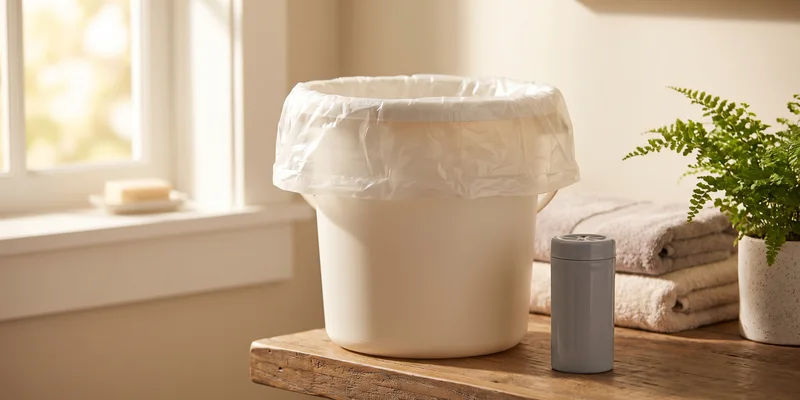
A commode liner is a disposable bag sized to drop into the pail of a bedside commode, hooked over the rim so it stays open while the commode is in use. When the commode is used, the contents go into the bag rather than the bucket. Afterward the bag is tied off and disposed of, and the bucket itself usually needs nothing more than an occasional wipe.
The material is typically a thicker plastic than a kitchen bag, with a wide enough mouth to fold over a commode rim without slipping. Many liners are sold with a drawstring or tie top, because the moment that matters most is the one where the bag has to be closed one handed while the other hand steadies the pail.
Liners With Pads and Liners Without
Basic liners are just bags. Pad liners include a sheet of absorbent material, usually a super absorbent polymer, sitting in the bottom of the bag. That pad turns liquid into a gel within seconds, so the bag can be lifted and carried without sloshing and without the weight shifting unpredictably. For anyone carrying the bag down a hallway, that difference is the whole point.
Why Odor Is Mostly a Handling Problem
Odor around a bedside commode comes from three places: the contents sitting in an open pail, residue left on the pail after rinsing, and the splash zone around the commode itself. Liners handle the first, an absorbent pad handles part of the second, and a waterproof pad on the floor handles the third.
Fragrance products cover odor rather than remove it, which is fine as a finishing touch and unhelpful as a primary strategy. Enzyme and gelling products work on the source instead, which is why families who have lived with a commode for months tend to recommend them.
Commode Supplies by Situation
The Default Setup for Daily Use
For a commode in daily use, a liner with a built-in absorbent pad is the version that solves the most problems at once. It gels the liquid, contains the odor while the bag is closed, and makes disposal a single motion rather than a trip to the bathroom with an open pail.

Occasional Use or a Backup Supply
If the commode is only used overnight or during a recovery period, plain liners without pads cost less per bag and still spare the bucket. Many families keep a box of plain liners alongside a smaller box of pad liners and choose per use.

When the Odor Lingers in the Room
Gel packets and powder deodorizers are dropped into the bag or the pail and work by solidifying liquid and neutralizing odor rather than masking it. They are also useful for a commode that cannot be emptied immediately, for example overnight.

Protecting the Floor Around the Commode
Disposable waterproof underpads placed under and beside the commode catch what misses the bucket and lift out in one piece. This is the cheapest fix for the part of the odor problem that lives in the carpet rather than in the pail.

Keeping the Bucket Itself Clean
Even with liners, the pail benefits from a periodic clean. A dedicated brush and a bathroom-safe cleaner kept with the commode supplies stops the job from being postponed because the supplies are in another room.

Comparing the Main Options
| Option | Best suited to | Watch out for |
|---|---|---|
| Liner with gel pad | Daily use, carrying the bag any distance | Higher cost per bag than plain liners |
| Plain liner | Occasional or overnight use | Liquid stays liquid, so handling matters |
| Gel or powder packets | Adding to an existing liner or pail | Needs a measured amount, check the label |
| Underpads on the floor | Carpeted bedrooms, tight commode placement | Can slide, so tuck or tape the edges |
| Lidded pail | Any commode left in a bedroom | Check the lid actually fits your model |
Getting the Fit Right
Commode pails are not one size. Most fall in a range that standard liners cover, but wider bariatric pails and the deeper buckets on some drop arm commode models need a liner with more mouth width, not just more depth. Measure the pail across the rim and note its stated capacity before ordering a large box.
The second fit question is the seat opening. A liner that bunches up under the seat is annoying and can slip during use. Rolling the top of the bag once over the rim, rather than draping it loosely, keeps it flat and keeps the opening clear.
Disposal Rules Are Local
Household disposal of sealed liner bags is common practice in most areas, but waste rules differ by municipality and by facility, and rented equipment sometimes comes with its own instructions. Check your local guidance rather than assuming, especially if the commode is being used in an assisted living or rehab setting.
Common Mistakes With Commode Liners
The most common one is buying liners without checking the pail size, then discovering the bags are too narrow to fold over the rim and stay put. The second is using ordinary kitchen bags, which are thinner, lack the wide mouth, and are the usual explanation behind a bag that failed halfway down the hallway.
A third mistake is relying on air freshener alone. It smells like air freshener plus the thing it is covering, and it does nothing for the residue in the pail. Gelling and enzyme products are the ones that address the source.
Emptying Once a Day Is Usually Too Little
A commode that gets used several times overnight and emptied once in the morning is the version families remember unfavorably. Emptying after each use where practical, or at least keeping the lid on between uses, does more for the room than any product on this page.
A Note on Comfort and Dignity
A commode in a bedroom is a practical solution to a mobility problem, and the supplies around it exist so that neither the user nor the person helping has to make a production of it. Keep the supplies within arm’s reach of the commode, keep a lidded bin nearby, and let the routine be quiet and quick. If you are unsure whether a commode is the right setup at all, ask your doctor or an occupational therapist, who can look at the bedroom, the walking distance to the bathroom, and what kind of transfer is realistic. Our guide to using a bedside commode safely covers the placement and braking side of that question.
Frequently Asked Questions
Do you have to use liners with a bedside commode? No. A commode works without them, and the pail can simply be emptied into a toilet and rinsed. Liners exist to make that job faster and less messy, which is why most households adopt them quickly.
Can you use regular trash bags as commode liners? They physically fit some pails, but kitchen bags are thinner and lack the wide mouth designed to fold over a commode rim, so they slip and tear more often. Commode liners are built for the job and are inexpensive per bag.
What is the absorbent pad inside a commode liner for? It contains a super absorbent polymer that turns liquid into gel within seconds. That keeps the bag from sloshing while it is being carried and helps contain odor once the bag is tied.
How do you stop a bedside commode from smelling? Use a liner, keep a lid on the pail between uses, empty it promptly, and use a gelling or enzyme-based deodorizer rather than a fragrance spray. Underpads on the floor handle the part of the odor that ends up outside the bucket.
Can commode liners be flushed? No. The bag and the absorbent pad are not designed to break down in plumbing and will cause a blockage. Tie the bag off and dispose of it in household waste according to your local rules.
How many liners does a commode need per day? That depends entirely on how often the commode is used, and most families plan on one per use. Buying a larger box lowers the cost per bag if the commode is in ongoing daily use.
Do liners fit every commode bucket? Most standard pails, yes. Bariatric and extra deep pails may need a wider liner, so measure across the rim and check the stated capacity before ordering in bulk.
Are liners worth it for overnight use only? Usually yes, because the overnight pail is the one most likely to sit until morning. A pad liner plus a lid handles that gap better than an empty bucket does.
The Bottom Line
Commode liners are a small purchase that changes the daily reality of living with a bedside commode, and the version with an absorbent gel pad is the one worth paying slightly more for. Add a lidded pail, keep waterproof underpads on the floor around it, and use a gelling deodorizer rather than a fragrance spray, and the odor question largely answers itself. If you are still choosing the commode itself, our bedside commode guide covers frame types, seat height, and capacity.