
Last updated: August 20, 2026
Some links on this page are affiliate links. See our affiliate disclosure.
A bedside commode solves a distance problem rather than a height problem. When the bathroom is at the far end of a hallway, up a flight of stairs, or simply further than someone can comfortably manage at three in the morning, a freestanding chair with a removable bucket brings the toilet to the bedroom instead.
The category covers more than one product. The same frame often works as a commode, as a shower chair, and as a raised frame that sits over an existing toilet, and the differences between fixed-arm, drop-arm, and folding versions matter a lot in a small room. This guide covers those types, the sizing checks worth doing before you order, and the practical side of cleaning that most product pages skip.
Quick Answer
Which bedside commode should you choose?
- A standard fixed-arm commode with adjustable legs suits most bedrooms and is the simplest to keep clean.
- Choose a drop-arm model if the user transfers sideways from a bed or wheelchair rather than standing up in front of it.
- A three-in-one frame doubles as a toilet surround and, on some models, a shower chair, which is useful when needs are still changing.
- Check the seat height range against the bed height, and take the weight capacity from the manufacturer’s listing.
Bottom line: the transfer direction decides the arm style, and the bed height decides the seat height.
What a Bedside Commode Is For
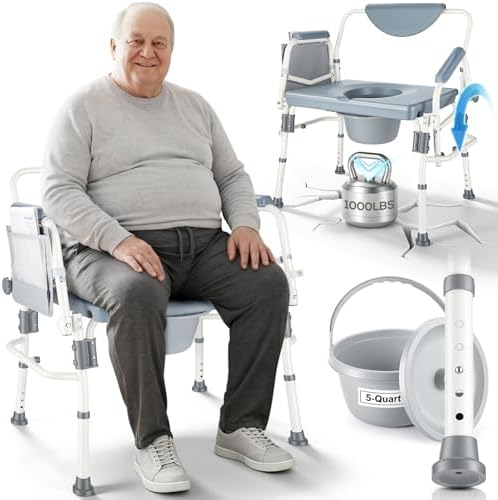
A commode is a chair with a seat, a lid, and a removable bucket underneath, standing on four adjustable legs. Families commonly bring one in during recovery from surgery, during an illness that limits walking, or where a bedroom is on a different floor from the bathroom and the trip at night is the difficulty.
It is worth separating the commode from the raised seat. A raised toilet seat makes an existing toilet easier to get off, while a commode removes the trip to the toilet altogether. If the bathroom is close and the problem is standing up, the riser is the simpler answer.
The Main Types
Commodes differ mostly in the arms and in whether the frame does more than one job. Both questions come down to how the user actually gets on and off, so it helps to picture the movement before comparing models.
Standard Fixed-Arm Commodes
Arms are fixed to the frame on both sides, giving something solid to push against from a standing start. This is the most common design, the lightest, and the easiest to wipe down since there are fewer moving joints. It suits someone who walks to the commode and turns to sit.
Drop-Arm Commodes
One or both arms release and drop out of the way, which clears the whole side of the chair. That matters for a sideways transfer, where someone slides across from a bed, a wheelchair, or a transport chair rather than standing in front. Drop-arm models are heavier and cost more, and the release mechanism needs checking as part of any routine cleaning.
Three-in-One Frames
The same frame works as a bedside commode with the bucket in place, and as a raised frame that stands over the existing toilet with the bucket removed. Some models also serve as a shower chair, though not all are rated for wet use, so check the listing rather than assuming. This flexibility suits a situation still in flux.
Folding and Lightweight Models
Folding frames collapse flat for storage between uses or for taking to a family member’s house. They are usually lighter, which makes them easier to move but also means the stated weight capacity tends to be lower than a rigid frame.
Bedside Commodes by Situation
The Standard Bedroom Setup
An adjustable-height commode with fixed arms and a snap-on bucket covers the majority of situations. Legs adjust so the seat can match the bed height, and the whole thing weighs little enough to reposition without help.

When the Transfer Happens Sideways
A drop-arm model clears the side of the chair so a slide transfer from bed or wheelchair has a clear path. This is the version to look at when the user does not stand independently before sitting.

When One Frame Should Do Several Jobs
A three-in-one frame works beside the bed now and over the toilet later, which avoids buying twice when the situation is likely to change over a few months.

When a Higher Weight Capacity Is Needed
Bariatric commodes use wider seats, heavier tubing, and a broader leg stance, with weight ratings stated per model. Read that number in the listing, and measure the width against any doorway the chair needs to pass through.
Making the Cleaning Manageable
Disposable liner bags with an absorbent pad inside sit in the bucket and lift out sealed, which turns the daily clean into a much shorter job. Many households find this the single change that makes a commode workable for a caregiver.

Comparing the Types
| Type | Suits | Watch out for |
|---|---|---|
| Fixed arm | Standing transfers, simplest cleaning | Arms block a sideways slide transfer |
| Drop arm | Slide transfers from bed or wheelchair | Heavier, more joints to clean and check |
| Three-in-one | Changing needs, doubles over the toilet | Not all are rated for shower use |
| Folding | Storage between uses, taking to another house | Weight capacity often lower than rigid frames |
Sizing and Placement
Set the seat height close to the height of the bed the user transfers from, so the movement is level rather than up or down. Then check that the feet rest flat on the floor once seated, which is the same rule that applies to a raised toilet seat and for the same reason.
For placement, leave enough clear floor on the transfer side for a walker or for a caregiver to stand, and put the commode on the side of the bed the user naturally gets out from. Carpet is not ideal under the legs, since a soft surface lets the frame settle unevenly, and a hard-surface mat under the commode both stabilizes it and protects the floor.
Weight Capacity Comes From the Listing
Every commode states a maximum user weight, and it varies considerably between a folding frame and a bariatric one. Use the figure the manufacturer publishes for that model rather than a category assumption, and confirm the arms are rated for the user leaning on them during a transfer.
Living With a Commode Day to Day
The practical burden is emptying and cleaning, and that falls on whoever is caring. Liner bags with absorbent pads cut the work substantially, and a lidded bucket plus a spare bucket means the chair is usable again immediately after emptying rather than after washing up.
Dignity deserves a mention here too. A commode in a bedroom is a visible change, and a folding model that stores in a closet during the day, or a design that looks more like furniture than equipment, often makes a real difference to whether it actually gets used.
A Note on Getting Advice
Whether a commode is the right answer, and which transfer style suits, depends on how the person moves and on what is going on medically. If you are unsure what fits your situation, ask your doctor or an occupational therapist. They can also advise on whether a different setup, such as a closer bathroom route with better lighting, would work better than adding a chair.
Frequently Asked Questions
What is the difference between a commode and a raised toilet seat? A commode is a freestanding chair with its own bucket, used where reaching the bathroom is the problem. A raised toilet seat fits an existing toilet and only addresses seat height. Some three-in-one frames do both jobs.
Can a bedside commode be used over the toilet? Many three-in-one models are designed to, with the bucket removed and the frame straddling the bowl. Check the listing, because not every commode has the leg spread and height range to fit over a toilet.
How do you clean a commode bucket? Empty it into the toilet, rinse, and wash with warm water and standard household cleaner, following the manufacturer’s instructions for the model. Disposable liners with absorbent pads reduce that job to lifting out a sealed bag.
What height should a bedside commode be set to? Close to the height of the bed the user transfers from, with their feet flat on the floor when seated. Most models adjust in one-inch increments on the legs.
Are commodes safe on carpet? They stand more securely on a hard, level surface. If the bedroom is carpeted, a firm hard-surface mat under the frame helps it sit level and protects the carpet at the same time.
Do drop-arm commodes lock in the up position? On most models yes, with a latch or pin that holds the arm in place. Check that the latch engages fully every time before the user leans on that arm.
How much weight can a bedside commode hold? It depends entirely on the model, and the manufacturer states the figure in the listing. Bariatric versions carry higher ratings, folding frames generally lower ones.
The Bottom Line
A bedside commode is the answer when distance to the bathroom is the problem, and the choice comes down to how the user gets on and off: fixed arms for a standing transfer, drop arms for a sideways slide, a three-in-one frame when needs are still changing. Set the seat height to the bed, keep the transfer side clear, and take the weight capacity from the listing. If the bathroom is close and only standing up is hard, a raised toilet seat is the simpler fix.