Last updated: August 21, 2026
Search for an enclosed mobility scooter and the results are a strange mix. There are photographs of little cabin cars with doors and windshield wipers, there are canopy kits that bolt onto an ordinary scooter, and there are vehicles that look the part but are sold as low-speed cars in some places and as nothing at all in others. It is one of the least clearly defined categories in mobility equipment.
This page sets out what actually exists, what the words mean, and why the picture that brought you here may not correspond to anything you can order and use where you live. There is no product recommendation on this page, because the honest answer to the shopping question is that the mainstream retail market does not carry this category.
This article contains affiliate links. If you buy through them, we may earn a commission at no extra cost to you. Learn more.
Quick Answer
What is an enclosed mobility scooter?
- The term covers three different things: a canopy or cabin accessory added to a normal scooter, a purpose-built enclosed mobility vehicle, and a low-speed electric vehicle that is really a small car.
- Fully enclosed models are a specialist and largely imported category rather than something stocked by mainstream retailers in the United States.
- Where any of these may legally be driven differs by state and by municipality, so that question belongs with your local authority rather than with a seller.
Bottom line: work out which of the three you actually mean, then check local rules before shopping, because the legal question decides the practical one.
Three Different Products, One Search Term
The phrase gets used for three separate things. The first is a weather enclosure added to a conventional scooter, a frame with a roof and clear panels that leaves the scooter itself unchanged. The second is a purpose-built enclosed mobility vehicle with a fixed cabin, doors, and a windshield. The third is a low-speed electric vehicle, which in regulatory terms is a small car rather than a mobility aid.
Those three are not interchangeable, and the images that circulate online mix them freely. Working out which one a picture shows is the first step, because they differ completely in cost, in availability, and in where they are allowed to be used.
Canopy and Cabin Accessories
The most widely available option is not a vehicle at all. It is a canopy: a folding frame that clamps to an existing scooter and carries a roof, and sometimes clear side panels and a windshield, to keep rain and sun off the rider. The scooter underneath stays exactly what it was.
Availability of these is uneven and quality varies a great deal, and there is a real engineering caution attached. Adding a large surface above the wheels changes how the machine behaves in wind and shifts weight upward, which is why manufacturers are specific about what may and may not be attached to their frames.
Check the Manufacturer First
Before fitting any canopy, check what the scooter’s own manufacturer says about accessories and attachments. Some explicitly permit approved canopies, some do not, and fitting an unapproved structure can affect the warranty as well as the handling. Treat the manufacturer’s documentation as the deciding source rather than the accessory seller’s claims.
Purpose-Built Enclosed Mobility Vehicles
Fully enclosed mobility vehicles do exist. They have a hard cabin, doors or a hinged canopy, a windshield, lights, and often heating. They are common in a handful of European and Asian markets, where they occupy a defined legal category and are sold through specialist dealers.
In the United States they are a fringe product. There is no mainstream retail channel, distribution is thin, and support and parts are the practical difficulty rather than the purchase itself. That is worth knowing before falling in love with a photograph, because a vehicle nobody local can service is a vehicle with a short useful life.
The Low-Speed Vehicle Overlap
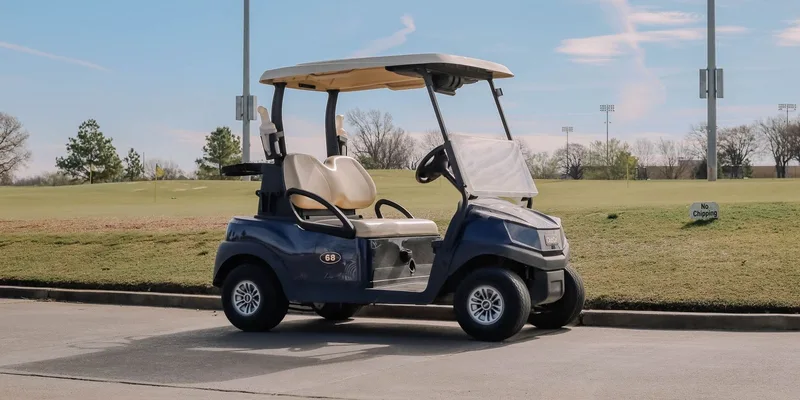
Some of what appears in enclosed scooter search results is actually a low-speed electric vehicle: a small enclosed electric car with a defined top speed, sold and registered as a motor vehicle. Golf-cart-derived neighborhood vehicles fall into this group in many places.
The distinction matters because it changes everything downstream. A vehicle in that category typically brings registration, insurance, and licensing questions with it, and it is not treated as mobility equipment. If the product you are looking at has a vehicle identification number and a road speed rating, you are shopping in a different market than you thought.
Comparing What the Term Covers
| Type | What it is | Where you find it |
|---|---|---|
| Canopy accessory | Roof and panels added to a normal scooter | Accessory sellers, subject to scooter maker approval |
| Enclosed mobility vehicle | Fixed cabin, doors, windshield, lights | Specialist and largely overseas dealers |
| Low-speed vehicle | Small electric car with a speed rating | Vehicle dealers, with registration questions |
Where Any of This May Be Driven
Rules about where a mobility scooter, an enclosed scooter, or a low-speed vehicle may travel are set locally. Sidewalk use, roadway use, bike lane use, and crossing arrangements are governed by state law and often by municipal ordinance on top of it, and they are not consistent from one town to the next.
We do not publish a figure or a rule here, because any single answer would be wrong somewhere. Ask your state department of motor vehicles and your municipality directly, and get the answer before buying rather than after. This is one of the few areas where a seller’s assurance is worth very little.
What Most People Actually Need
Most families arriving at this search want one thing: to keep using a scooter in bad weather. That problem is usually solved with weather-appropriate clothing, a proper cover for storage, a well-chosen route, and a scooter with wheels and ground clearance suited to wet ground, rather than with an enclosure.
If the aim is longer outdoor trips over rough or wet surfaces, the useful comparison is between scooter types rather than between enclosures. Our guide to all terrain mobility scooters covers the ground clearance and tire question, and our guide to scooter covers covers keeping the machine dry when it is parked.
Sidewalks and Driveways Come First
An enclosure does nothing about a cracked walkway or an unlit driveway, which is where most outdoor difficulty actually happens. Our guide to walkway and driveway safety covers the surfaces themselves, and it is a cheaper and more immediate fix than any vehicle purchase.
Before You Chase This Category
If an enclosed vehicle still looks like the answer, work through the practical questions before the emotional ones: who services it, where parts come from, how long a repair takes, where it is stored and charged, and what your municipality says about where it may be driven.
And separately from all of that, whether a scooter is the right equipment at all is a question for a doctor or an occupational therapist, who can look at how the person moves rather than at a catalog. Our scooter selection walkthrough covers the mainstream decision, and if a step or threshold stands between the door and the street, our portable ramp guide covers that.
Frequently Asked Questions
Do fully enclosed mobility scooters exist? Yes, as a specialist category with a fixed cabin, doors, and a windshield, mostly sold in a few overseas markets. They are not a mainstream retail product in the United States, and parts and service are the practical difficulty.
Can I put a canopy on my existing mobility scooter? Sometimes. Check what the scooter’s manufacturer says about approved accessories first, because a roof adds surface area and height that affects handling in wind and can affect the warranty.
Is an enclosed scooter the same as a low-speed vehicle? No. A low-speed electric vehicle is registered and treated as a motor vehicle with a speed rating, which brings licensing and insurance questions that mobility equipment does not.
Where can an enclosed mobility scooter be driven? That is set by state law and often by local ordinance as well, and it varies from one town to the next. Ask your state motor vehicle department and your municipality before buying.
Why can I not find one at a normal retailer? Distribution in this category is thin and largely overseas, so there is no mainstream retail channel for fully enclosed models. Canopy accessories are the part of the category that is actually available.
What is the cheaper way to use a scooter in bad weather? Weather clothing, a route that avoids standing water, a scooter with suitable wheels and ground clearance, and a cover for storage handle most of it without an enclosure.
Are canopies safe on a mobility scooter? That depends entirely on the specific scooter and the specific canopy, which is why the manufacturer’s position on approved attachments is the thing to check rather than the accessory listing.
Who can tell me whether a scooter suits the person at all? A doctor or an occupational therapist, who can look at how the person actually moves, gets on and off, and manages controls. That question comes before any decision about enclosures.
The Bottom Line
Enclosed mobility scooter is a search term covering three different products, and only one of them, the canopy accessory, is genuinely available through ordinary channels. Fully enclosed vehicles exist but sit in a specialist and largely imported market with real service and parts questions, and low-speed electric vehicles are cars in regulatory terms. Establish which one you mean, ask your state and municipality where it may be driven, and if the underlying goal is simply riding in bad weather, our all terrain scooter guide and cover guide address that more directly.