Last updated: August 20, 2026
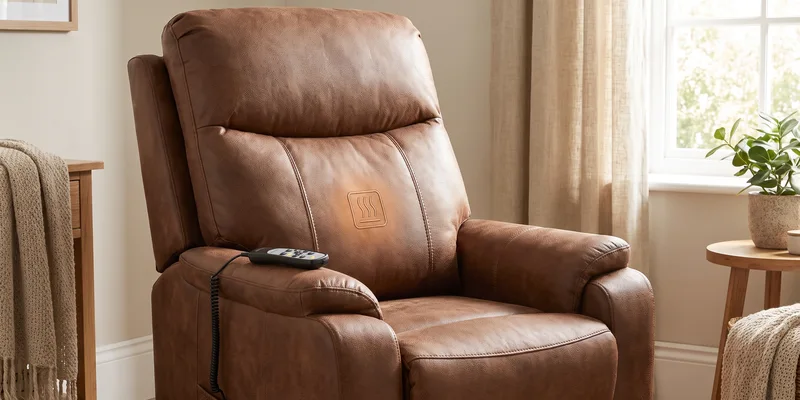
Heat and massage appear on a large share of mid-range and upper-range lift chairs, usually as a second row of buttons on the hand control. They are comfort features, in the same category as a heated car seat, and it is worth being clear about that from the start: they are not medical equipment and no honest listing presents them as such.
What they do offer is a reason to stay comfortable in a chair someone occupies for much of the day. This guide covers what the settings usually control, how the two systems differ mechanically, and what to check before paying extra for them.
This article contains affiliate links. If you buy through them, we may earn a commission at no extra cost to you. Learn more.
Quick Answer
Are heat and massage worth it on a lift chair?
- They are comfort features, not clinical ones. Judge them as you would a heated seat, and expect nothing more from them than that.
- Heat is usually a low-wattage pad in the lumbar area with a timer; massage is a set of vibration motors in zones, with intensity and pattern settings.
- Check whether the functions shut off automatically, how many zones there are, and whether the hand control is simple enough to operate without reading a manual.
Bottom line: pleasant additions on a chair someone sits in all day, but they should never outrank fit and weight capacity in the decision.
What the Heat Function Actually Does
Heat on a lift chair is typically a low-wattage heating pad built into the lumbar section of the backrest, occasionally into the seat as well. It warms the surface gently rather than deeply, and most models include an automatic shut-off timer so the pad cannot be left running for hours.
Coverage is the specification worth reading. Lumbar-only heat warms the lower back and nothing else, which is what most chairs offer. A few models extend heat to the seat or the footrest, and those are described as such in the listing rather than implied.
Safety Points Worth Knowing
Anyone with reduced sensation in the skin should be careful with any heated product, because the usual warning sign of a surface being too warm is simply not felt. That is a question for a doctor rather than a product decision. Follow the manufacturer’s instructions on run time, and avoid adding a separate heating pad on top of a heated seat.
What the Massage Function Actually Does
Massage on a lift chair means vibration, not the rollers and kneading arms of a dedicated massage chair. Small motors sit inside the back, seat, and footrest sections, and the control offers intensity levels and preset patterns such as pulse or wave. It is a gentle, buzzing sensation rather than deep manipulation.
Zone count is the difference between models. A basic system might have two zones and one intensity; a fuller system offers four or more zones with independent control and a timer. More zones means more motors and more wiring, which is worth weighing against the extra complexity.
Heat and Massage Chairs by Situation
The Common Mid-Range Configuration
A lift recliner with lumbar heat and a simple multi-zone vibration massage covers what most buyers are after. The functions sit on the same hand control as the lift and recline buttons, which keeps things manageable for anyone who does not want a second remote.

Full-Day Sitting With Independent Leg Control
Where the chair is occupied for most of the day, an infinite position model with heat and massage gives both the postural flexibility of independent back and leg movement and the comfort extras. It is the most expensive combination in the category and the one that makes most sense for heavy daily use.

Higher Weight Capacity With the Same Extras
Heat and massage are available on heavy duty frames as well, though fewer models combine both. If a higher rating is needed, start from the bariatric options and filter for the comfort features rather than the other way around.
What to Check Before Paying Extra
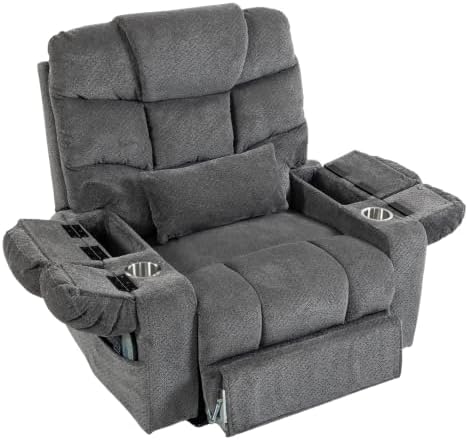
| Feature | What to look for |
|---|---|
| Heat coverage | Lumbar only, or seat and footrest as well |
| Auto shut-off | Whether heat and massage time out on their own |
| Massage zones | Number of zones and whether they run independently |
| Control layout | Buttons large enough and labeled clearly |
| Noise | Vibration motors are audible; quieter systems cost more |
| Warranty | Whether heat and massage are covered separately from the frame |
The Hand Control Is Part of the Decision
Adding heat and massage doubles the number of buttons on the control, and that has a real cost in usability. A control with a dozen small identical buttons is harder to use than one with four large ones, particularly for anyone with limited hand strength or reduced vision.
Look for backlit or clearly labeled buttons, a control that clips or pockets onto the chair so it does not fall to the floor, and separate obvious buttons for the lift function itself. If the lift button is buried among massage presets, that is a design worth avoiding regardless of what the extras offer.
Common Mistakes When Buying
Choosing a chair for its massage system and settling for a poor fit is the mistake that matters most. A chair that is the wrong seat height or depth stays uncomfortable no matter how many vibration zones it has. Settle the measurements first with our sizing walkthrough.
The second is expecting a dedicated massage chair experience. These are vibration systems built into a recliner, and anyone hoping for rollers and kneading will find them underwhelming. Judged as a comfort extra, they are pleasant; judged as a massage chair, they are not.
A Note on Getting Advice
Heat and vibration are comfort features and this guide makes no claims about what they do for anyone’s health. If you have questions about using heat or vibration, particularly with circulation issues, reduced skin sensation, swelling, or an implanted device, ask your doctor. If you are unsure what fits your situation more broadly, an occupational therapist can look at how the chair will actually be used.
Frequently Asked Questions
Is the massage on a lift chair like a real massage chair? No. Lift chairs use vibration motors in zones rather than the rollers and kneading mechanisms of a dedicated massage chair. It is a gentle vibration, and expectations should be set accordingly.
Where is the heat on a lift chair? Usually a low-wattage pad in the lumbar section of the backrest. A few models extend heat to the seat or footrest, and the listing states which areas are covered.
Does the heat turn itself off? Most models include an automatic shut-off timer. Confirm that in the specifications, and follow the manufacturer’s guidance on run time.
Are heat and massage safe for everyone? Anyone with reduced skin sensation, circulation concerns, swelling, or an implanted device should ask their doctor before using heat or vibration. This is a question for a clinician, not a product page.
Do these functions add much to the running cost? The heating element and vibration motors are low-wattage and run intermittently, so the effect on household electricity use is small. The chair itself draws power mainly when the motors move.
Are the massage motors noisy? They are audible, more so at higher intensity. Quieter systems generally appear on higher specification models.
Can heat and massage be added to a chair later? Not usually as a built-in system. A separate seat pad with heat and vibration is the common alternative, and it can be moved between chairs.
The Bottom Line
Heat and massage are worth having on a chair someone sits in all day, provided they are treated as comfort features rather than anything more. Check heat coverage, auto shut-off, zone count, and above all whether the hand control stays simple enough to use easily. Settle the fit first with our sizing guide, then decide whether the extras earn their place. The full category overview is in our lift chair recliner guide.