
Last updated: August 21, 2026
A mobility scooter parked outside a store, in an apartment lobby, or in an unlocked carport is a valuable machine sitting in the open, and unlike a car it can be pushed away by one person in neutral. That is the part owners tend not to think about until it happens, or until a neighbor’s scooter disappears.
Nothing on the market makes a scooter theft proof, and any product that claims otherwise is overselling. What locks and alarms do is add time, noise, and difficulty. This guide covers the options that genuinely add those three things, what the key switch does and does not protect, and the habits that matter more than any hardware.
This article contains affiliate links. If you buy through them, we may earn a commission at no extra cost to you. Learn more.
Quick Answer
How do you keep a mobility scooter from being stolen?
- Anchor it to something fixed with a heavy chain or cable lock, since a scooter left in neutral can simply be pushed away.
- A wheel clamp stops it rolling even if it is never anchored to anything.
- An alarm adds noise, which is often what actually ends an attempt in a public place.
Bottom line: the key switch is not a lock, so treat the scooter like a bicycle and secure it to something that does not move.
What Actually Goes Missing
Three things get taken, and they call for different answers. The scooter itself is the obvious one and needs anchoring or immobilizing. The batteries are the second, because they are valuable and on many scooters they lift straight out from under the seat. The third is whatever was left in the basket, which no lock addresses at all.
Knowing which risk applies where is useful. A brief stop outside a store is a scooter risk. An unlocked shared bike room in an apartment building is a battery risk as well, because a thief has time and privacy there that a sidewalk does not offer.
Locks Buy Time Rather Than Guarantees
Any lock can be defeated with enough time and the right tool, so the question is never whether a lock is unbreakable. It is whether the effort and the noise required are more than the person trying is willing to spend in that particular spot. That is what a heavier chain, a hardened shackle, and an alarm all contribute.
The practical consequence is that a lock and a location work together. The same chain that is plenty outside a busy supermarket entrance is thin protection in an unlit corner of a parking garage at night.
Where You Park Matters More Than What You Buy
Visible, busy, and well lit beats hidden every time. Parking where staff or passers-by can see the scooter removes the privacy a thief needs, and at home a locked garage or a spot inside the door does more than any accessory. Our storage and charging guide covers the at-home version of that decision.
Security Options by Situation
Anchoring It to Something Fixed
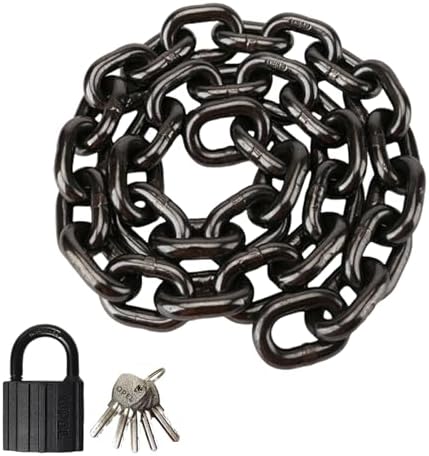
A heavy chain or armored cable with a hardened padlock, run through the frame and around a bike rack, a post, or a ground anchor, is the closest thing to a standard answer. Match the chain to the situation rather than buying the lightest one that fits in the basket.
When There Is Nothing to Anchor To
Plenty of parking spots have no rack, no post, and no rail. A wheel clamp works there because it does not need an anchor point at all: it stops the wheel turning, which stops the scooter being pushed away casually.

Adding Noise to the Equation
A motion-triggered alarm lock draws attention the moment the scooter is moved, and in a public place attention is usually what ends the attempt. Check how the alarm is armed and whether the battery is one you will actually remember to replace.

Comparing the Approaches
| Measure | What it stops | Limitation |
|---|---|---|
| Chain or cable lock | Wheeling the scooter away | Needs something fixed to attach to |
| Wheel clamp | Rolling it in neutral | Two people can still lift a light scooter |
| Motion alarm | Quiet, unhurried attempts | Needs arming and a working battery |
| Removing the key | Riding it away under power | Not a lock; it can still be pushed |
| Taking the battery | Riding it away at all | Only practical on removable packs |
| Where you park | The privacy a thief needs | Not always your choice |
The Key Switch Is Not a Lock
Removing the key stops someone riding the scooter away under power, which is worth doing every time. What it does not do is stop the scooter being pushed, because most scooters have a freewheel or manual release lever precisely so they can be moved when switched off.
Keys themselves are worth thinking about too. Scooter key switches are simple, and keys are not always unique to one machine, so treat the key as a convenience rather than as security. On scooters with a removable battery pack, taking the pack indoors is the most effective immobilizer available and it doubles as looking after the battery.
Serial Numbers, Insurance, and Recovery
Photograph the scooter, note the serial number from the frame plate, and keep both somewhere you can find them. A serial number is what makes a police report and an insurance claim useful, and it is the detail nobody has to hand at the moment it is needed.
Whether a scooter is covered by homeowner’s or renter’s insurance, and under what conditions, differs by policy and by state, so ask your insurer directly rather than assuming. Some households add a specific rider for mobility equipment, and the answer depends entirely on the policy in front of you.
Common Mistakes With Scooter Security
Locking the scooter to itself is the first, which happens when a chain goes around a wheel and back to the frame without passing around anything fixed. That stops the wheel turning but leaves the scooter portable.
The second is buying a lock too heavy to actually use. A chain that cannot be lifted onto the scooter or threaded around a post one-handed will be left at home within a fortnight. The third is relying on a cover for concealment, which hides the scooter but secures nothing.
A Note on Handling and Reach
A lock is only useful if the person parking the scooter can operate it while seated or from a standing position beside it. Heavy chains, stiff shackles, and small keys are all harder to manage than they look in a product photograph, and a lock that hurts to use does not get used.
If handling a lock is difficult, a keyless option or a lighter clamp may be the more realistic choice, and it is worth discussing with an occupational therapist alongside the rest of the scooter setup. If you are unsure what fits your situation, ask your doctor or an occupational therapist.
Frequently Asked Questions
Can a mobility scooter be stolen easily? A scooter left in freewheel can be pushed away by one person, which is why removing the key alone is not enough. Anchoring it to something fixed or immobilizing a wheel is what makes casual theft impractical.
What is the best lock for a mobility scooter? A heavy chain or armored cable with a hardened padlock, run through the frame and around something fixed, is the standard answer. Where there is nothing to anchor to, a wheel clamp is the alternative.
Does taking the key stop someone stealing a scooter? It stops them riding it away under power, but not pushing it. Most scooters have a freewheel lever so they can be moved when switched off, so treat the key as a convenience rather than as security.
Are mobility scooter alarms worth it? In public places, noise is often what ends an attempt, so an alarm adds something a chain alone does not. Check how it is armed and whether its battery is one you will remember to replace.
Should I remove the battery when parking a scooter? If the pack lifts out easily, taking it with you is the most effective immobilizer available and it keeps the pack out of the weather. On scooters with fixed packs this is not practical.
Does home insurance cover a stolen mobility scooter? It depends entirely on the policy and the state, and some households add a specific rider for mobility equipment. Ask your insurer directly rather than assuming the scooter is included.
Where should I park a mobility scooter outside a store? Somewhere visible and busy rather than tucked around a corner, ideally near an entrance where staff and passers-by can see it. Visibility removes the privacy an attempt needs.
Does a scooter cover protect against theft? No. A cover conceals the scooter from casual view, which has some value, but it secures nothing. Pair it with a lock or a clamp if the scooter is stored anywhere accessible.
The Bottom Line
Treat a scooter like a bicycle: the key switch is not a lock, and a machine left in freewheel can be pushed away by one person. Anchor it to something fixed where you can, clamp a wheel where you cannot, and add an alarm if the scooter regularly parks in public. Note the serial number, ask your insurer what your policy actually covers, and remember that where you park does more than any product on this page. The rest of the kit is in our scooter accessories guide.
Related Reading
- Mobility Scooter Accessories Worth Buying First
- Mobility Scooter Storage and Charging at Home
- Mobility Scooter Covers for Outdoor Storage
- Mobility Scooter Baskets, Bags and Storage
- Mobility Scooter Batteries: How to Pick a Match
- How to Choose a Mobility Scooter Step by Step
- Ramps for Rental Homes: What Works Without Drilling