
Last updated: August 20, 2026
Upholstery is usually the last thing people think about when buying a lift chair and the first thing they notice every day afterward. Leather and its various imitations get chosen for one practical reason above all others: spills wipe off instead of soaking in. In a chair that doubles as a dining seat, a napping spot, and the place where medication gets taken, that matters.
The complication is that the word leather covers several very different materials, from full grain hide to bonded leather to polyurethane fabrics that contain no hide at all. This guide explains what each term actually means on a lift chair listing and where each one holds up or lets you down.
This article contains affiliate links. If you buy through them, we may earn a commission at no extra cost to you. Learn more.
Quick Answer
Is a leather lift chair a good choice?
- Yes for easy cleaning. Spills sit on the surface and wipe away rather than soaking into a woven fabric.
- Check which material you are actually buying: top grain, bonded, or faux leather behave very differently over time.
- Leather feels cooler in winter and warmer against skin in summer, and it is more slippery than fabric, which some people find helps transfers and others find unhelpful.
Bottom line: choose leather for cleanability, but read the material description carefully, because the word covers several different products.
What Leather Means on a Lift Chair Listing
Three descriptions dominate. Top grain or full grain leather is genuine hide, durable and expensive. Bonded leather is leather fiber mixed with adhesive and bonded to a backing, which looks like leather when new but can flake as it ages. Faux leather, also sold as polyurethane or PU leather, contains no hide and behaves like a coated fabric.
Many lift chairs use a mixed construction, with genuine hide on the seating surfaces and a matching synthetic on the sides and back where nobody touches it. That is a normal and reasonable approach, but it should be stated in the listing, and if the description is vague it is worth asking before ordering.
The Detail That Predicts Longevity
Look for how the material is described on the seat and arms specifically, because those are the surfaces that take the wear. A chair described as leather match or leather touch is usually hide where you sit and synthetic elsewhere. Bonded leather on the seat of a chair used every day is the combination most likely to disappoint after a few years.
Cleaning and Everyday Wear
The practical advantage is straightforward. A spilled drink on leather or faux leather can be wiped up before it reaches the foam, where the same spill on a woven fabric goes straight through. For a chair that gets meals eaten in it, that alone often decides the purchase.
The maintenance is different rather than absent. Genuine leather benefits from an occasional conditioner and dislikes being parked in direct sunlight, which dries and fades it. Faux leather needs no conditioner but can crack over time, particularly if it is cleaned with harsh products. Follow whatever the manufacturer specifies rather than a generic household approach.
Leather Lift Chairs by Situation
The Straightforward Wipe-Clean Chair
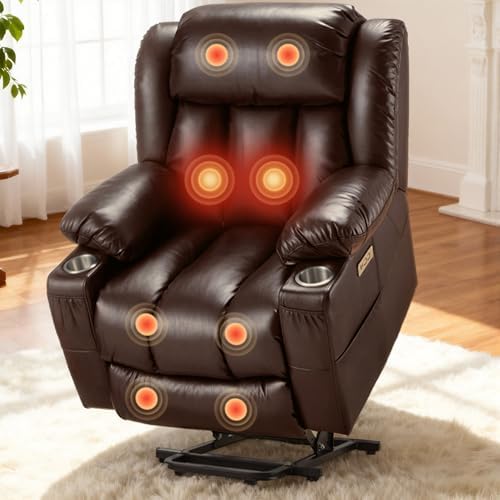
A faux leather or leather match lift recliner is the common choice where cleanability is the priority and the budget is not unlimited. It looks the part, wipes down in seconds, and comes in the widest selection of frame sizes and recline types.

When the Chair Is a Piece of Living Room Furniture
A genuine top grain leather lift recliner is the choice where the chair has to sit alongside good furniture and last. Hide ages rather than degrades, developing a patina instead of flaking, and it holds up to daily use better than bonded alternatives.

Higher Capacity in a Leather Finish
Heavy duty frames are available with leather and faux leather upholstery too, though the selection is narrower. If both a higher weight rating and a wipe-clean surface are needed, check the bariatric options before settling on a material.
Comparing Upholstery Choices
| Material | Strength | Weakness |
|---|---|---|
| Top grain leather | Durable, ages well, wipes clean | Costs more, dislikes direct sun |
| Bonded leather | Looks like leather when new | Can flake and peel with age |
| Faux or PU leather | Easy to clean, wide selection | Can crack over time, less breathable |
| Microfiber fabric | Warm, grippy, comfortable | Absorbs spills, harder to clean |
| Vinyl or medical grade | Very easy to sanitize | Least comfortable against bare skin |
Grip, Temperature, and Comfort
Leather is more slippery than fabric. Whether that is good or bad depends on the person. Some find that a smoother surface makes it easier to shift position and slide toward the front of the seat; others find they slide when they would rather stay put, particularly when the chair is tilted forward by the lift function.
Temperature is the other everyday difference. Leather feels cool on contact in an unheated room and can feel warm against bare skin in summer, which is why a throw over the seat is such a common sight on leather chairs. Fabric sits in a narrower comfort band but hides spills far less well.
Common Mistakes When Buying
Assuming leather means genuine hide is the main one. Read the material line in the specifications, and if it says bonded or PU, price the chair accordingly. The second mistake is putting a leather chair in a sunny window, which fades and dries genuine hide faster than any amount of sitting in it.
The third is choosing upholstery before frame size. Material is a comfort decision; seat height and depth decide whether the chair works at all. Our sizing walkthrough covers the measurements to settle first.
A Note on Getting Advice
Upholstery is a preference rather than a care decision, but grip and transfers are connected. If you are unsure what fits your situation, ask your doctor or an occupational therapist, particularly if sliding in the seat or moving in and out of a chair has become more difficult.
Frequently Asked Questions
Is faux leather good enough for a lift chair? For many households, yes. It wipes clean, comes in the widest range of models, and holds up well if it is cleaned with a mild product rather than a harsh one.
What is bonded leather? Leather fibers mixed with adhesive and applied to a backing material. It resembles leather when new, but the surface layer can flake or peel over time, particularly on a seat used every day.
Does leather get too hot or too cold? It feels cool to the touch in a cold room and can feel warm against bare skin in summer. A throw over the seat is the usual fix and costs nothing.
Is leather slippery to sit on? More so than fabric. Some people find that helps them shift position, others prefer the grip of microfiber. If sliding forward in the seat is a concern, fabric may suit better.
How do I clean a leather lift chair? Follow the manufacturer’s instructions for the specific material. Genuine hide generally takes an occasional conditioner, while faux leather usually needs only a damp cloth and a mild cleaner.
Do leather lift chairs come in petite sizes? Some do, though the selection is narrower than in standard frames. See our guide to small lift chairs for the measurements that matter.
Should I pick material or size first? Size. Seat height, seat depth, and back height decide whether the chair suits the person; upholstery decides how it feels and how easily it cleans.
The Bottom Line
A leather lift chair earns its place through cleanability, and the material description in the listing decides how long that advantage lasts. Top grain hide ages well, faux leather is the practical middle ground, and bonded leather is the one to look at most carefully on a chair used daily. Settle the frame size first using our sizing guide, then choose the covering.