
Last updated: August 20, 2026
Most lift chairs are built around a person somewhere between five foot four and six foot. If the person who will use it is shorter than that, a standard chair goes wrong in a very specific way: the seat is too deep, so the lower back never reaches the backrest, and the seat is too high, so the feet hang instead of resting on the floor. The result is someone perched on the front edge of an expensive chair.
Petite and small frame lift chairs solve that by shrinking the seat rather than the features. This guide covers what actually changes on a small lift chair, which measurements to compare, and what to do when the numbers fall between two sizes.
This article contains affiliate links. If you buy through them, we may earn a commission at no extra cost to you. Learn more.
Quick Answer
What makes a lift chair a small or petite model?
- A lower seat height so the feet rest flat on the floor, and a shallower seat so the back can reach the backrest.
- A shorter backrest, so the top of the chair supports the shoulders instead of pushing the head forward.
- Manufacturers usually publish a user height range for petite models, commonly topping out somewhere around five foot four, and that range is the number to compare first.
Bottom line: petite means smaller seat height, seat depth, and back height, not a stripped-down chair.
Why a Standard Lift Chair Fails a Shorter User
Seat depth is the main culprit. If the seat is deeper than the distance from hip to the back of the knee, the person has to choose between resting against the backrest with their feet dangling or putting their feet down and losing all back support. Neither is comfortable for an afternoon.
Seat height compounds it. A seat that sits too high leaves the thighs sloping down and the feet unsupported, which makes the lift function less useful too, because the chair is already lifting from a position the person cannot brace against. Getting both numbers right matters more than any feature on the spec sheet.
The Footrest Problem Nobody Mentions
On a chair sized for a taller person, the extended footrest lands past the heels rather than under them. The calves then rest on the edge of the footrest instead of along it, which becomes uncomfortable long before anyone works out why. A correctly sized chair puts the heels near the end of the footrest.
The Three Measurements That Decide Fit
Sit the person on a firm dining chair with their feet flat, and take three numbers. Floor to the back of the knee gives you the seat height to aim for. Back of the hip to the back of the knee, minus roughly two inches, gives you the seat depth. Seat to the top of the shoulder gives you the minimum back height.
Compare those against the specifications rather than the marketing description, because petite is not a standardized term and one brand’s small is another brand’s medium. Our full sizing walkthrough covers how to take each measurement and what to do when a person falls between two model sizes.
Small Lift Chairs by Situation
The Standard Petite Choice
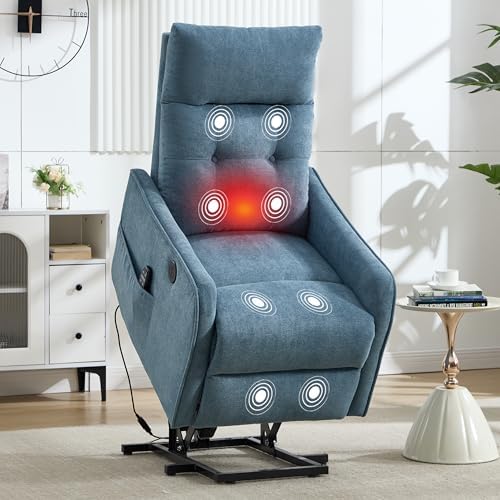
A petite two-position or three-position lift recliner with a lower seat and shallower cushion is the straightforward answer for a shorter adult who wants a comfortable chair that helps them stand. The controls, motors, and upholstery options are the same as on full-size models; only the frame dimensions change.
Small Rooms as Well as Small Users
Compact lift chairs also solve a floor space problem. In an apartment, a condo, or a bedroom that is doubling as a sitting room, a narrower frame with a wall-hugger recline mechanism keeps the chair usable without rearranging the room around it.

When Sleeping in the Chair Is Part of the Plan
If the chair will sometimes be slept in, a petite three-position model that reclines close to flat is worth the extra outlay over a two-position frame. On a small frame the difference is noticeable, because a two-position chair leaves a shorter person sitting more upright than they expect.

What Petite Models Usually Give Up
The main trade-off is weight capacity. Smaller frames often carry a lower stated capacity than full-size chairs, so check that number in the listing rather than assuming it matches. If the capacity is close to the user’s weight, look at a standard or heavy duty frame instead and solve the height problem with cushions and a footstool.
Selection is the other limit. Fewer petite models exist, so upholstery colors, fabrics, and extras like heat and massage may be more restricted than in the standard size range. That is a comfort compromise rather than a functional one.
Comparing Frame Sizes
| Frame | Typical user height range | What changes |
|---|---|---|
| Petite | Shorter users, often up to around five foot four | Lower seat, shallower seat, shorter back |
| Standard | Middle of the height range | The default dimensions most models use |
| Tall | Taller users | Higher seat, deeper seat, taller back |
| Bariatric | Varies by model | Higher listed weight capacity, wider seat |
Height ranges are set by each manufacturer and appear in the product specifications, so treat the ranges above as a rough map rather than a standard.
Common Mistakes When Buying a Petite Chair
Ordering a standard chair and planning to fix the depth with a cushion behind the back is the most frequent one. It moves the person forward, which helps the back but leaves them closer to the front edge of the seat, and it does nothing for the seat height. A cushion is a workaround, not a size.
The second is shopping on the word petite alone. Because the term is not standardized, two chairs both described as petite can differ by several inches in seat depth. Compare the actual figures side by side before deciding.
When a Chair Is Not the Answer at All
If the current armchair fits well and the only difficulty is the final push to standing, a lift assist cushion placed on the existing seat may solve the problem without changing the furniture. That option keeps the seat height and depth that already suit the person.
A Note on Getting Advice
Sizing a chair is a practical decision rather than a clinical one, but the underlying question of how someone stands up is not always simple. If you are unsure what fits your situation, ask your doctor or an occupational therapist. Occupational therapists routinely help families work out seat heights and transfers at home.
Frequently Asked Questions
What height is a petite lift chair made for? Manufacturers set their own ranges, and petite models commonly top out somewhere around five foot four. The user height range appears in the product specifications, so compare that figure per model.
What is the difference between petite and small lift chairs? Nothing consistent. Both terms describe a reduced frame, and neither is standardized, which is why the seat height, seat depth, and back height numbers are more reliable than the label.
Can a taller person use a petite lift chair? They can sit in it, but the seat will be shallow and the back too short for proper support, so it is not a good long-term choice.
Do petite lift chairs have a lower weight capacity? Often, yes. Smaller frames frequently carry a lower stated capacity than full-size models, so check the number in the listing rather than assuming it is the same.
Can I make a standard lift chair fit a shorter person? Cushions and a footstool can improve a poor fit, but they cannot lower a seat that is genuinely too high, and they push the sitter toward the front edge of the seat.
Are petite lift chairs available with heat and massage? Some are, though the choice is narrower than in standard sizes. Our heat and massage guide covers what those functions do.
How do I measure seat depth correctly? Measure from the back of the hip to the back of the knee while seated upright, then subtract roughly two inches so the seat edge does not press behind the knee.
The Bottom Line
A small lift chair is worth seeking out when the person using it is shorter than the standard frames are built for, and the case for it comes down to three numbers: seat height, seat depth, and back height. Compare those figures across models rather than trusting the word petite, and check the weight capacity, which is often lower on small frames. For the wider category, start with our lift chair recliner guide.