
Last updated: August 20, 2026
A bed alarm is a simple idea with a lot of family feeling attached to it. Someone gets up at night, nobody hears, and the next morning there is a bruise and a story that starts with “I didn’t want to wake you.” The device does one narrow thing: it lets a person in another room know that someone has left the bed or the chair.
That narrowness is worth taking seriously, because bed alarms are often sold as if they do more. This guide covers the four main types, how the sensor and the receiver fit together, and the honest limits of what a pressure pad can and cannot tell you.
This article contains affiliate links. If you buy through them, we may earn a commission at no extra cost to you. Learn more.
Quick Answer
Which bed alarm makes sense for an older adult at home?
- A cordless bed pad with a separate receiver is the usual home setup, because the alert sounds where the caregiver is rather than next to the person getting up.
- Chair pads and floor mat sensors cover the same job in a recliner or beside the bed, and a motion sensor covers a doorway without anything to sit on.
- Home units are one time purchases. Nothing in this category needs a monthly plan, and anything that does is a monitoring service rather than an alarm.
Bottom line: pick the sensor by where the person actually gets up, and pick a cordless model so the sound reaches you instead of startling them.
How Bed Alarms Work
A bed alarm has two parts: a sensor and an alarm unit. The sensor is usually a thin pressure pad placed under the sheet or on top of the mattress. While weight rests on it the circuit stays closed, and when the weight lifts the alarm unit is signalled. That is the whole mechanism.
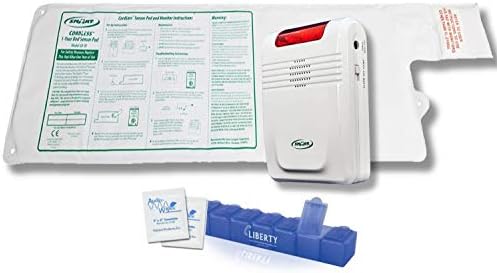
In corded systems the alarm box hangs on the bed frame and sounds in the room. In cordless systems the pad transmits to a receiver that can be carried to another room, which is why cordless is the more common choice at home. The pad itself works the same either way.
What the Alert Actually Tells You
The signal means weight came off the pad. It does not distinguish between standing up, rolling to the far side of the bed, or reaching for a glass of water. Reading the alert as “someone is up and moving” rather than anything more specific keeps expectations realistic and reduces the urge to switch the thing off after a week of false alerts.
The Four Types Worth Knowing
Most of this category is one of four sensors: a bed pad under the sheet, a chair pad on a seat cushion, a floor mat beside the bed, or a motion sensor aimed at a doorway. They share receivers and alarm logic, so the choice comes down to where the person is when they move, not to brand.
Households often end up combining two, typically a bed pad at night and a chair pad for the afternoon recliner. Check before buying that one receiver can accept more than one sensor if that is where you expect to end up.
Bed Alarms by Situation
Overnight Monitoring From Another Bedroom
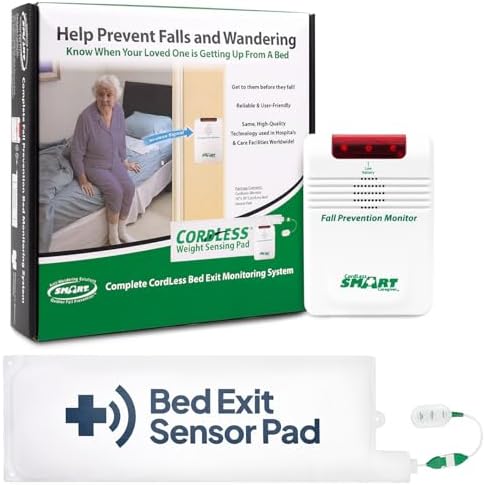
The standard home configuration is a cordless bed sensor pad paired with a portable receiver. The pad goes under the fitted sheet at shoulder or hip level, and the receiver sits on the caregiver’s nightstand. Nothing sounds in the sleeper’s room, which is the main advantage over a corded unit.
Getting Up From a Recliner During the Day
A chair pad is the same technology in a smaller format, sized to sit under a seat cushion. It suits the household where the concern is the afternoon rather than the night, and it pairs with the same style of receiver.

When a Pad Under the Sheet Is Not Tolerated
Some people find a pad under the sheet uncomfortable or simply move it. A floor mat alarm placed beside the bed sidesteps that entirely, because it only registers when a foot lands on it. It also gives a slightly later signal, since it triggers after standing rather than at the moment weight lifts.

Covering a Doorway Instead of a Surface
A motion sensor alarm mounted near a bedroom or bathroom door covers movement without anything to sit or lie on. It is the least intrusive option and the vaguest, since it reports that someone passed by rather than who or why.

Corded Systems for a Single Room
If the caregiver sleeps in the same room, a corded bed alarm with the box mounted on the bed rail is simpler and has nothing to pair. Volume is usually adjustable, and a lower setting is worth using so the alert informs rather than startles.
Comparing the Sensor Types
| Sensor | Best suited to | Main limitation |
|---|---|---|
| Bed pad | Overnight, person stays in bed for long stretches | Can be felt through thin sheets; pads wear out |
| Chair pad | Daytime recliner or dining chair | Only covers that one seat |
| Floor mat | People who dislike pads or shift position often | Signals slightly later, must stay in the walking path |
| Motion sensor | Doorways and hallways | Cannot tell who triggered it |
| Corded alarm box | Same room caregiving | Sound goes off next to the person getting up |
Choosing Between Corded and Cordless
Cordless is the better default in a house, because the whole point is that the alert reaches a person who is somewhere else. Check the stated range and remember that walls and floors reduce it, so a receiver two floors up may not be as reliable as the box claims.
Corded units are cheaper, simpler, and have no pairing to lose. Their drawback is real though: an alarm sounding beside the bed at two in the morning is a jarring way to be told you have stood up, and that is the main reason families abandon them.
Volume, Tone, and Nighttime Use
Look for a receiver with adjustable volume and, ideally, more than one tone. Some models offer a chime or a vibration option instead of a siren, which is far easier to live with over months. A device that cannot be turned down usually ends up turned off.
Honest Limits and the Dignity Question
A bed alarm reports movement. It does not steady anyone, catch anyone, or stop anything from happening, and it should never be described as if it does. What it buys is time: someone knows sooner, and can be there sooner.
It is also a device that watches a person in their own bedroom, and that deserves a conversation rather than an installation. Most people accept it readily when the reason is explained and they are part of the decision. If you are unsure whether a bed alarm fits your situation, ask your doctor or an occupational therapist, who will often look at the room, the lighting, and the path to the bathroom first.
What Usually Belongs Alongside It
An alarm rarely stands alone. A clear path to the bathroom, a lamp within reach or a plug in light, and a grab point near the bed are the low technology parts of the same problem. Our guides to bedroom safety and motion sensor night lights cover those.
Frequently Asked Questions
What is a bed alarm for the elderly? A pressure sensitive pad or mat paired with an alarm unit that signals when someone gets out of bed. Home versions are commonly used by family caregivers who sleep in another room.
Do bed alarm pads need a monthly subscription? No. Home bed alarms are a one time purchase and work entirely between the sensor and its receiver. Any product asking for a monthly fee is a monitoring service, which is a different category.
Where should the bed pad be placed? Under the fitted sheet, roughly under the shoulders or hips, so that normal lying position keeps weight on it. Manufacturers give a placement diagram, and following it reduces false alerts considerably.
How long does a bed sensor pad last? Pads are consumables and most listings state an expected service life in months. They lose sensitivity with use and cleaning, so plan on replacing the pad while keeping the receiver.
Are bed alarms uncomfortable to lie on? Most are thin enough to disappear under a fitted sheet, though people who are sensitive to texture may notice the edge. A floor mat alarm avoids the issue completely.
Can one receiver handle a bed pad and a chair pad? On many cordless systems yes, if the sensors are from the same range. Check the stated number of paired transmitters before assuming, especially if you plan to add a call button later.
Will a bed alarm stop someone from falling? No, and no honest product description should suggest otherwise. It tells you that someone is up so you can respond sooner. What to do in the moment is covered in our guide on what to do if an older person falls.
What is the difference between a bed alarm and a bed rail? A rail is a physical support to hold when getting in and out of bed, an alarm is an alert. They answer different questions, and the tradeoffs of rails are covered in our bed rail safety guide.
The Bottom Line
Choose the sensor that matches where the person actually gets up, and choose cordless so the alert reaches the caregiver rather than the sleeper. Adjustable volume and a replaceable pad are the two features that decide whether the system is still in use six months later. A bed alarm is one part of a bedroom setup, not the whole of it, so pair it with the practical changes in our bedroom safety guide.