Last updated: August 20, 2026
A transport chair is a lightweight wheeled chair with four small wheels, designed to be pushed by someone else. It is not a wheelchair in the self-propelling sense: there are no large rear wheels with hand rims, so the person seated cannot move it on their own. That single design decision is what makes it lighter, narrower, and easier to fold than a standard wheelchair.
Families usually arrive at transport chairs for one of two reasons. Either the distances have grown longer than a rollator comfortably covers, such as airports, museums, and hospital campuses, or someone needs to be moved short distances at home. This guide covers the differences that matter, the measurements to take, and where a transport chair is and is not the right answer.
This article contains affiliate links. If you buy through them, we may earn a commission at no extra cost to you. Learn more.
Quick Answer
What is a transport chair, and when do you need one?
- It is a lightweight four-small-wheel chair pushed by a caregiver, with no hand rims for the seated person to self-propel.
- It suits long distances where walking is not realistic, such as airports and appointments, and it folds smaller and lighter than a standard wheelchair.
- Measure seat width against the user’s hips plus a margin, check the listed weight capacity, and confirm the folded size fits the car it travels in.
Bottom line: choose a transport chair when someone else does the pushing and portability matters; choose a standard wheelchair when the seated person needs to move themselves.
Transport Chair or Wheelchair
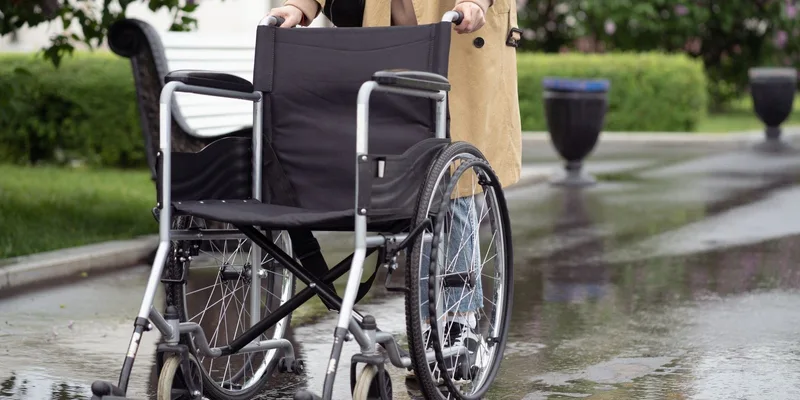
The visible difference is wheel size at the back. A standard wheelchair has large rear wheels with hand rims so the occupant can propel themselves. A transport chair has four small wheels and no rims, so it always needs someone pushing. That removes weight and bulk, which is exactly why transport chairs exist.
The practical consequence is independence. If the seated person can and wants to move themselves, a transport chair takes that away. If they cannot, or if the chair is only used occasionally for long distances, the lighter and more portable design is usually the better fit.
Brakes on a Transport Chair
Most transport chairs have wheel locks on the rear wheels, operated by the person seated or by the caregiver. Many also offer attendant brakes: hand levers on the push handles that let the caregiver slow the chair on a slope, which is worth looking for if the route involves ramps or hills.
Measuring for Fit
Seat width is the primary measurement. Have the user sit on a firm chair and measure across the widest point of the hips and thighs, then add roughly an inch on each side for clothing and comfort. Compare that to the listed seat width, since a chair that is too narrow is uncomfortable and one that is far too wide gives poor support.
Seat depth and back height come next. Seat depth should support most of the thigh without pressing into the back of the knee, and back height depends on how much trunk support the user needs. All three figures appear on most product listings; if they do not, that is a reason to look elsewhere.
Transport Chairs by Situation
The Standard Portable Choice
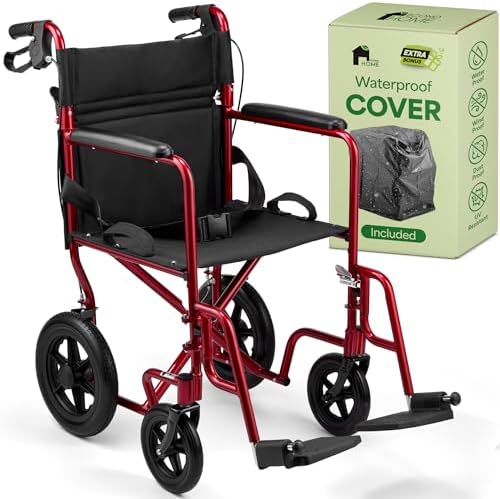
A folding aluminum transport chair with swing-away or removable footrests, rear wheel locks, and a seat width in the common range covers most occasional use. It folds side to side, loads into a trunk, and weighs far less than a standard wheelchair.
Travel and Airports
Compact travel transport chairs prioritize folded size and weight, sometimes folding in two directions to fit an overhead bin or a small trunk. Airlines set their own rules for mobility devices, so confirm with the carrier rather than relying on the product description.

Wider Seats and Higher Capacity
Bariatric transport chairs are built with wider seats, reinforced frames, and higher listed weight capacities. Read both the seat width and the capacity from the specific listing, because they vary by model even within one brand’s range.

Longer Distances and Ramps
Transport chairs with larger rear wheels roll more smoothly over sidewalk seams and thresholds than the smallest-wheeled models, and attendant hand brakes give the person pushing control on a slope. Both features add a little weight and are worth it on longer routes.

Transport Chair Compared With the Alternatives
| Device | Who moves it | Typical use |
|---|---|---|
| Transport chair | A caregiver pushes | Long distances, occasional use, travel |
| Standard wheelchair | Occupant or caregiver | Daily use with self-propelling |
| Rollator with seat | User walks, sits to rest | Walking with rest stops |
| Upright rollator | User walks | Walking with forearm support |
| Cane with seat | User walks and perches | Occasional short rests |
Getting In and Out
Transfers into and out of a transport chair are where most of the real-world difficulty sits, not the pushing. Lock both rear wheels first, move or swing away the footrests so nothing is in the path, and give the person room to stand or pivot. Footrests that stay in place are a common obstacle during transfers.
Transfer technique is worth learning properly rather than improvising, both for the person moving and for the person helping. An occupational or physical therapist can walk a family through it, and equipment such as a gait belt or a transfer board is often part of that conversation.
Thresholds, Curbs, and Small Wheels
Small front wheels catch on raised thresholds and door strips, which is a routine annoyance at home. A low threshold ramp solves the common indoor version. Curbs and steps outdoors are a different problem and need either a curb cut, a portable ramp, or a different route.
Common Mistakes When Buying a Transport Chair
Buying on frame weight alone is the first. A very light chair with the smallest possible wheels is a pleasure to lift and a struggle to push over anything but smooth floors. If the chair will cross parking lots and sidewalks, larger rear wheels earn their extra pounds.
The second is skipping the seat width measurement and ordering a common default. Seat width is the fit dimension that most affects comfort over a long day, and it is the one most often guessed. Measure across the hips, add margin, and match it to the listing.
A Note on Choosing Between Devices
Moving from a walking aid to a wheeled chair is a meaningful change and is worth discussing before it is bought. If you are unsure what fits your situation, ask your doctor or an occupational therapist, who can look at endurance, transfers, and the routes the person actually travels. They can also advise on seat sizing, which is easier to get right with someone measuring in person.
Frequently Asked Questions
What is the difference between a transport chair and a wheelchair? A transport chair has four small wheels and no hand rims, so it must be pushed by someone else. A standard wheelchair has large rear wheels with rims that let the occupant propel themselves. Transport chairs are lighter and fold smaller as a result.
Can you push a transport chair by yourself while seated in it? No. Transport chairs have no hand rims and the small rear wheels are not designed for self-propulsion. If independent movement matters, a standard wheelchair is the right category.
How do I choose the right seat width? Measure across the widest point of the hips and thighs while seated, then add roughly an inch on each side. Match that to the listed seat width on the product page rather than assuming a standard size.
What weight capacity do transport chairs have? It varies by model, and bariatric versions list higher maximums than standard ones. Take the number from the specific product listing, since capacity and seat width differ even within one brand’s lineup.
Do transport chairs have brakes? Most have rear wheel locks for parking. Attendant hand brakes on the push handles are a separate feature, worth looking for if the routes include slopes or ramps, and they are listed as a feature when present.
Can a transport chair be taken on a plane? Airlines set their own policies for mobility devices, so confirm with the carrier before travel. Compact folding models with small folded dimensions are generally easiest to gate check, but the airline’s rules govern.
Is a transport chair easier to fold than a wheelchair? Generally yes, since there are no large rear wheels to work around, and most fold side to side into a narrow package. Check the listed folded dimensions against the space in the vehicle it will travel in.
Does Medicare cover a transport chair? Coverage depends on the plan, the situation, and how the equipment is prescribed and supplied, so no single answer applies to everyone. Check the current rules at medicare.gov and confirm with the specific plan.
The Bottom Line
A transport chair is the right tool when someone else does the pushing and the chair spends more time folded in a trunk than in use. Measure seat width across the hips with a margin, check the listed weight capacity, and think honestly about the surfaces the chair will cross, because the smallest wheels are the hardest to push outdoors. If the seated person can and wants to move themselves, a standard wheelchair is the better category. For walking with rest stops rather than being pushed, our rollator with seat guide covers that case.