Last updated: August 20, 2026
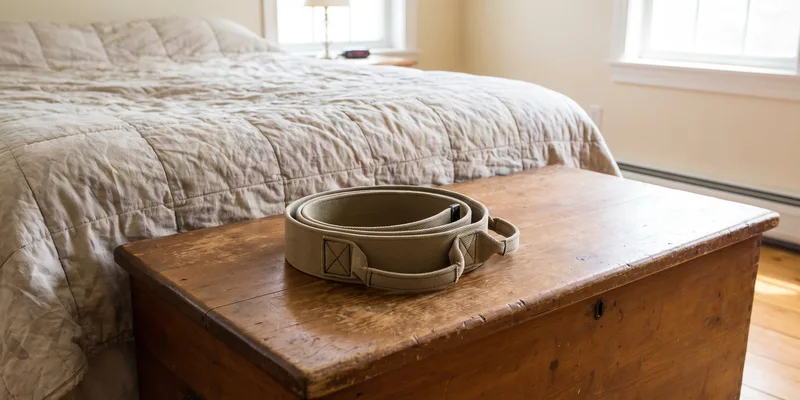
A gait belt is a simple thing: a length of webbing that buckles around the waist so a caregiver has something firm to hold instead of grabbing an arm, a waistband, or a handful of clothing. Physical and occupational therapists use them constantly, and families who help with transfers at home usually come across them the first time a professional demonstrates a safer way to assist.
The buying decision comes down to four things: length, buckle type, whether it has handles, and how it feels against skin over repeated use. This guide works through each of those, and covers the part that matters more than the product itself, which is being shown how to use one properly.
This article contains affiliate links. If you buy through them, we may earn a commission at no extra cost to you. Learn more.
Quick Answer
Which gait belt should you buy?
- Match the length to the waist measurement with room to spare. Standard belts are commonly around 60 inches, with longer options sold for larger waists and over clothing.
- Handles are the biggest usability difference. They give a caregiver a defined grip and make the hold easier to maintain than flat webbing alone.
- Quick release plastic buckles are faster; metal loop buckles are the traditional design many therapists teach with. Both are widely used, so pick the one you can operate confidently.
Bottom line: a belt is only useful with the right technique. Ask a physical or occupational therapist to show you before relying on one.
What a Gait Belt Is Designed to Do
A gait belt gives the person assisting a secure, central place to hold. Without one, helpers instinctively grab an upper arm or the back of a shirt, which puts force through a shoulder joint or a piece of fabric rather than through the torso. The belt is designed to provide a controlled grip point close to the body’s center, which is where a helper has the most useful leverage.
| Feature | What it changes |
|---|---|
| Length | Must reach around the waist with enough tail to buckle comfortably |
| Handles | Defined grip points, easier to hold than flat webbing |
| Buckle type | Quick release plastic versus traditional metal loop |
| Padding | Comfort over repeated or longer use, more bulk |
| Material | Cotton webbing feels softer, nylon wipes clean more easily |
Gait Belts by Situation
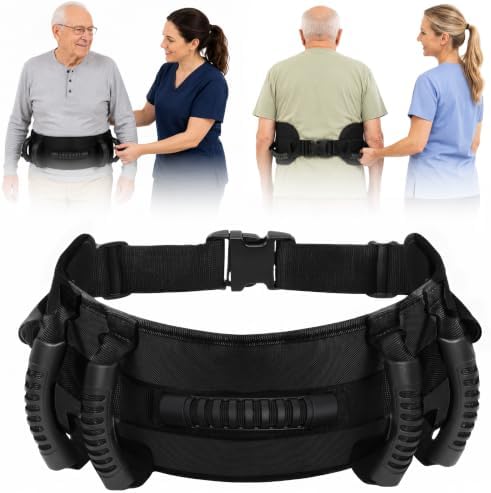
Home Caregivers Helping With Transfers
A belt with sewn handles is the most common recommendation for family caregivers, because holding a handle is far easier to maintain than gripping flat webbing, especially for smaller hands. Look at how many handles there are and where they sit, since handles spaced around the belt give options depending on which side you stand.

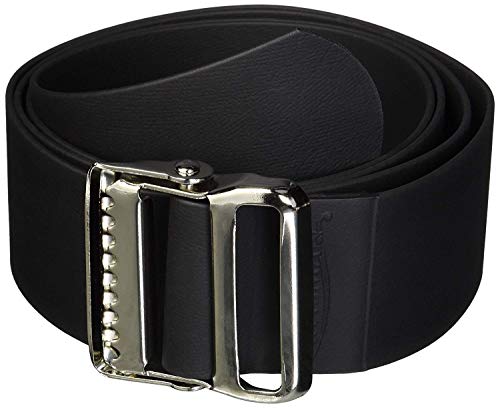
The Traditional Metal Buckle Belt
Plain webbing with a metal loop buckle is the design most therapists learn on, and it holds at any length rather than at fixed increments. It takes a little practice to thread and cinch quickly, which is exactly why a therapist demonstration is worth having before you rely on it.
Quick Release for Faster Fastening
Plastic side release buckles fasten and unfasten in a second, which suits situations where the belt goes on and off several times a day. Check that the buckle clicks positively and that the length adjustment holds without creeping under load.
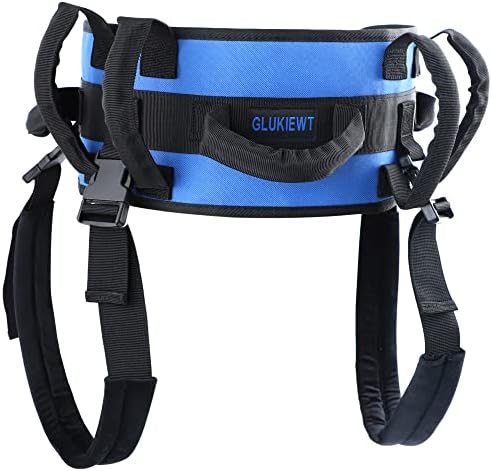
Comfort Over Longer Use
Padded belts spread pressure across a wider band, which matters when the belt is worn for a while or when skin is thin and easily marked. The tradeoff is bulk, and a padded belt can feel less precise to hold than a plain webbing one.
Larger Waists and Bariatric Sizing
Standard belts run out of length sooner than people expect, particularly over clothing. Extended length and bariatric belts are sold specifically for this, and manufacturers state both length and, in some cases, a weight capacity. Where a rating is given, treat it as a limit rather than a suggestion.

Getting the Length Right
Measure the waist where the belt will sit, which is above the hips and below the ribs, over the clothing that will normally be worn. Then allow extra length for the buckle and a comfortable tail. A belt that only just closes is awkward to fasten and leaves nothing to adjust when a heavier layer goes on in winter.
Common lengths sit around 60 inches for general use, with shorter and considerably longer options available. If the measurement lands near the top of a belt’s range, size up rather than down, since excess webbing is a minor nuisance while a belt that will not close is unusable.
Material and Cleaning
Cotton webbing is soft and traditional; nylon and polyester wipe down more easily and dry faster. If the belt will be cleaned frequently, check the manufacturer’s washing guidance, and replace any belt with fraying webbing, a cracked buckle, or stitching coming loose at a handle. Hardware and stitching are the parts that fail, and both are visible if you look.
Technique Matters More Than the Belt
A gait belt does not make an unsafe transfer safe. It gives a better hold, and the rest depends on positioning, the helper’s own body mechanics, and whether the person being helped can bear weight through their legs at all. That last point is not something a product page can assess, and it is the reason professional guidance comes first.
Ask a physical or occupational therapist to demonstrate with the actual person and the actual furniture involved. Most will happily do this, and a single session tends to change how families do transfers far more than any purchase. Our step by step walkthrough in how to use a gait belt covers what that demonstration usually includes.
When a Belt Is Not the Right Tool
Gait belts are not appropriate in every situation. Recent surgery, certain abdominal or spinal conditions, fragile skin, and situations where the person cannot bear weight all change the picture, and some of those call for a different piece of equipment entirely, such as a transfer board for seated moves. Ask a clinician who has seen the person rather than deciding from a listing.
Common Mistakes When Buying
- Buying too short. Measure over the clothing that will be worn, and size up if you are between lengths.
- Assuming handles are always better. They usually help, but a bulkier handled belt can be harder to position on a small frame.
- Skipping the demonstration. The belt is the cheap part; the technique is what makes it worth having.
- Using it as a lifting strap. A gait belt is for guiding and steadying, not for hoisting someone who cannot bear weight.
- Leaving a worn belt in service. Fraying webbing, loose handle stitching, or a cracked buckle means replace it.
Frequently Asked Questions
What is a gait belt used for? It gives a caregiver a firm central place to hold while helping someone stand, sit, or walk short distances, instead of gripping an arm or clothing. It is designed to provide a controlled hold, not to lift someone.
What length gait belt do I need? Measure the waist over normal clothing, then add room for the buckle and a tail. Around 60 inches covers many adults, with extended lengths sold for larger waists. Size up if you are between lengths.
Are handles on a gait belt worth it? For most home caregivers, yes. Handles give defined grip points that are easier to hold than flat webbing, particularly for smaller hands or when the helper is shorter than the person being assisted.
Metal buckle or quick release? Metal loop buckles adjust to any length and are what most therapists teach with. Quick release buckles are faster to fasten. Choose the one you can operate confidently, since fumbling with a buckle mid transfer is its own problem.
Can anyone use a gait belt? No. It is not appropriate in every situation, including some post surgical, abdominal, spinal, and fragile skin situations, and it does not suit someone who cannot bear weight through their legs. Ask a physical or occupational therapist about the specific person.
How tight should a gait belt be? Snug enough that it does not ride up, loose enough to slide a flat hand underneath, and always over clothing rather than bare skin. A therapist demonstration is the reliable way to calibrate this.
How do you wash a gait belt? Follow the manufacturer’s guidance, which varies with material. Nylon and polyester generally wipe clean easily; cotton webbing often needs laundering. Replace rather than repair any belt with damaged stitching or hardware.
The Bottom Line
Choose a gait belt by length first, then decide between handles and plain webbing and between a quick release and a metal buckle based on what you can operate confidently. Padded belts help over longer wear, and extended lengths exist for a reason. Then get shown how to use it, because technique is what makes the belt worth owning. Start with our walkthrough in how to use a gait belt.