Last updated: August 20, 2026
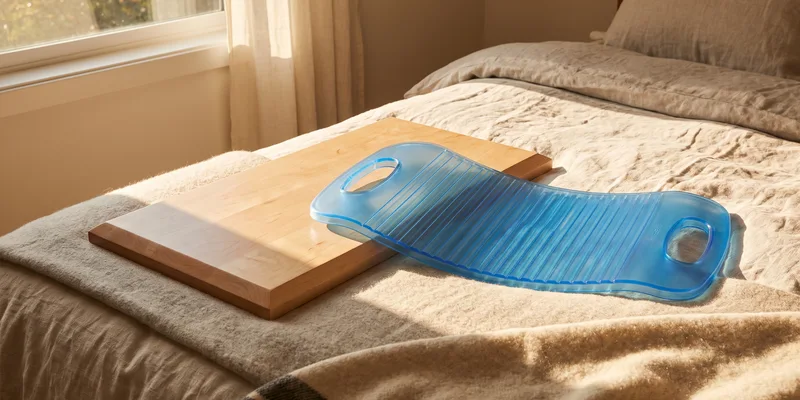
A transfer board, also called a slide board, bridges the gap between two seated surfaces so a person can move across without standing. One end goes under the hip, the other rests on the destination, and the move happens in small shifts along the board rather than in one big lift. Wheelchair to bed, wheelchair to car seat, bed to commode: those are the situations it exists for.
It is a different tool from a gait belt, and the two are not interchangeable. A belt helps someone who can stand; a board helps someone who cannot, or for whom standing is the risky part of the move. This guide covers the types, the sizing decisions, and the surface conditions that decide whether a board works at all.
This article contains affiliate links. If you buy through them, we may earn a commission at no extra cost to you. Learn more.
Quick Answer
Which transfer board should you choose?
- Straight boards suit direct, aligned moves such as bed to wheelchair. Curved boards are made for angled moves, typically wheelchair to car.
- Boards with a rotating disc or sliding seat reduce the friction of shifting along the surface, which matters when the person cannot lift their own weight much.
- Length must span the gap with enough overlap at both ends, and the manufacturer’s stated weight capacity is a limit rather than a target.
Bottom line: board choice depends on the specific move. Ask an occupational or physical therapist to look at the transfer before buying.
The Main Types
Boards differ in shape, surface, and whether anything moves. Shape decides which transfers are geometrically possible; surface decides how much effort each shift takes; a moving element decides how much of the sliding the person has to generate themselves.
| Type | Built for | Notes |
|---|---|---|
| Straight board | Aligned seat to seat moves | Simplest, easiest to store |
| Curved board | Angled moves, wheelchair to car | Shape follows the arc between seats |
| Board with sliding seat | Longer or harder moves | A pad or disc travels along the board |
| Tapered end board | Getting the end under the hip | Thinner leading edge slides under more easily |
| Notched or cut out board | Clearing a wheelchair wheel | Cutouts allow the board to seat past the wheel |
Transfer Boards by Situation
Bed to Wheelchair at Home
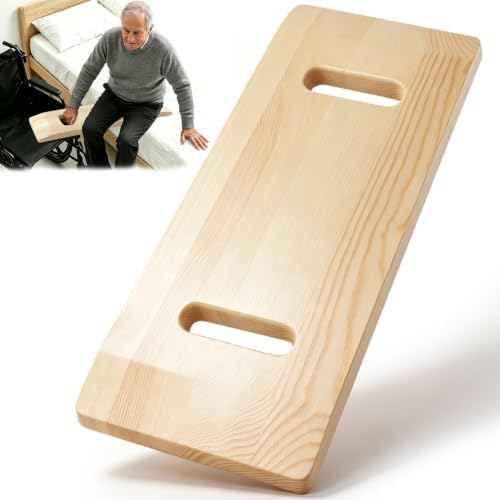
A straight board of moderate length covers the most common home transfer, where the two surfaces can be brought parallel and close together. Look for a tapered end that slides under the hip without needing a big lift, and a surface that is slick enough to shift on but not so slick that the board feels unstable.
Getting In and Out of a Car
Car transfers are angled and involve a door frame, which is why curved boards exist. The curve follows the arc from a wheelchair beside the car to the seat inside, and length matters because the sill sits between the two surfaces rather than beside them.

When Sliding Is the Hard Part
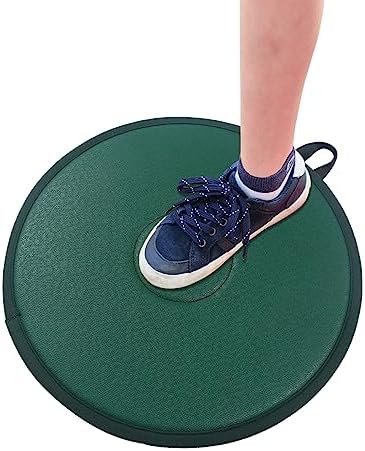
Boards with a rotating disc or a sliding pad let the person move without dragging across the surface, which reduces friction on skin and clothing and takes effort out of the transfer for both people. They are bulkier and cost more in storage space, but for a daily transfer that trade often makes sense.
Heavier Users
Weight capacity is stated per product and varies widely with material and thickness. Where a listing gives a rating, treat it as the ceiling, and pay attention to board thickness and material as well, since a board that flexes noticeably under load is unsettling to sit on mid transfer.

Getting the Length Right
Measure the gap the board has to bridge in the position the transfer will actually happen, with the wheelchair where it will be parked and the brakes on. Then add overlap at both ends, because a board that only just reaches has no margin if anything shifts during the move.
Longer is not automatically better. A board that extends well past the destination is harder to handle, harder to store, and can catch on furniture or a car door. Aim for enough overlap to feel secure with the two surfaces as they normally sit.
Height Difference Between Surfaces
Boards work best when the two surfaces are close in height, ideally with a slight downhill in the direction of travel. A big step up makes the move considerably harder, which is why bed height often gets adjusted first when a board comes into the picture. An occupational therapist will usually look at this before recommending a board at all.
Surfaces, Clothing, and Skin
What the person is sitting on matters as much as the board. A slick cushion cover slides; a textured or rubberized one does not. Clothing behaves the same way, and bare skin against a board is the situation to avoid, both for comfort and because friction on skin during repeated transfers is something therapists watch carefully.
Some households use a slide sheet or a fabric pad on top of the board to solve this. If skin condition is a concern at all, raise it with a clinician rather than working it out by trial, since skin integrity during transfers is exactly the kind of thing an occupational therapist assesses routinely.
Using It Safely
The basics are consistent across boards. Position the two surfaces close and as level as possible, lock every brake and wheel, remove the wheelchair armrest on the transfer side if it comes off, and seat the board firmly under the hip rather than balancing it on the edge of the cushion. Then move in several small shifts rather than one long slide.
Hands go on the board or the seat surface, not curled under the edge where fingers can be pinched as weight passes over. A helper steadies and guides rather than pulling, and where a caregiver is assisting a standing transfer instead, the technique in how to use a gait belt applies. If you are unsure what fits your situation, ask your doctor or an occupational therapist.
Frequently Asked Questions
What is a transfer board used for? It bridges the gap between two seated surfaces so a person can move across without standing, such as bed to wheelchair, wheelchair to car, or bed to commode.
What is the difference between a transfer board and a slide board? The terms are used interchangeably for the same product. Some manufacturers reserve slide board for models with a sliding pad or disc, but there is no consistent distinction across the market.
What length transfer board do I need? Measure the actual gap with the wheelchair parked where it will be and brakes on, then add overlap at both ends. Avoid going much longer than needed, since excess length is awkward to handle and store.
Straight or curved? Straight for aligned, direct moves between two parallel surfaces. Curved for angled transfers, most commonly wheelchair to car seat, where the path between the two seats is not a straight line.
Can one person do a board transfer alone? Sometimes, depending on the person’s arm strength, trunk control, and the surfaces involved. That assessment belongs with a physical or occupational therapist rather than a product listing.
Do transfer boards work on any wheelchair? They need an armrest that removes or swings away on the transfer side, and enough clearance past the wheel. Notched boards exist for exactly that clearance problem.
How do I stop the board sliding during the transfer? Lock all brakes, seat the board firmly under the hip rather than on the cushion edge, keep the two surfaces close, and move in small shifts. If the board still moves, the setup needs adjusting before the transfer continues.
The Bottom Line
Pick a transfer board by the specific move: straight for aligned seat to seat, curved for the car, and a sliding seat model where friction is the limiting factor. Measure the real gap, respect the stated weight capacity, and get the two surfaces as level as you can. Have an occupational or physical therapist look at the transfer first, since board choice and technique go together. For standing transfers instead, see our guide to the gait belt.