Last updated: August 20, 2026
The front steps are usually the first thing that stops working. A wheelchair, a rollator, or simply a knee that no longer bends far enough turns three concrete steps into the reason someone stops leaving the house. Once a family starts looking at ramps, the next question arrives within about a minute: is any of this covered.
This article explains how that question is actually structured, which official sources can answer it for a specific person, and what to have ready before you call. We are a product guide, not an insurance resource, and nothing here is coverage advice or a promise about what any plan will do.
This article contains affiliate links. If you buy through them, we may earn a commission at no extra cost to you. Learn more.
Quick Answer
Does Medicare cover a wheelchair ramp?
- There is no general yes or no. Coverage depends on the specific plan a person holds, on how the item is classified, and on the individual situation.
- Ramps are frequently discussed as a home modification rather than as equipment, and those two labels are handled differently in the program’s own materials.
- The answers that count come from medicare.gov and from the member services line of the actual plan, not from a retailer or from an article.
Bottom line: treat this as a question about one item and one plan, ask it through official channels, and write down who told you what.
Why Ramps Sit in an Awkward Category
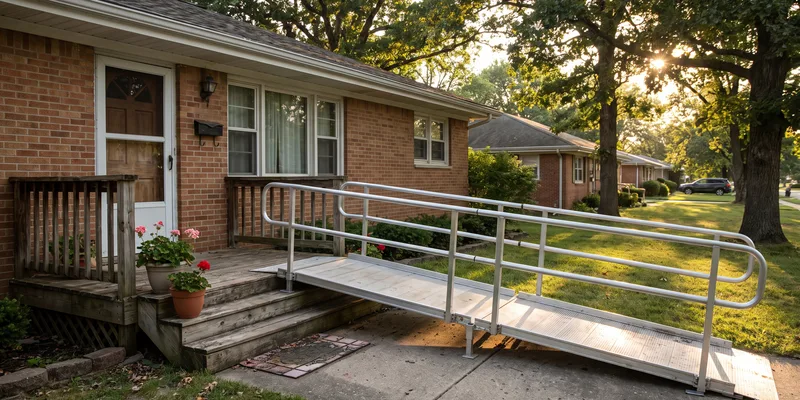
A ramp is unusual among mobility items because it is attached to a building rather than to a person. Most items families ask about, such as walkers and wheelchairs, are described in program materials as equipment used by an individual. A ramp changes the house itself, which is why it is often discussed alongside widened doorways and bathroom modifications rather than alongside rollators.
That distinction is not a technicality invented by insurers. It is the line that decides which department you talk to, which form is involved, and whether the question even belongs to Medicare at all rather than to a housing program, a state waiver, or the household budget.
Portable and Permanent Are Not the Same Question
A threshold ramp that sits loose at the back door, a folding suitcase ramp that travels in a car, and a bolted modular ramp system running down to the driveway are three different purchases with three different conversations attached to them. When you call, name the exact item you are asking about rather than saying “a ramp”, because the answer can differ between them.
What Actually Determines the Answer
Four things decide the outcome for any one household: which plan the person holds, how the item is classified, what documentation exists, and where the item is obtained. None of those are visible from a product page, which is why no article can predict the result for you.
The plan itself is the biggest variable. Original Medicare and the private plans sold as Medicare Advantage are administered differently, and some private plans offer supplemental benefits that Original Medicare does not. Two neighbors on paper can be in genuinely different positions.
Find Out Which Plan Is Actually Held
Before any other step, look at the card in the person’s wallet and the plan documents that arrive each autumn. Families regularly spend a week researching the wrong program because nobody checked whether the parent is on Original Medicare, a Medicare Advantage plan, or a combination with other coverage. The card settles it in ten seconds.
Where to Get an Answer You Can Rely On
Three sources give answers that are worth acting on. The official program site, medicare.gov, is the reference point for how items are described and which rules apply. The member services number printed on the person’s card answers questions about that specific plan. And every state has free, independent counseling through the State Health Insurance Assistance Program, listed on medicare.gov.
That last one is the option most families miss. SHIP counselors do not sell anything, and they are used to exactly this sort of question. Talking to one before you talk to a supplier tends to shorten the whole process.
What to Have Ready Before You Call
| Have ready | Why it matters |
|---|---|
| The plan card | Identifies the plan and the member services number to call |
| The exact item | Threshold, folding, or modular changes the conversation |
| Rise measurement | The vertical height from ground to threshold, in inches |
| Who prescribed what | Any existing documentation from a clinician about mobility needs |
| Supplier details | Where the item would come from, if that has been decided |
| A notebook | Date, name, and reference number for every call you make |
Keeping a record is not bureaucratic caution. Coverage questions often involve several calls to different departments, and being able to say who told you what, and when, is what keeps the process from restarting each time.
The Measurement You Need Either Way
Whatever the coverage answer turns out to be, the ramp still has to fit the entrance. The single number that drives everything is the rise: the vertical distance from the lower surface to the top of the threshold or landing. Measure it with a tape held plumb, not along the slope, and write it down before you shop or call.
For reference on slope, the 2010 ADA Standards for Accessible Design specify a maximum running slope of 1:12 for ramps in the settings the standard covers, meaning twelve inches of ramp length for every inch of rise. Private homes are not covered by the ADA, so that figure is not a legal requirement for a house. Families use it anyway because it is a published, sourced benchmark rather than a guess, and our ramp length guide works through what it means in practice.
Other Routes Families Look At
Beyond the Medicare question, households commonly ask about state programs, veterans’ services, local nonprofits, and Area Agency on Aging offices, which exist in every region and can point to local resources. We do not evaluate any of these, and eligibility varies enormously by state and by situation.
If money is the reason a ramp has not happened, that is worth saying plainly to a SHIP counselor or an Area Agency on Aging office rather than to a salesperson. They know the local landscape, and they have no product to move.
Be Careful With Sellers Who Sound Certain
Any company that guarantees coverage before seeing the plan documents is telling you something it cannot know. Coverage determinations depend on the individual and the plan, and a confident sentence on a landing page is a sales technique rather than information. The same applies to installation companies that offer to handle the paperwork in exchange for signing a contract on the spot.
Take the time to confirm through the official channels first. If a supplier is genuinely the right route, that will still be true a week later.
A Note on Getting Advice
Choosing between a portable ramp, a permanent ramp, and a different entrance altogether depends on the person’s mobility, on who will be pushing, and on the layout of the property. If you are unsure what fits your situation, ask your doctor or an occupational therapist, who can look at the entrance and the person together before anything is ordered. Our broader Medicare and home safety equipment overview covers how the same question works across other items.
Frequently Asked Questions
Is a wheelchair ramp classified as durable medical equipment? That classification is exactly what the question turns on, and it is not ours to assign. Ramps are frequently discussed as home modifications rather than as equipment used by a person. Ask how the specific item you want is treated under the specific plan, and see our explanation of the term for background.
Does it help to have a doctor recommend a ramp? Documentation from a clinician about mobility needs is part of what plans look at for many items, and having it costs nothing to obtain during an appointment that is happening anyway. Whether it changes the outcome for a ramp is a question for the plan, not for us.
Are portable ramps treated differently than built ramps? They can be, which is why naming the exact item matters when you call. A threshold ramp, a folding suitcase ramp, and a bolted modular system are different purchases with different suppliers and different paperwork.
Does Medicare Advantage change the answer? Private plans sold as Medicare Advantage set their own supplemental benefits within program rules, so their answers can differ from Original Medicare and from each other. Read the plan’s own member documents and call the number on the card.
Who can help without trying to sell me something? Every state runs free counseling through the State Health Insurance Assistance Program, listed on medicare.gov, and Area Agency on Aging offices handle local questions. Neither sells equipment.
What if the answer is no? Then the decision becomes a straightforward buying question, and portable ramps cover a large share of household situations without any construction. Our portable ramp guide and threshold ramp guide start from the measurements rather than from the paperwork.
How long does getting an answer usually take? It varies by plan and by how many departments are involved. Having the plan card, the rise measurement, and the exact item named in advance is what shortens it most reliably.
The Bottom Line
Whether Medicare covers a wheelchair ramp is a question about one item, one plan, and one person, and it can only be answered through medicare.gov, the plan’s own member services, and free SHIP counseling in your state. Check which plan is actually held, name the exact ramp type, measure the rise, and keep a record of every call. Meanwhile the practical decision does not have to wait: our portable wheelchair ramp guide covers what fits a typical entrance.