
Last updated: August 20, 2026
Some links on this page are affiliate links. See our affiliate disclosure.
The obstacle that stops people most often is not a flight of steps. It is the two-inch lip at the back door, the raised track of a sliding patio door, or the metal strip where tile meets carpet. Wheels catch on it, walker feet snag on it, and toes clip it. A threshold ramp is a short wedge that turns that vertical edge into a shallow slope you can roll or walk straight over.
They are cheap, they need no fixings in most cases, and they are one of the few home safety products where the fitting question is genuinely simple. This guide covers the materials, the difference between one-sided and double-sided designs, how to measure a sill correctly, and where a threshold ramp stops being the right tool.
Quick Answer
How do you choose a threshold ramp?
- Measure the height of the sill at its highest point and the width of the opening, then match a ramp rated for that rise.
- Use a one-sided wedge at an exterior door where the ground drops away, and a double-sided design where there is floor on both sides, such as an interior doorway.
- Rubber suits indoor and sheltered sills, aluminum suits outdoor use and heavier loads, and adjustable models handle awkward or uneven sills.
- Check that the ramp does not block the door from closing or swinging, which is the single most common fitting problem.
Bottom line: measure the sill height and check the door swing, then pick the material for the location.
What a Threshold Ramp Solves
A threshold ramp bridges a small vertical step, typically anything from half an inch to around six inches. That covers most doorsills, sliding door tracks, garage steps, and the transitions between rooms in older homes where floor levels never quite matched.
The benefit is not limited to wheelchair users. Walkers and rollators catch on sills constantly, wheeled shopping carts and oxygen trolleys do the same, and a raised lip is a trip hazard for anyone whose foot clearance has changed. A wedge at a doorway is one of the more useful small changes in a house.
One-Sided and Double-Sided Designs
This is the distinction that decides whether a ramp works at a given door, and it follows directly from what is on each side of the sill. Getting it wrong means solving one edge and creating another.
One-Sided Wedges
A single slope rising to meet the top of the sill, used where the ground on the far side is already at or below the level being climbed. That is the typical exterior door situation, where a patio or path sits lower than the doorsill.
Double-Sided Designs
Two slopes meeting at a peak that straddles the sill, used where there is finished floor on both sides at roughly the same level. Interior doorways, sliding door tracks, and transitions between rooms all call for this shape, since a single wedge would simply move the step to the other side.
Adjustable and Modular Ramps
Some designs stack or adjust in height, which suits sills that are unusually tall, uneven, or where the two sides sit at different levels. They cost more and take a little setting up, and they save the guesswork when a standard wedge lands close but not quite right.
Materials
Material affects grip, weight, and how the ramp copes with weather, and each of the three common choices has a clear home.
| Material | Strength | Best for |
|---|---|---|
| Rubber | Heavy enough to stay put, good grip, quiet under wheels | Interior doorways, sheltered exterior sills |
| Aluminum | Light, strong, handles weather and higher loads | Exterior doors, garage steps, higher capacity needs |
| Molded plastic | Lightest and cheapest, easy to move around | Low sills, temporary or occasional use |
For an exterior door specifically, weight is an advantage rather than a drawback, since a light ramp shifts when a wheel crosses it. Our guide to the rubber threshold ramp covers that material in more detail, including how it behaves in cold and wet weather.
Threshold Ramps by Situation
The Standard Exterior Doorsill
A one-sided rubber wedge sized to the sill height handles the typical back door or garage entrance. Its weight keeps it in place without fixings, and the textured surface holds up to daily use.

Interior Doorways and Sliding Door Tracks
A double-sided ramp straddles the sill so both approaches are smooth, which is what an interior door or a patio slider needs. Look at the peak height against the track and the width against the opening.

Taller or Uneven Sills
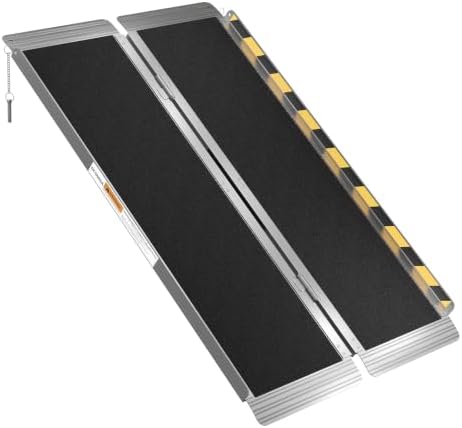
An adjustable aluminum threshold ramp sets its height to the sill rather than the other way around, which suits older houses where nothing is quite standard. Aluminum also handles outdoor exposure well.

Occasional and Portable Use
A lightweight molded ramp is easy to carry to a relative’s house or move between doors, which is useful for visits rather than for a permanent fixture.
Measuring a Sill Properly
Take three measurements. First, the rise: the vertical distance from the lower surface to the highest point of the sill, measured at the highest point rather than an average. Second, the width of the opening, so the ramp spans it fully. Third, the run available on the approach side, since the ramp needs floor space in front of it.
Then check the door. Open and close it fully with a tape measure held at the ramp’s intended height, and confirm the door clears. Doors that swing outward over the ramp are the usual problem, and the fix is either a lower-profile ramp or a design shaped to sit clear of the swing.
Do Not Forget the Screen Door
Storm and screen doors sit closer to the sill than the main door and clear far less. If there is one, measure to the bottom of the screen door rather than the main door, since that is the tighter constraint and it catches a lot of people out.
When a Threshold Ramp Is Not the Right Tool
Once the rise passes the range a threshold ramp is rated for, usually somewhere around six inches, the wedge becomes too steep to use comfortably and a longer ramp is the correct answer. Our guide to the portable wheelchair ramp covers what to look at from that point up.
A threshold ramp is also the wrong answer where the real issue is a doorway that is too narrow rather than a sill that is too high. Width is a different problem with different solutions, including swing-clear hinges that recover an inch or two, and it is worth measuring the opening before assuming the sill is the obstacle.
Common Mistakes
The most frequent is buying a single wedge for an interior doorway, which smooths one side and leaves a step on the other. If both sides have finished floor, you need a double-sided design.
The second is ignoring drainage at an exterior door. A solid wedge sitting tight against a sill can hold water against the door frame, which is why many outdoor designs include channels or a gap underneath. Check for that if the door sees rain, and sweep leaves and grit off regularly so the surface keeps its grip.
A Note on Getting Advice
If someone is catching a foot or a wheel on more than one threshold in the house, it is worth looking at the whole route rather than fixing doorways one at a time. If you are unsure what fits your situation, ask your doctor or an occupational therapist, who can walk the route and often spot changes that cost nothing.
Frequently Asked Questions
How high can a threshold ramp be? Most cover roughly half an inch up to around six inches of rise, with the exact range stated per model. Beyond that, a longer portable ramp is the appropriate product rather than a taller wedge.
Do threshold ramps need to be fixed down? Usually not. Rubber and aluminum models are heavy enough to stay in place under normal use, and many include optional screw holes or adhesive strips for exterior locations where wind or weather is a factor.
Will a threshold ramp stop the door from closing? It can, which is why door clearance is the first thing to check. Measure to the bottom of the door and, if there is one, to the bottom of the storm or screen door, then compare against the ramp’s peak height.
Can you use a threshold ramp on a sliding glass door? Yes, and a double-sided design is normally the right shape, since a slider track has floor on both sides. Check the peak width against the track so the ramp sits stable rather than rocking on the rail.
What is the difference between rubber and aluminum? Rubber is heavier, quieter, and grips well, which suits interior and sheltered use. Aluminum is lighter to move, handles weather and higher loads, and is the more common outdoor choice.
Are threshold ramps useful for walkers as well as wheelchairs? Yes. Walker and rollator feet catch on sills readily, and a raised lip is a common trip point for anyone walking. Smoothing the transition helps regardless of what someone uses to get around.
Can a threshold ramp be cut to width? Some rubber models can be trimmed with the right tools, and many are sold in several widths instead. Check the manufacturer’s guidance before cutting, since trimming can affect how the ramp sits.
The Bottom Line
A threshold ramp is the cheapest useful change you can make at a doorway, and the fitting comes down to three things: the height of the sill at its highest point, whether the far side needs a slope too, and whether the door and any screen door still clear. Rubber suits interior and sheltered use, aluminum suits outdoor exposure, and adjustable models handle awkward sills. Once the rise passes what a wedge can cover, move up to a portable ramp.