Last updated: August 20, 2026
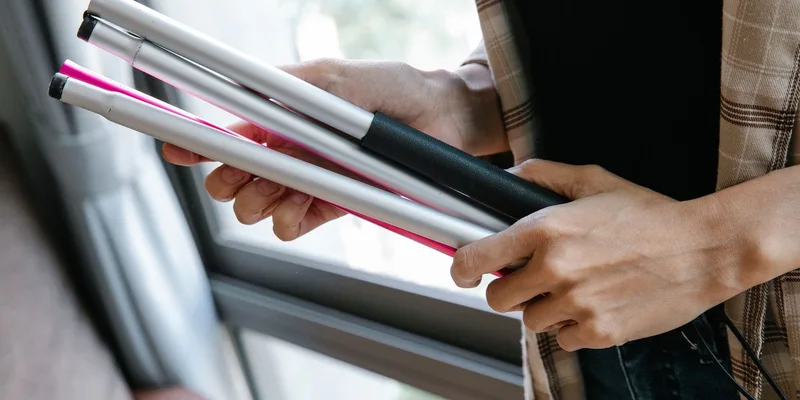
A folding cane solves a problem that only shows up away from home. A one piece cane has to be held, leaned somewhere, or hooked over a chair back in a restaurant, and it slides to the floor the moment someone bumps the table. A cane that folds into three or four short sections goes into a bag, a car door pocket, or a coat pocket, and comes back out in about two seconds.
What folding costs you is worth knowing before you buy. This guide covers how the folding mechanism works, which variations exist, how folding canes compare with fixed and adjustable ones, and the handful of checks that separate a cane that stays rigid from one that develops a rattle in a month.
This article contains affiliate links. If you buy through them, we may earn a commission at no extra cost to you. Learn more.
Quick Answer
What should you look for in a folding cane?
- Check how the sections lock together. A cane that snaps rigid with an audible click and no play at the joints is the whole point of the category.
- Match the handle type to the hand: an offset or contoured grip spreads load across the palm, a crook handle hooks over an arm, and a round derby suits smaller hands.
- Confirm the adjustable height range covers the user’s wrist height, and read the manufacturer’s stated weight capacity from the listing rather than assuming.
If you are unsure which cane type suits, ask your doctor or an occupational therapist before ordering.
How a Folding Cane Works
Nearly all folding canes use the same principle as a tent pole. An elastic cord runs through three or four aluminum sections, and when the cane is unfolded, the cord pulls the sections together so the tapered ends seat into each other. Most add a spring button or a push button lock at one joint so the shaft cannot separate under load.
The height adjustment is usually a separate mechanism at the lower shaft, a spring button running through a row of holes. That means a folding cane has two things to check every time it comes out of a bag: that all the sections are seated fully, and that the height button is clicked all the way through its hole.
Why the Cord Matters
The elastic cord is the part that ages. As it loses tension, the sections stop pulling together firmly and the cane develops a small amount of play at the joints, which is felt as a rattle or a slight give when weight goes on. On many models the cord is replaceable, and a cane that has gone loose is worth checking before it is written off.
Folding Canes by Situation
The Broadest Starting Point: An Adjustable Four Section Cane
A four section folding cane with a spring button height adjustment and an offset handle covers most needs. It folds short enough for a large bag, adjusts to the user, and uses the same standard tip sizes as ordinary canes, so replacements are easy to find.

Occasional Use and Travel
For someone who walks unaided most days and wants something in the bag for long outings, a compact travel cane with a carrying pouch is the usual choice. These fold shortest, weigh least, and often have simpler handles, which is a fair trade for a cane that spends most of its life folded.

Hands That Ache on a Round Handle
Handle shape matters more than shaft material for comfort. Offset and palm grip handles spread pressure across the whole hand instead of concentrating it in the web of the thumb, which is what people notice on longer walks. Fischer style and contoured grips take this further, and both are available on folding shafts.

A Wider Base When Standing Still
Folding quad canes exist, with a small four point base that stands on its own while still folding at the shaft. They are heavier and bulkier than a single point folding cane and they need a flat surface for all four feet to land, which is why they suit indoor use better than uneven paths. Our quad cane guide covers the base sizes in detail.

Folding, Fixed, or Adjustable
| Type | Best suited to | Watch out for |
|---|---|---|
| Folding, adjustable | Travel, bags, occasional use | Joint play as the cord ages |
| One piece wooden | Daily use at a fixed height | Cut to length, cannot be adjusted back |
| Adjustable single point | Everyday use, easy height changes | Does not fold, awkward in cafes |
| Folding quad | Standing support that stays upright | Bulk, weight, needs level ground |
| Cane with a seat | Rest stops on longer outings | Heavier, seat use has its own rules |
Getting the Height Right
Cane height uses the same method as walkers. Standing upright in usual shoes with arms relaxed at the sides, the top of the handle should sit level with the crease of the wrist, which puts a slight bend in the elbow when the hand is on the grip. Confirm that height falls within the model’s stated adjustment range rather than at either end of it.
With a folding cane there is one extra step: check the height every time after unfolding, because the button can sit in a different hole than you left it. Our guide to measuring cane height walks through the method and the common errors.
What Folding Costs You
Rigidity is the honest trade. A one piece shaft has no joints to develop play, and a folding shaft has two or three. Well made folding canes stay tight for a long time, and weaker ones announce themselves with a rattle within weeks. If a cane will be leaned on heavily every day rather than used for balance and confidence, a fixed shaft is generally the sturdier long term choice.
The second cost is weight distribution. Folding canes tend to be light, which sounds good and makes the cane feel less planted on the ground. Some users prefer a little more mass. Neither is right in general, which is why trying one in person is useful when it is possible.
Check the Locking Button Every Time
The single most important habit with a folding cane is confirming that the spring button has clicked fully through its hole before any weight goes on. A button sitting half in is the failure mode that matters, and it takes one second to check.
Tips, Straps, and Holders
The rubber tip on the bottom is a consumable and it wears smooth long before it looks worn out, which is when a cane starts to slip. Folding canes use standard tip sizes, so replacements are easy, and it is worth keeping a spare. A wrist strap keeps the cane with the user when they let go, and a clip on cane holder keeps it upright against a table instead of on the floor. Our guide to cane tips and accessories covers the options and the sizes.
Choosing Between Cane Types
Whether a single point cane, a quad cane, or something with more support suits depends on balance, hand strength, and how much weight actually goes through the cane, none of which a listing can judge. If you are unsure what fits your situation, ask your doctor or an occupational therapist. Our cane versus walker comparison covers the step up in support if a cane is no longer enough.
Frequently Asked Questions
Are folding canes as sturdy as regular canes? A well made folding cane is firm in use, but it has joints that a one piece shaft does not, and those joints can develop play as the internal cord ages. For heavy daily leaning, a fixed shaft is generally the sturdier choice.
How do folding canes lock together? An elastic cord inside pulls the sections into each other, and most models add a spring button at one joint. Check that the button has clicked fully through its hole before putting weight on the cane.
How short do folding canes get? Most fold into three or four sections that fit a large handbag or a backpack, with travel models folding shortest. Folded length is listed on the product page and varies by section count.
What height should a cane be? The handle should sit level with the wrist crease when standing upright in normal shoes with arms relaxed, giving a slight bend at the elbow. Confirm that height sits inside the model’s adjustment range.
Can folding canes be used every day? Yes, many people use one as their only cane. Check the joints periodically for play and replace the tip when the tread wears smooth.
Do folding canes stand up on their own? Single point ones do not, which is why cane holders and clips exist. Folding quad canes stand on their own base but are heavier and bulkier.
What weight capacity do folding canes have? Each model states its own manufacturer capacity, and bariatric versions are rated higher. Read it from the specific listing rather than assuming a category figure.
Can the elastic cord be replaced? On many models yes, and a cane that has gone loose at the joints is worth checking against the manufacturer’s parts information before replacing the whole cane.
The Bottom Line
A folding cane is the right answer when the cane has to disappear into a bag between uses, and a fair everyday option as long as the joints stay tight and the locking button is checked each time it comes out. Match the handle to the hand, confirm the height range covers the wrist measurement, and read the listed capacity. If standing support matters more than packability, look at the quad cane instead.