Last updated: August 20, 2026
A cane with a seat, often sold as a seat cane, a folding cane chair, or a shooting stick, is a walking cane that opens into a small stool. Close it and it is a cane; unfold the legs and the top splits into a seat. It is the answer to the specific problem of standing in line, waiting for a bus, or watching a grandchild’s game with nowhere to sit.
These are useful, popular, and frequently misunderstood. A seat cane is not a rollator with a seat, it is not a chair, and it is not built for the same kind of sitting. Knowing what it is actually designed for is what separates a purchase people keep using from one that goes in the closet after a month.
This article contains affiliate links. If you buy through them, we may earn a commission at no extra cost to you. Learn more.
Quick Answer
What is a cane with a seat good for?
- Short rests while out and about, in places where no bench or chair is available, such as queues, transit stops, museums, and outdoor events.
- Three-legged tripod designs are the common form, and they need firm, level ground to sit on safely.
- Check the listed weight capacity and the seat height, and use it as a perch for short sits rather than a chair for extended sitting.
Bottom line: a seat cane buys you a two-minute rest almost anywhere, on level ground, within the manufacturer’s stated weight capacity.
How a Seat Cane Works
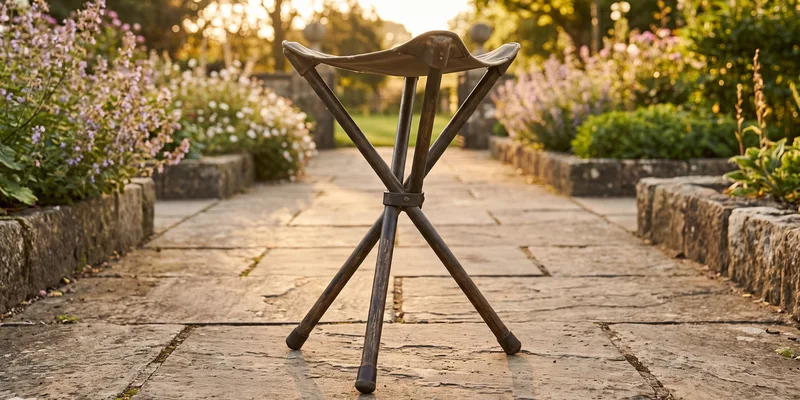
The common design is a tripod. Three legs are joined near the top, and the handle splits into two or three padded segments that fold outward to form a small seat. Closed, the three legs sit together and the device works as a walking cane. Opened, the legs spread into a triangle and the seat sits at roughly chair height or a little lower.
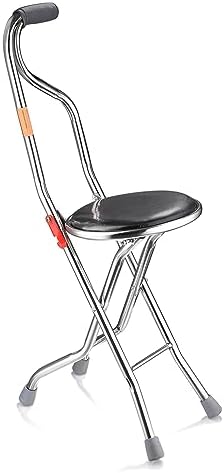
Some models use four legs and a wider seat pad, which is more stable but heavier and bulkier to carry. Others are built as folding stools with a carry strap rather than as canes, and those do not double as a walking aid at all. Read the product description rather than the category name.
Level Ground Is Not Optional
A tripod distributes weight across three points, and it needs all three planted on firm, level ground. Soft grass, sand, gravel, and sloped pavement all undermine it. Manufacturers say this in their instructions, and it is the single most important thing to know about the whole category.
Seat Height, Capacity, and Comfort
Seat height on a seat cane is usually lower than a dining chair, and on most models it is fixed once the legs are extended, though many have adjustable overall height. Check the listed seat height and compare it against the height of a chair the user rises from comfortably. Too low, and standing back up becomes the hard part of the rest.
Weight capacity is the other number that matters, and it is a real limit rather than a suggestion. Seat canes are lightweight by design, and their listed capacities are typically lower than those of rollators. Take the figure from the specific product listing rather than a category average.
Seat Canes by Situation
The Common Folding Tripod
A three-legged folding seat cane with a padded seat and an adjustable shaft is the mainstream option. It is light enough to carry all day, opens in a second, and closes back into something that works as a cane between rests.

More Stable Sitting
Four-legged seat canes and folding cane stools spread weight over a wider base and generally offer a broader seat pad. They are heavier and bulkier, which is the trade for the extra footprint, and they suit users who plan to sit more often than they walk.
Outdoor Events and Standing Around
Seat canes marketed for outdoor use often add a shoulder strap, a wider foot on each leg for softer ground, and a weather-resistant seat fabric. Even so, soft ground remains the weak point of any tripod, so a firm surface is still the requirement.

Higher Listed Capacity
Heavy duty seat canes use thicker tubing and reinforced hinges with higher listed weight capacities. This is the category to look at if the standard models list a maximum below what is needed, and the number should come from the listing itself.

Seat Cane Compared With Other Options
| Option | Sitting | Walking support |
|---|---|---|
| Seat cane, tripod | Short perch, level ground only | Works as a cane when closed |
| Seat cane, four leg | Broader base, heavier | Usable but bulkier to carry |
| Folding stool | Sitting only | None |
| Rollator with seat | Stable seat with brakes | Continuous rolling support |
| Quad cane | None | Stands alone, four-foot base |
| Standard cane | None | Lightest walking support |
Using a Seat Cane Sensibly
Open the legs fully until the hinge or locking mechanism engages, set all feet on firm level ground, and lower onto the seat with a hand still on the frame rather than dropping onto it. Standing back up works the same way in reverse. None of this is complicated, but a seat cane behaves differently from a chair and rewards a little deliberation.
Where a longer, steadier sit is the real need, a seat cane is the wrong tool and a rollator with a seat is the right one. Rollators have locking brakes, a wider seat, and a much larger footprint, and they are designed for repeated sit-and-rest use during a walk.
Checking the Hinges and Tips
The folding mechanism is what takes the load when the device is in seat mode, so it is worth looking at every so often for play, bent tubing, or a hinge that no longer locks crisply. Rubber tips wear the same way they do on any cane and should be replaced when the tread flattens.
Common Mistakes With Seat Canes
The first is using one on soft or sloped ground. Grass looks flat and is not, and a tripod leg sinking an inch on one side is enough to tip the seat. Firm level ground is what the design assumes.
The second is buying a seat cane when the underlying need is a proper mobility aid used all day. A seat cane provides light walking support at best; if someone needs steady support on every step, a quad cane or a rollator is the honest answer, and a seat cane can still ride along for the rest stops.
A Note on Choosing the Right Support
Needing to sit down frequently while out can come from any number of causes, and the device is only part of the picture. If you are unsure what fits your situation, ask your doctor or an occupational therapist. They can also advise whether a seat cane is a sensible addition alongside a primary walking aid rather than a replacement for one.
Frequently Asked Questions
What is a cane with a seat called? Common names include seat cane, cane seat, folding cane chair, and shooting stick. They describe broadly the same thing: a walking cane whose handle unfolds into a small seat supported by three or four legs.
How much weight can a seat cane hold? Capacities are listed per model and are generally lower than those of rollators. Take the figure from the specific product listing, and choose a heavy duty model if the standard maximums are below what is needed.
Are seat canes safe to sit on? They are designed for short rests on firm, level ground with all legs fully opened and locked. Soft ground, gravel, and slopes are where they become unstable. Follow the manufacturer’s instructions for the specific model.
How high is the seat on a seat cane? Usually lower than a dining chair. Check the listed seat height and compare it with a chair the user stands up from comfortably, since rising from a low perch is the harder half of using one.
Can a seat cane replace a walking cane? It can serve as a cane when closed, though it is typically heavier and bulkier than a plain cane. If steady support is needed on every step, a dedicated cane or rollator is a better primary aid.
Is a tripod or four-leg seat cane better? A tripod is lighter and easier to carry; four legs give a broader base and usually a wider seat at the cost of weight and bulk. Choose around how often the seat gets used versus how far it gets carried.
Can you use a seat cane on grass? Soft ground is the weak point of any tripod, since a leg can sink and tip the seat. Some outdoor models add wider feet, but firm, level ground remains what the design depends on.
What is the difference between a seat cane and a rollator with a seat? A seat cane is a lightweight perch you carry; a rollator is a wheeled walking frame with locking brakes and a proper seat. Rollators support walking continuously and suit repeated rest stops; seat canes are for occasional short sits.
The Bottom Line
A cane with a seat solves one problem well: somewhere to sit for a couple of minutes when there is nowhere to sit. Check the listed seat height and weight capacity, open the legs fully onto firm level ground, and use it as a perch rather than a chair. If the real need is steady support throughout a walk with regular rests, look at a rollator instead. For a walking aid that stands on its own without a seat, our quad cane guide covers the alternative.