Last updated: August 20, 2026
Location tracking is the category where families most often buy first and think second. The searches behind it are usually practical rather than dramatic: a parent who drives to appointments alone, a walk that took longer than expected, keys and a wallet that disappear twice a week. Those are three different problems and they have three different answers.
This guide separates what a subscription free tracker can honestly do from what needs a cellular plan, and it starts from a position worth stating plainly: an adult’s location is their own information, and the conversation comes before the purchase.
This article contains affiliate links. If you buy through them, we may earn a commission at no extra cost to you. Learn more.
Quick Answer
Is there a GPS tracker for older adults without a monthly fee?
- Not a true GPS one. Real time GPS trackers carry their own cellular connection, and that connection is what the monthly fee pays for.
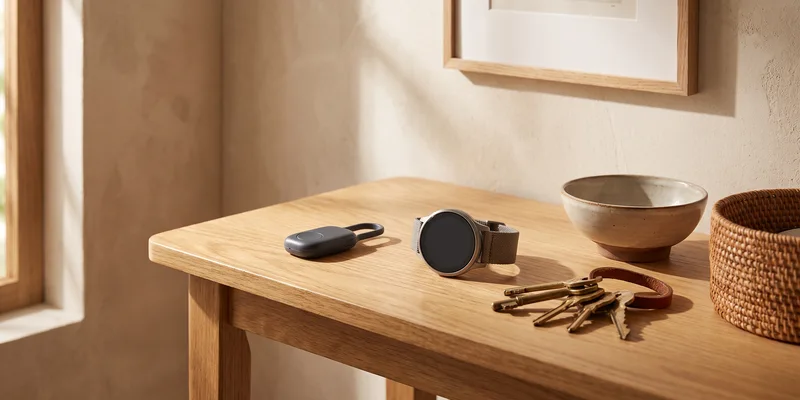
- What works without a fee is a Bluetooth item tracker on keys, a bag, or a coat, which reports its last known position through a network of nearby phones.
- If the person already carries a smartphone, its built in location sharing does most of this with no extra hardware and no extra cost, and it is switched on by them rather than for them.
Bottom line: for finding misplaced things, Bluetooth trackers are excellent. For knowing where a person is, phone location sharing agreed between you is the honest first option.
Start With the Conversation, Not the Device
Location information is personal, and an adult deciding to share it is different from a family deciding to collect it. The devices below work far better when the person knows they exist, agrees to them, and can switch them off. That is not only the respectful arrangement, it is the durable one.
Framing helps. “I would like to be able to find your keys and your car in the car park” lands very differently from “we want to know where you are.” Most people are happy to share a location with one named person and uncomfortable sharing it with a family group chat, and that distinction is worth asking about directly.
Where the Line Sits
If someone is not in a position to agree to being located, that is a situation to discuss with their doctor and, if relevant, whoever holds legal authority for their decisions. It is not a question a product page can answer, and this guide will not pretend otherwise.
Why Real GPS Trackers Have Monthly Fees
A tracker that reports its position anywhere needs to send that position somewhere, and it does that over a cellular network exactly as a phone does. That connection needs an account and a plan. This is why every real time personal GPS tracker on the market has a recurring charge, whatever the marketing says.
Devices in that category, including the ones marketed for family monitoring, are worth knowing about but sit outside what we recommend, because our rule here is that hardware should keep working without an ongoing plan. If you do go that route, read what happens to the device when the plan stops.
Subscription Free Options by Situation
Finding Keys, Wallets, and Bags
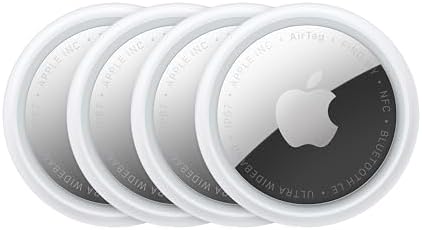
Bluetooth item trackers are the strongest answer to the most common daily problem. They attach to keys or slip into a bag, and the phone application makes them ring and shows the last place they were seen. No plan, no charging in most cases, and years of battery life.
Households That Are Not on iPhones
Tile works across both platforms and has its own network of phones that anonymously report a tracker’s position when they pass it. Its basic finding features work without a paid tier, which matters if the household is mixed between Android and Apple.

Keeping a Tracker Attached
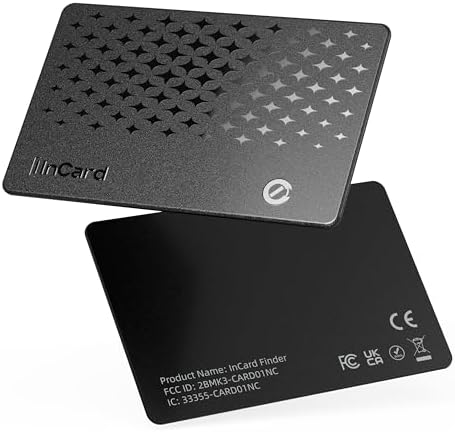
A tracker only works while it stays on the thing. Keychain holders, loops for a walking stick, and slim card style trackers for a wallet solve the practical half of the problem, which is otherwise a tracker sitting loose in a drawer.

Wallets and Flat Spaces
Card shaped Bluetooth trackers are made to sit in a wallet or a coat pocket without adding bulk. Battery life is usually shorter than a coin cell tracker and some are rechargeable, so check which type a listing describes.
What Bluetooth Trackers Cannot Do
They do not report live location. A Bluetooth tracker has no GPS receiver and no cellular connection; it shows where it was last detected by a passing phone on the manufacturer’s network. In a busy town that can be minutes old. On a quiet country road it can be hours old, or nothing at all.
They also carry deliberate anti stalking features. Apple’s system alerts an iPhone user when a tracker that is not theirs appears to be traveling with them, and similar alerts exist on Android. That is the correct design for society and an important limitation to understand before attaching one to a person rather than to an object.
The Phone You Already Have
If the person carries a smartphone, built in location sharing between two accounts is more accurate, live, and free of extra hardware. It is also visible and revocable by them, which makes it the version most people actually agree to. Setting it up is a five minute job covered in our smartphone guide.
Comparing the Options
| Option | What it gives | Ongoing cost |
|---|---|---|
| Bluetooth item tracker | Last seen position of an object, ring to find nearby | None |
| Phone location sharing | Live position, agreed between two people | None beyond the phone plan |
| Cellular GPS tracker | Live position of a device carried separately | Monthly plan required |
| GPS watch | Worn rather than carried, harder to leave behind | Usually a monthly plan |
What About GPS Watches
Watches solve the real weakness of item trackers, which is that a bag can be put down. A worn device stays with the person. Almost all of them, however, are sold with a service plan, and the ones without a plan are usually smartwatches that share location through a paired phone rather than independently.
If a watch is the direction you are heading, look closely at what happens when the plan lapses, whether the battery lasts a full day of ordinary use, and whether the person will actually wear it. A device that comes off at night and stays off is a decision made, not a device failure.
Frequently Asked Questions
How can I track my elderly parents? The straightforward option is phone location sharing, set up together on their smartphone and shared with one named person. It is live, accurate, costs nothing extra, and stays under their control. Hardware trackers make sense mainly for objects rather than for people.
Is there a GPS tracker for seniors with no monthly fee? Not a genuine one. Live GPS tracking needs a cellular connection, and that is what the fee pays for. Bluetooth item trackers have no fee but report only a last seen position rather than live location.
Can I put an AirTag on my parent? Apple designs these as item trackers, and the platform deliberately alerts people when an unknown tracker travels with them. Attaching one to a bag or keys with the person’s knowledge is reasonable. Using one to follow a person without their agreement is not, and the system is built to reveal it.
How accurate are Bluetooth trackers? Very accurate when a phone from the network is nearby, and useless when none is. In a town center the position may be current within minutes. In a rural area there may be no update for a long time.
What is the difference between a GPS tracker and a Bluetooth tracker? A GPS tracker calculates its own position and sends it over a cellular connection. A Bluetooth tracker sends a short range signal that other phones relay. The first needs a plan, the second does not.
Do these trackers need charging? Coin cell trackers typically run about a year and take a user replaceable battery. Card style and rechargeable models need topping up, which the listing will state.
Should we tell the person the tracker is there? Yes. Beyond it being their information to share, an agreed arrangement survives, and a hidden one damages trust the moment it is discovered. If capacity to agree is the underlying question, raise it with their doctor rather than solving it with hardware.
What if the concern is someone getting lost while out walking? That is worth discussing with their doctor rather than treating as a shopping problem, since the right response depends on the person. A phone with agreed location sharing, an identification card in the wallet, and a conversation with close neighbours are the practical first steps.
The Bottom Line
There is no true GPS tracker without a monthly plan, and any listing claiming otherwise is describing a Bluetooth item tracker. Those are excellent for keys, bags, and wallets, and honest about what they are. For knowing where a person is, agreed location sharing on the smartphone they already carry is more accurate, costs nothing extra, and keeps the decision with them. Start with the conversation, and see our smartphone guide for the setup.