Last updated: August 20, 2026
The phrase medical alert has been claimed almost entirely by subscription services, to the point that many families assume a monthly plan is the only way to give someone a button to press. It is not. There is a whole category of devices that work on their own hardware, cost nothing after the purchase, and suit a large number of households perfectly well.
What they do not do is replace a staffed monitoring center, and being clear about that difference is the point of this guide. Below: the four formats that exist without a recurring fee, who each one actually fits, what to check before buying, and the situations where a monitored service genuinely is the better answer.
This article contains affiliate links. If you buy through them, we may earn a commission at no extra cost to you. Learn more.
Quick Answer
What is the best medical alert device with no monthly fee?
- If someone else is usually home, a wireless call button with a plug in receiver is the simplest and most reliable choice.
- If the person is alone but has family nearby, an auto dialer that calls preprogrammed numbers covers the gap.
- Outside the house, a loud personal alarm gets attention from whoever is within earshot.
- For automatic detection with no fee, a mainstream smartwatch is the only real route.
Bottom line: choose based on who would actually respond, because that is what changes between formats.
Ask Who Would Answer Before You Ask What to Buy
Every device in this category ends with a person. A pager reaches someone in another room. A dialer reaches a phone list. A panic alarm reaches whoever is within earshot. A subscription service reaches a staffed center. The question is not which product is best, it is which of those chains exists in this particular household.
Answer that first and the shortlist becomes short quickly. Get it wrong and you end up with a device that alerts a room nobody is in, which is the most common way this purchase disappoints.
Format One: Wireless Call Button and Receiver
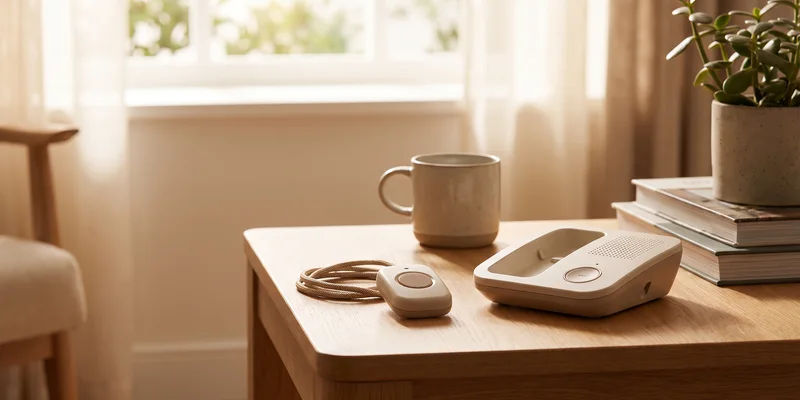
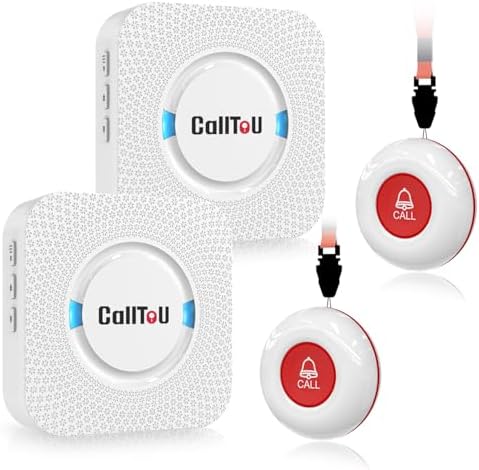
The classic setup pairs one or more waterproof buttons with a plug in receiver that chimes loudly elsewhere in the house. The person presses, the receiver sounds, and whoever is in the kitchen or asleep upstairs knows. There is no account, no SIM card, and no fee.
This is the right answer for a household where someone else is usually present: a spouse, an adult child living in, or a carer working a shift. Look for adjustable volume, a decent range through internal walls, extra buttons so one can live in the bathroom and one by the bed, and a wearable version on a lanyard or wristband.
Where to Put the Buttons
The bathroom and the bedside are the two spots that matter most, because those are where people spend time out of sight of others. A wearable button on a lanyard covers the rest of the house and does not depend on being near a wall unit. Our full comparison of formats lives in the caregiver pager guide.
Format Two: Auto Dialers With No Contract
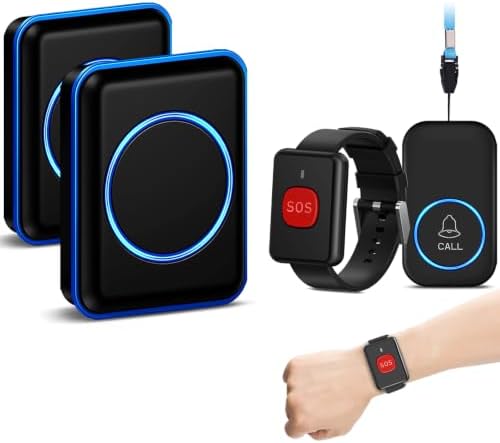
An auto dialer is a base unit with a pendant that, when triggered, calls a list of preprogrammed numbers in order until someone picks up, usually with a recorded message and a speakerphone. Because the calling happens over an existing phone line or a prepaid mobile service, there is no monitoring fee attached to the device itself.
This suits a person living alone with family or neighbours who would answer. The two things to check before buying are what kind of line the unit needs, since some are landline only, and whether the speakerphone is loud enough to hold a conversation from the floor across the room.

Format Three: Personal Alarms That Simply Make Noise
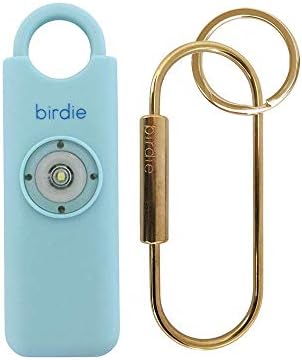
A keychain or pendant alarm produces a very loud siren when a pin is pulled or a button is held. There is no phone call and no receiver, which makes it the simplest device here and the most limited. What it does well is attract attention in a place where people are around: a garden, a corridor in an apartment building, a shared driveway.
They are cheap enough to have several and small enough to live on a keyring, which is why many households add one alongside another device rather than instead of it.
Format Four: Smartwatches, for Automatic Detection
If automatic detection is the requirement rather than a button, a mainstream smartwatch is the only route that avoids a monthly fee. Apple Watch, Google Pixel Watch, and several Samsung models include fall detection as a built in feature and call emergency services plus listed contacts when triggered.
The limitations are practical rather than technical: the watch has to be worn, charged, and set up by someone comfortable with a smartphone. We go into the trade offs, and into how reliable automatic detection actually is, in our editorial on fall detection without a subscription.
Matching the Format to the Household
| Situation | Format that fits | Main limitation |
|---|---|---|
| Someone else usually home | Call button and plug in receiver | Only works inside the house |
| Lives alone, family nearby | Auto dialer with pendant | Someone has to answer the phone |
| Active outdoors or in a garden | Loud personal alarm, or a cellular smartwatch | Alarm relies on someone in earshot |
| Wants automatic detection | Smartwatch with fall detection | Must be worn and charged daily |
| Alone with nobody nearby | A monitored service is worth considering | Has a recurring cost |
What to Check Before You Buy
Range is the specification most often overstated. Figures quoted for open air fall away through brick walls and across floors, so a house with thick internal walls or a basement needs more margin than a small apartment. Test the real range on day one, from the bathroom and from the bed, not from the hallway next to the receiver.
Then check the battery arrangement. A button that runs on a coin cell needs a note in the calendar and a spare in the drawer; a rechargeable pendant needs a routine. Whichever it is, a device with a low battery warning is worth more than one without.
The Details That Decide Whether It Gets Used
Water resistance matters because the bathroom is the room where this is most needed and the room where most devices are taken off. A button that can be worn in the shower stays on the person. Beyond that, look at whether the button is easy to press with limited grip, whether it can be pressed by accident in a pocket, and whether the person finds it comfortable enough to wear all day.
Being Honest About the Limits
None of these devices does anything until someone responds. A pager sounding in an empty house, a dialer calling numbers nobody answers, or an alarm sounding where nobody is in earshot all amount to the same outcome. A subscription free setup therefore needs a plan around it: two or three contacts who really do answer, in a sensible order, and a way for them to get through the front door.
We do not review monitored services, because that market is dominated by lead generation pages that rarely help the reader. If nobody is nearby and nobody would reliably answer, a monitored service is a fair thing to consider on its own merits. If you are unsure what fits your situation, ask your doctor or an occupational therapist, who can also advise on whether other support belongs in the picture.
Frequently Asked Questions
Is there a medical alert device with no monthly fee? Yes, several kinds. Wireless call buttons with a plug in receiver, auto dialers that call preprogrammed numbers, loud personal alarms, and smartwatches with built in fall detection all work without a recurring charge.
What is the catch compared with a subscription? There is no staffed monitoring center. The alert reaches whoever the device is set up to reach, and that person has to respond. Which format suits you depends entirely on who that person would be.
Do call buttons work through walls? Usually, but quoted ranges are measured in open air and drop considerably through brick, concrete, and between floors. Test from the bathroom and the bedside on the first day rather than assuming the number on the box.
Can these be worn in the shower? Look specifically for a water resistant or waterproof rating, because the bathroom is exactly where a button most needs to be on the person. A device taken off before a shower is not covering the room it was bought for.
Do auto dialers need a landline? Some do and some accept a prepaid mobile service, so check before buying. If the household has already dropped its landline, that single specification decides which models are even possible.
Can you have more than one device? Yes, and many households do. A wall button in the bathroom, a wearable button for the rest of the house, and a keychain alarm for the garden cover different situations without any of them costing a monthly fee.
Which is better for someone who lives completely alone? If nobody is nearby and no contact would reliably answer, this is the situation where a monitored service earns its fee. We do not compare those services, and the person’s doctor or an occupational therapist is a better starting point than a comparison page.
The Bottom Line
Medical alert devices without a monthly fee are real and they come in four shapes: call button with a receiver, auto dialer, loud personal alarm, and smartwatch with built in detection. Pick by asking who would answer, because that is the only variable that changes between them. Check range through real walls, water resistance for the bathroom, and battery arrangements, then build a contact list and a way in through the front door. For the detection side of the question, see our editorial on fall detection without a subscription.