Last updated: August 20, 2026
Small print turns up everywhere it is least convenient: medication labels, thermostat displays, the back of a food package, the fine print on a bill. A lighted magnifier is often the difference between managing those independently and having to ask someone, and it is a small purchase with an outsized effect on the day.
Choosing one is less obvious than it looks, because magnification and usable field of view pull against each other. This guide explains that trade-off, covers the main types from handheld lenses to desk lamps and electronic magnifiers, and notes what the light itself should be doing.
This article contains affiliate links. If you buy through them, we may earn a commission at no extra cost to you. Learn more.
Quick Answer
How do you choose a lighted magnifier?
- Higher magnification means a smaller lens and a shorter working distance, so pick the lowest power that makes the text readable.
- Around 2x to 3x suits reading a page; 5x and above suits short bursts like a label or a dosage line.
- Hands-free designs matter whenever both hands are needed, such as sewing, hobbies, or filling a pill organizer.
- Light quality counts as much as the lens: even, adjustable, and positioned to avoid glare off glossy paper.
A magnifier is a tool for small print. Any change in vision belongs with an optometrist or eye doctor.
The Types and What Each Is For
Magnifiers divide by how they are held rather than by power, and that is usually the more useful way to shop. Decide first whether the task needs a free hand, then choose the strength.
| Type | Best for | Trade-off |
|---|---|---|
| Handheld | Labels, price tags, quick checks | Occupies a hand, and holding steady tires |
| Full-page sheet | Reading a whole page at low power | Modest magnification only |
| Bar or dome | Following lines of text | Sits on the page, so it only works flat |
| Neck-worn hands-free | Hobbies, sewing, sorting small items | Fixed working distance, can feel heavy over time |
| Headband or visor | Detailed close work | Awkward to put on and take off repeatedly |
| Desk lamp magnifier | A fixed workstation or reading spot | Needs a clamp edge and does not travel |
| Electronic magnifier | Higher magnification with contrast control | Bulkier, needs charging, more to learn |
Magnification: Why Bigger Is Not Better
Optical magnification comes at the cost of lens size and working distance. A high-power lens has to be small and has to sit close to the page, which means less text is visible at once and the magnifier has to be held near the eye. That is fine for a dosage line and frustrating for a novel.
The practical approach is to pick the lowest power that makes the target text comfortably readable. Around 2x to 3x keeps a useful chunk of a page in view. Powers of 5x and upward are short-burst tools. Many households end up with one of each, which is a reasonable outcome rather than a mistake.
X and Diopters
Listings use two scales, and the same lens is described both ways. Diopters describe the optical power of the lens, and manufacturers commonly convert to the X figure by dividing the diopter number by four and adding one. Knowing that lets you compare two listings that have chosen different labels for the same lens.

Hands-Free Options
The moment a task needs two hands, a handheld magnifier stops working. Sewing, sorting small parts, filling a pill organizer, or repairing something all fall into that category, and this is where hands-free designs earn their place.
Neck-worn magnifiers hang on a cord with legs that rest against the chest, which sets a fixed working distance. Headband and visor styles flip up out of the way and suit longer sessions of detailed work. Both take some getting used to, because the focal distance is set by the design rather than by how you hold it.

Page Magnifiers and Desk Lamps
A full-page sheet magnifier is a thin flexible lens the size of a page. The magnification is modest, but the whole page stays visible, which makes it the least disruptive option for continuous reading. Lighted versions add an edge-lit strip.
A magnifying desk lamp on an articulated arm is the better answer for a fixed reading chair or a hobby table, because it holds both the lens and the light in position indefinitely. Check the clamp before ordering, since these need a table edge of a suitable thickness, and check whether the arm holds position or drifts.


The Light Matters as Much as the Lens
Adding light often does more than adding magnification, because contrast is what makes small text legible. Look for an even light across the lens rather than a single bright point, since a hot spot reflects straight off glossy paper into the eye.
Adjustable brightness is worth having, and so is knowing whether the light is warm or cool in tone, since people differ strongly in which they find easier to read under. Rechargeable models avoid a steady diet of button cells, and a listing that states run time is more useful than one that does not.
Room Lighting Comes First
A magnifier compensates for a dim room, but improving the room is the better fix. A brighter task lamp beside the reading chair, positioned to light the page over the shoulder rather than into the eyes, frequently removes the need for magnification at low powers entirely. Our guide to night lights and motion sensors covers the rest of the house.
Electronic Magnifiers
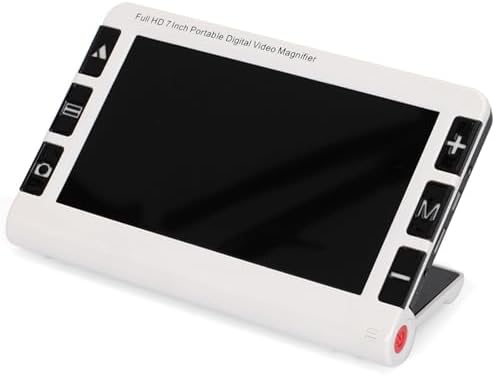
Electronic or digital magnifiers use a camera and a screen instead of a lens. They reach much higher magnification without shrinking the field of view, and they can invert colors or boost contrast, which some people find easier than plain enlargement.
The trade is size, cost, charging, and a learning curve. Handheld versions are pocket sized with a small screen; desktop units sit over a tray and are effectively a reading station. This is the category where a low vision specialist or an optometrist is worth consulting before buying, since the right choice depends on the specific difficulty rather than on the specifications.
Frequently Asked Questions
What magnification do I need for reading? Around 2x to 3x keeps enough of a page in view for continuous reading. Higher powers shrink the lens and the visible area, which makes them better suited to short tasks like checking a label.
What is the difference between diopters and X? Two ways of describing the same lens. Manufacturers commonly convert diopters to the X figure by dividing by four and adding one, which lets you compare listings that use different labels.
Are hands-free magnifiers worth it? Yes, whenever the task needs both hands, such as sewing, hobbies, small repairs, or sorting medication into an organizer. For quick label checks a handheld is simpler.
Do lighted magnifiers help more than plain ones? Usually. Contrast does a lot of the work in reading small print, and added light often helps more than added magnification, provided the light is even rather than a single hot spot.
What is an electronic magnifier? A camera and screen instead of a lens. It reaches higher magnification without losing field of view and can invert colors or increase contrast, at the cost of size, charging, and a learning curve.
Should I get a magnifier or see an eye doctor? Both, in that order of importance. A magnifier handles small print, but any change in vision should be assessed by an optometrist or eye doctor rather than worked around with a stronger lens.
What about glare on glossy paper? Position the light so it comes across the page rather than straight down at it, and prefer a magnifier with even edge lighting over one with a single bright LED behind the lens.
The Bottom Line
Pick the lowest magnification that makes the text readable, choose the format by whether the task needs both hands, and treat the light as half the purchase rather than a bonus feature. A low-power page or handheld lens for reading and a stronger one for labels covers most households between them. Improve the room lighting first, and take any change in vision to an optometrist rather than to a stronger lens.