
Last updated: August 20, 2026
Most families start looking at automatic pill dispensers after the same small moment: a dose taken twice, or a compartment still full at bedtime. A weekly pillbox works well right up until the schedule gets complicated, and then the box stops being a reminder and becomes one more thing to remember. An automatic dispenser adds the part a plastic tray cannot do on its own, which is telling someone that it is time.
This guide walks through how these devices actually work, the real difference between a one time purchase and a monthly service, and how to match a dispenser to the person who will be using it every day rather than to a feature list.
This article contains affiliate links. If you buy through them, we may earn a commission at no extra cost to you. Learn more.
Quick Answer
What is the best automatic pill dispenser for a senior at home?
- A 28 day rotating dispenser with an audible alarm and a locking lid covers the most common situation: several doses a day, filled once a month by a family member.
- Choose a model with a loud alarm and a flashing light if hearing is a concern, and check that the compartments are large enough for the actual pills.
- Devices sold outright do everything locally. Connected models that text a caregiver almost always carry a monthly service fee, which is a separate decision.
Bottom line: match the number of daily doses and the alarm style to the person first, and see connectivity as an optional extra rather than the starting point.
How an Automatic Pill Dispenser Works
An automatic pill dispenser is a lidded tray divided into compartments, usually 28 of them, that rotates on a timer. At each programmed time the device sounds an alarm and exposes only the compartment that is due. Everything else stays under the lid, so there is nothing to count and nothing to decide in the moment.
Most models are filled once every four weeks. A family member or a pharmacist loads the compartments, sets the dose times, and closes the lid, which usually locks with a small key. From then on the device handles the schedule, and the person using it only has to tip the pills out when it beeps.
Where the 28 Compartments Come From
Twenty eight compartments is the standard because it divides neatly: four doses a day for seven days, two doses a day for fourteen days, or one dose a day for four weeks. That flexibility is why the same tray suits both a simple morning routine and a schedule with several timed doses.
Devices You Buy Once Versus Monthly Services
There are two different products sharing one category name. A standalone dispenser is a one time purchase that runs on batteries or a power adapter and does everything on the countertop. A connected dispenser is a subscription service, where the hardware comes with a required monthly plan for the app, the caregiver alerts, and sometimes the pill filling itself.
Hero is the best known of the subscription devices, and it is worth knowing it exists, but we do not recommend a device that only functions while a monthly plan is active. If the plan lapses, the reminder system on the counter stops being useful. Everything recommended below works on its own, permanently.
Automatic Pill Dispensers by Situation
The Standard Setup: Several Doses a Day, Filled Monthly
The common starting point is a 28 compartment rotating dispenser with a programmable alarm and a locking lid. It handles up to four alarm times a day, and the lock is what keeps a second dose from being taken out of habit rather than schedule.

When the Alarm Needs to Be Heard From Another Room
Alarm volume varies a lot between models, and the listing usually states whether the alert is audible only or audible plus a flashing light. A dispenser with both is the sensible choice if the device sits in the kitchen while the person is often in the living room, or if hearing is already a concern.

Established Medication Management Brands
e-pill has built medication timers and dispensers for decades and its models tend to show up first when families search by brand. Buying within an established line mainly buys you documented programming steps and available replacement parts, which matters more than it sounds when the device is meant to run for years.

Tamper Resistance as the Main Concern
If the worry is a dose being taken early rather than forgotten, the locking mechanism becomes the deciding feature. Look for a keyed lid rather than a simple clip, and note where the key will live, since a key kept next to the dispenser defeats the point of having one.

Doses Away From Home
A countertop dispenser does not travel well. For a day out or an overnight stay, a small vibrating or beeping travel dispenser with a handful of compartments covers the gap without moving the main device off its schedule.
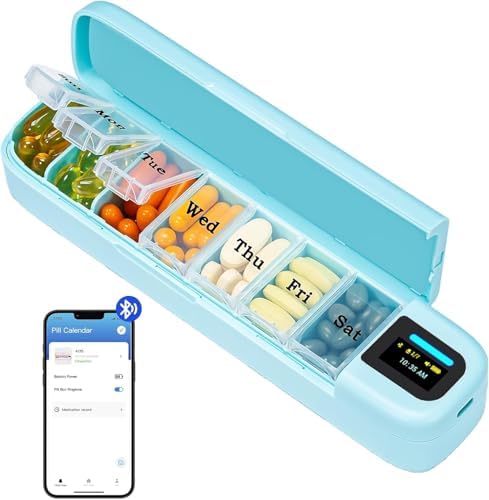
Comparing the Main Features
| Feature | Why it matters |
|---|---|
| Compartment count | 28 is standard; divide by daily doses to see how long one fill lasts |
| Alarm type | Sound only, sound plus light, or vibration; check the listing before assuming |
| Locking lid | Keyed lids limit access to the compartment that is currently due |
| Power source | Battery only, adapter only, or adapter with battery backup for outages |
| Compartment size | Larger tablets and supplements do not always fit the smallest trays |
| Alarm times per day | Most handle four; more complex schedules need a model that states more |
What to Check Before You Buy
Start with the pills themselves. Count how many separate dose times there are in a day, then look at the physical size of the largest tablet or capsule in the routine. Those two numbers rule out more models than any other consideration, and both are easy to check against the specifications in a product listing.
Then look at who fills it. If a family member is loading the tray once a month, a keyed lid is fine. If the person manages their own medication and simply wants a reminder, a lock can turn into a daily frustration and an unlocked model with a good alarm is the better fit.
Power, Batteries, and What Happens in an Outage
Battery only models keep working in an outage but need the batteries changed on a schedule someone has to remember. Adapter powered models avoid that, and the better ones list a battery backup so the programmed times survive. Check which a listing describes rather than assuming.
Common Mistakes Families Make
The most common mistake is buying the device before talking to the person who will use it. A dispenser that appears on the counter unannounced tends to be read as a comment on someone’s competence, while the same device introduced as a way to stop double dosing usually gets accepted without much fuss.
The second is programming it once and never checking it again. Prescriptions change, dose times move, and a dispenser that is still running last spring’s schedule is worse than no dispenser at all. Build a quick check into the monthly refill so the schedule and the tray always match.
Skipping the Pharmacist
Pharmacists are the most underused resource here. They can tell you whether anything in the routine needs to stay in its original container, and whether a blister pack service would solve the problem without any device at all.
Where a Dispenser Is Not the Answer
A dispenser solves timing and access. It does not solve confusion about what a medication is for, and it cannot tell whether a dose was actually swallowed. If missed doses are becoming frequent or the pattern is changing, that is a conversation for the prescribing doctor or the pharmacist rather than a hardware problem to shop your way out of.
If you are unsure what fits your situation, ask your doctor, your pharmacist, or an occupational therapist. They see these routines constantly and will often suggest a simpler fix than the one you were about to buy.
Frequently Asked Questions
What is the best automatic pill dispenser with an alarm? For most households, a 28 compartment rotating model with a programmable audible alarm and a keyed lid. Add a flashing light alert if the device will sit out of earshot or if hearing is a concern.
Do automatic pill dispensers require a monthly subscription? Not the standalone ones. Countertop dispensers that beep and rotate are a one time purchase. Connected devices that send alerts to a caregiver’s phone generally require an ongoing service plan, which is a separate commitment worth reading carefully.
How many pills fit in each compartment? It varies by model, and the listing normally gives the compartment dimensions or a capacity in number of standard tablets. Check this against the largest item in the routine, since vitamins and supplements are often the ones that will not fit.
Can a pill dispenser be locked? Yes. Most 28 day models ship with a keyed lid that exposes only the compartment currently due. Where the key is stored matters as much as the lock itself.
What happens if the power goes out? Battery powered models keep running. Adapter powered models depend on whether they include a battery backup, which the product listing should state. Without one, the programmed times may need to be reset after an outage.
Is an automatic dispenser better than a weekly pill organizer? They do different jobs. An organizer sorts, a dispenser sorts and reminds. If the routine is simple and remembering is not the issue, a good pill organizer is cheaper, simpler, and perfectly adequate.
Who should fill the dispenser? Whoever normally manages the medication. Many families have one person load the tray monthly while the pharmacist confirms the schedule. Writing the fill date on a calendar keeps it from slipping.
Will Medicare cover an automatic pill dispenser? Coverage differs by plan and by situation, and we cannot tell you what yours includes. The reliable answer comes from medicare.gov or directly from the plan administrator.
The Bottom Line
The best automatic pill dispenser is the one that matches the actual routine: enough compartments for the daily doses, an alarm that will genuinely be heard, and a lid arrangement that suits whether the person manages their own medication or has help. Buy the device outright rather than tying a daily routine to a monthly plan, and check the schedule again every time you refill. If the reminder is the only piece missing, a simple pill organizer paired with a phone alarm may be all you need.