Last updated: August 20, 2026
Some links on this page are affiliate links. See our affiliate disclosure.
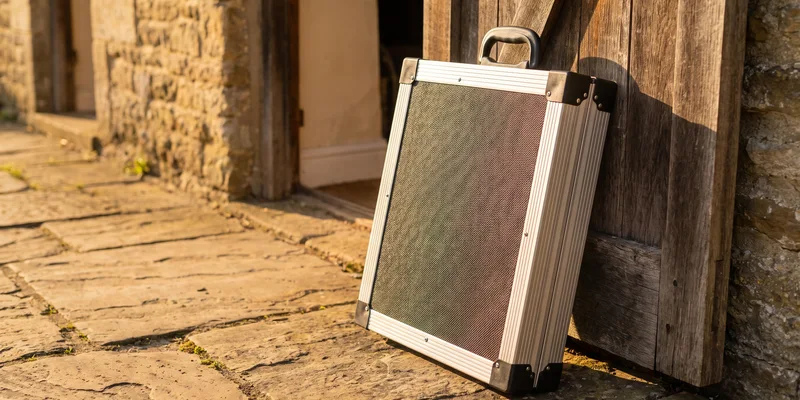
A suitcase ramp is an aluminum ramp that folds down the middle, and sometimes again across, into a shape with a handle on it. The design exists for one reason: to make a ramp something you can carry to where it is needed rather than something that lives at one door forever. That is what makes it the standard answer for visits, appointments, and any house where the ramp cannot stay out.
The trade-off is that carrying and using pull in opposite directions. Longer ramps give a gentler slope and are harder to lift, shorter ramps travel easily and run steeper. This guide covers how to balance those, what to look at in the fold and the hinge, and which length suits which obstacle.
Quick Answer
Which suitcase ramp should you buy?
- Measure the rise you need to clear, then let the slope ratio the manufacturer specifies set the minimum length.
- Check the carry weight, not just the capacity. Whoever handles it has to lift and place it every time.
- Single-fold ramps are more rigid and store long. Multi-fold ramps pack shorter and add a hinge across the middle.
- Look at the closed dimensions against your trunk, and at the hinge gap, the surface texture, and the raised side edges.
Bottom line: length follows the rise, and carry weight decides whether the ramp actually gets used.
What a Suitcase Ramp Is For
Suitcase ramps handle a step, a curb, a raised landing, or a vehicle threshold, and then fold away. Households use them for the front step at home, for a relative’s house that has no ramp, and for places where a permanent solution is not possible or not wanted.
They are a portable product rather than a permanent one, and the length available limits the rise they can cover sensibly. For a doorsill, a threshold wedge is simpler and cheaper. For anything beyond a couple of steps, portability stops being realistic. Our portable ramp guide covers where each type sits.
Single Fold and Multi Fold
The number of folds affects rigidity, packed size, and price. Both designs are common and neither is universally better, so it comes down to how the ramp gets stored and transported.
Single Fold
The ramp folds once along its length, so the closed package is half the width and full length. Fewer hinges means a more rigid deck and less flex under load. It suits a car with a long trunk or a household that stores the ramp against a garage wall.
Multi Fold
These fold along the length and again across the middle, so a longer ramp packs into a much shorter case. That is what makes a longer ramp transportable at all in a small car. The extra hinge adds weight and a joint in the middle of the running surface, so check that the hinge sits flush and the panels lock together firmly.
Telescoping Channels as the Alternative
Where carry weight is the binding constraint, two separate telescoping channels split the load into two lighter pieces. The trade-off is that the wheels have to be lined up on the channels, which is easier with a helper than alone.
Length, Rise and Carry Weight
Measure the rise first, from the lower surface to the top of the level the ramp lands on. Then apply the slope ratio: the ADA standard specifies a maximum running slope of 1:12 for ramps in accessible construction, and portable ramp manufacturers publish their own recommended ratios per model, often different for occupied and unoccupied use. Use the manufacturer’s figure for the ramp you are buying.
| Typical obstacle | Rough rise | What to check |
|---|---|---|
| Single step or curb | Around 6 to 8 inches | Shorter ramps handle this, easiest to carry |
| Two steps | Around 12 to 16 inches | Mid-length ramp, check the carry weight carefully |
| Three steps | Around 18 to 24 inches | Long ramp, multi-fold, often a two-person lift |
| Van or minivan opening | Varies by vehicle | Measure at the actual load height, not the spec sheet |
Carry weight is the number people skip and then regret. A ramp long enough for three steps is heavy enough that lifting it out of a trunk becomes a two-person job, and a ramp that is awkward to handle quietly stops being used. Compare the ramp weight against who will actually be carrying it.
Suitcase Ramps by Situation
The Common Travel Length
A shorter folding ramp handles a single step or a curb at a destination and stays light enough for one person to manage from a trunk. This is the length most families end up carrying regularly.

For Two or Three Steps at Home
A longer multi-fold ramp covers a bigger rise while still packing into a case. Check the closed length against where it will be stored, and plan on the lift being a two-person job at the top of this range.

When Rigidity Matters Most
A single-fold ramp has fewer joints and flexes less, which suits heavier power chairs and users who dislike any give underfoot. It stores long, so measure the space before ordering.

When Carry Weight Is the Limit
Telescoping channels split the weight into two lighter pieces, which makes a longer effective ramp manageable for one person. They need accurate wheel placement, so they suit assisted use.

What to Check on the Ramp Itself
Look at the surface first. A textured, slip-resistant deck that stays usable when wet matters more than any other single feature, since a travel ramp gets used in whatever weather the day brings. Raised side edges should run the full length, and the transition plates at each end should sit flat rather than perched.
Then check the hinge and the latches. The two halves should lock closed for carrying and lock open for use, with nothing that can fold unexpectedly. Run a hand along the joint when open: a hinge that leaves a lip or a gap in the middle of the running surface is something wheels will find every single time.
Handles and Storage
A handle positioned at the balance point makes a surprising difference to how a ramp carries, and a padded or contoured grip helps if the ramp is moved daily. Measure the closed dimensions against the trunk or the storage space before ordering, since a ramp that does not fit where it needs to live is no use at all.
Common Mistakes
Buying short is the classic one. A ramp that reaches the step is not the same as a ramp at a usable slope, and the difference shows up immediately when someone tries to go down it. Measure the rise and apply the ratio rather than judging by eye.
The second is forgetting the run at the bottom. The ramp needs flat ground to land on, and at a car it needs enough clear space behind the vehicle. Pace it out before ordering, especially if the parking spot at home is tight.
A Note on Getting Advice
How steep a slope a person can manage differs a lot between self-propelling, being pushed, and using a power chair, and that is what sets the practical minimum length. If you are unsure what fits your situation, ask your doctor or an occupational therapist. For a rise beyond what a portable ramp handles, a permanent ramp is a construction question for a licensed contractor working to local code.
Frequently Asked Questions
What length suitcase ramp do I need? It follows from the rise. The ADA standard specifies a maximum running slope of 1:12, and portable ramp manufacturers publish their own recommended ratios per model. Measure the rise, then apply the figure for the ramp you are considering.
How heavy is a suitcase ramp? It scales with length, and manufacturers list the weight in the specifications. Short travel ramps are usually a comfortable one-person lift, while the longest folding ramps often need two people to place safely.
Will a suitcase ramp fit in a car trunk? Multi-fold designs pack shorter specifically for this. Compare the closed dimensions in the listing against your trunk opening, which is often the tighter constraint rather than the trunk itself.
Single fold or multi fold? Single fold is more rigid and stores long. Multi fold packs shorter for the same open length and adds a hinge across the running surface. Choose on how the ramp will be stored and carried.
Are suitcase ramps stable enough for a power chair? Many are, provided the stated weight capacity covers the chair and user together. Power chairs are considerably heavier than manual ones, so check the figure in the listing rather than assuming.
Do they come with handrails? Generally not, since rails would defeat the folding design. A few longer models offer matched rails as accessories. Our guide to wheelchair ramp railings covers when rails matter.
Can a suitcase ramp stay outside permanently? Aluminum handles weather well, but a portable ramp left in place can shift, and it is a tempting thing to remove. If the ramp is never going to move, a fixed solution suits better.
The Bottom Line
A suitcase ramp is the answer when the ramp has to travel, and the choice sits between two numbers pulling opposite ways: the length the rise demands, and the weight one person can realistically carry. Measure the rise, apply the manufacturer’s slope ratio, then check the closed dimensions, the hinge, the surface texture, and the raised side edges. Multi-fold packs shorter, single fold flexes less, and telescoping channels split the load when carry weight is the limit. For the wider category, see our portable ramp guide.