Last updated: August 20, 2026
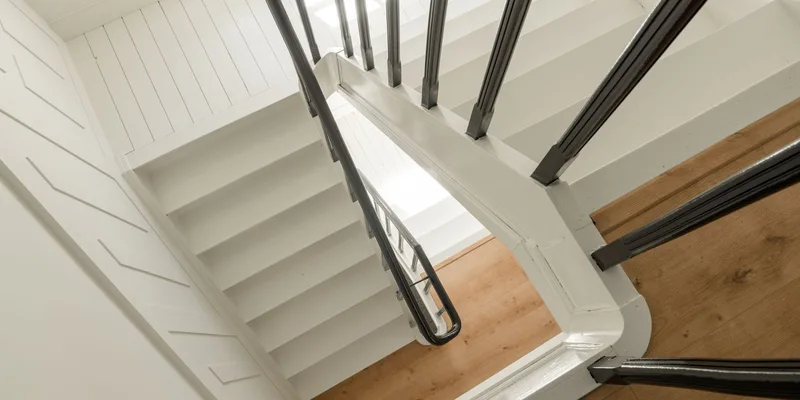
Stairs ask for three things at once: grip underfoot, something to hold, and the ability to see where each step ends. Most staircases in older homes deliver one of those well, the second by accident, and the third not at all. Polished wood treads, a handrail on one side only, and a carpet pattern that makes every step look identical is an extremely common combination.
The good news is that all three are addressable without touching the structure of the staircase. This guide covers what to change in what order, which products handle each part, and the honest limits of what any of it does. Fitting a second handrail is usually the single most worthwhile job on the list.
This article contains affiliate links. If you buy through them, we may earn a commission at no extra cost to you. Learn more.
Quick Answer
How do you make stairs safer for an older adult?
- Add a handrail on the second side so both hands have something to hold, and make sure both rails run the full length including the last step.
- Give the treads grip: stair treads on wood, or anti slip strips near the edge on any surface.
- Mark the top and bottom step with contrast so the first and last are unmistakable.
- Light the staircase from a switch at both ends, or with motion sensing units that come on by themselves.
Bottom line: a second handrail, grip on the treads, and contrast at the edges cover most of what a staircase needs.
Start With Handrails on Both Sides
A handrail on one side works only when the person is going the direction that puts their stronger hand on it. Adding a second rail means both directions are covered, and it also means someone carrying something has an alternative. This is the change most occupational therapists put first.
Two details matter more than the rail itself: it must be graspable, meaning a shape a hand can wrap around rather than a wide flat plank, and it must continue to the very last step at both ends. A rail that stops one step early leaves a gap exactly where people are most likely to misjudge.
Fixing a Rail That Will Hold
A handrail carries real load, so the brackets have to reach the studs behind the drywall, not just the surface. That is the same principle as mounting a grab bar, and our installation guide covers stud finding and anchors in more detail. If the wall material is awkward, the notes in mounting without studs apply here too.

Grip on Every Tread
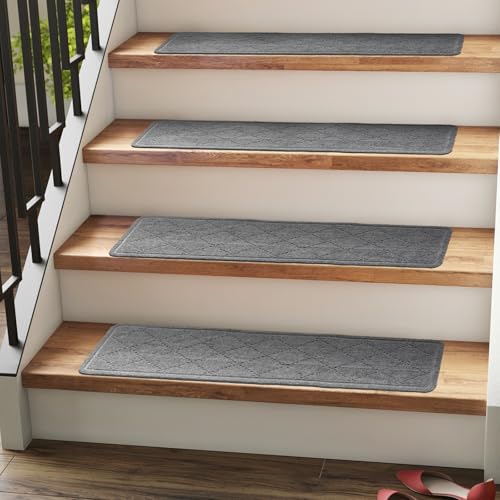
Bare wood, laminate, and tile stairs are slippery in socks and slippery again when someone comes in with wet shoes. Adhesive stair treads in rubber or carpet give the foot something to hold onto, and unlike a full carpet job they can be fitted in an afternoon and replaced individually when one wears.
Fit them so the tread covers the front portion of each step but stops short of the edge overhang, and press the adhesive down along all edges. A tread that lifts at a corner becomes the hazard it was meant to remove, so it is worth checking them every few months.
Anti Slip Strips as the Minimal Version
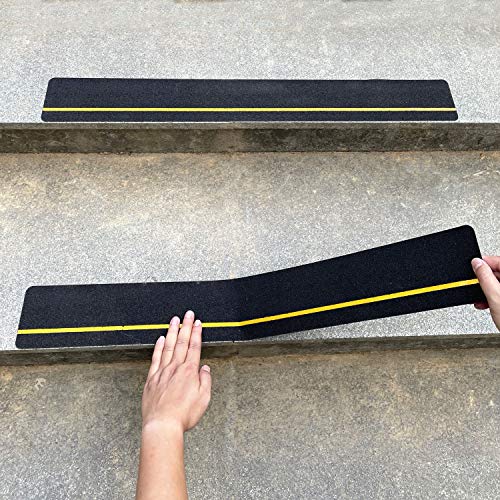
Where full treads are not wanted, a strip of anti slip tape near the front of each step gives grip at the point where the foot actually lands. Clear versions exist for people who do not want the look of tape, though a contrasting color does two jobs at once by adding grip and edge definition together.
Make the Edges Visible
Judging where a step ends is a visual task, and it gets harder as eyes take longer to adjust and as contrast sensitivity changes. A patterned carpet running unbroken up a staircase removes almost all of the visual cues about where one tread stops and the next begins.
Contrast tape or a differently colored nosing on the leading edge restores those cues cheaply. If nothing else gets done, mark the top step and the bottom step, because those two are the ones most often misjudged: at the top because the climb ends sooner than expected, at the bottom because people reach for a step that is not there.
Light the Stairs From Both Ends
A staircase should be switchable from the top and the bottom, so nobody has to walk it in the dark to reach the switch. Where that wiring does not exist, motion sensing units mounted low along the side of the stairs do the same job without an electrician.
Aim the light at the treads rather than at the person. Units at the side of every few steps, or a strip along the stringer, define the edges without creating glare, and our guide to motion sensor night lights covers the formats in more detail.

The Things That Cost Nothing
| Check | What to do |
|---|---|
| Clutter on treads | Nothing gets stored on the stairs, not even briefly |
| Loose runner | Refix or remove; a rug that shifts on a stair is the worst case of a shifting rug |
| Rug at the bottom | Move it away from the last step where feet land unevenly |
| Footwear | Shoes or slippers with a back and a grip sole rather than loose backless slippers |
| Carrying things | Use a bag over the shoulder so at least one hand stays free for the rail |
| Wobbly rail | Tighten or refix into studs; a rail that flexes gives no confidence |
| Burned out bulb | Replace the same day, not next weekend |
Outdoor Steps Need the Same Treatment
The steps up to the front door face weather on top of everything else, so grip matters more and lighting matters more. Outdoor rated anti slip strips and a proper handrail on at least one side are the equivalent changes, and where the level difference is a problem rather than the steps themselves, a ramp may be the better answer.
Our guides to outdoor stair handrails, threshold ramps, and the entryway checklist cover the outside of the house in the same order as this page covers the inside.
What We Do Not Cover, and Why
Stair lifts come up in every conversation about stairs, and we deliberately do not review them here. They are sold and installed through dealers, priced per staircase after a home visit, and the choice depends on the shape of the stairs rather than on a model comparison. Anyone considering one is better served by local installers and, ideally, an occupational therapy assessment first.
The same applies to any decision about whether the stairs should still be used at all, or whether living space is better rearranged on one floor. That is a judgement about a person, not about a product. If you are unsure what fits your situation, ask your doctor or an occupational therapist.
Frequently Asked Questions
Do stairs really need a handrail on both sides? A second rail means both directions are covered rather than only the one that suits a person’s stronger hand, and it gives an alternative when one hand is carrying something. It is usually the highest value change on a staircase.
What are the best non slip stair treads? The ones that suit the surface. Rubber treads grip well on wood and laminate and clean easily; carpet treads are quieter and warmer underfoot. Whichever you choose, fit them so no corner can lift, and check them periodically.
Should the treads or the edges be marked? Mark the edges, and if you only mark two, make them the top and the bottom step. Those are the ones most often misjudged, especially on a staircase with an unbroken carpet pattern.
How should a staircase be lit? With a switch at the top and the bottom so nobody walks it in the dark to reach one. If that wiring does not exist, low mounted motion sensing units aimed at the treads do the same job without rewiring.
Are stair lifts worth considering? Possibly, but they are a dealer product priced after a home visit and matched to the shape of a specific staircase, so a comparison article cannot tell you much. Start with an occupational therapy assessment and local installers.
What about carrying laundry up and down? Use a bag that goes over a shoulder or a back, so at least one hand is always free for the rail. A full basket held in both arms also blocks the view of the treads.
Do these changes make stairs safe? They make the staircase easier to grip, easier to see, and easier to hold onto. They do not change balance, strength, eyesight, or the effects of medication, and those belong in a conversation with a doctor.
The Bottom Line
Stair safety comes down to grip, grasp, and visibility. A handrail on both sides fixed into studs, non slip treads or edge strips, contrast marking on at least the top and bottom step, and lighting that can be switched from both ends together cover the great majority of what a staircase needs. Clear the treads of everything else, then work outward to the front steps using our entryway and stairs checklist.