Last updated: August 21, 2026
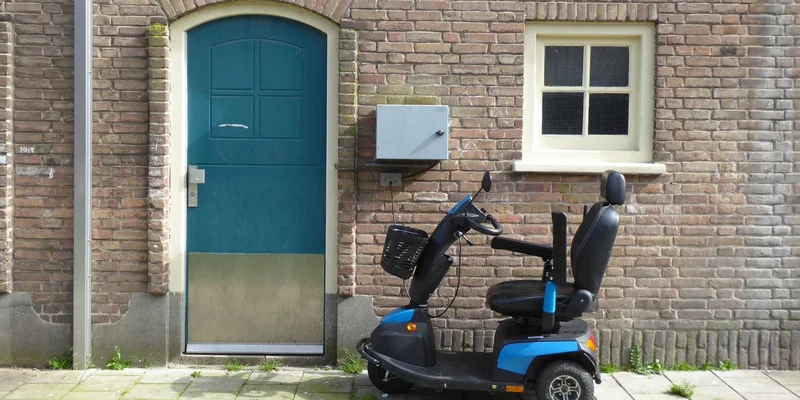
A mobility scooter arrives with a seat, a tiller, and a small front basket, and within a week the gaps show up: nowhere to put a drink, nowhere for the cane, and a tarp thrown over it in the carport because nobody thought about weather. Accessories are the cheapest part of scooter ownership and they change daily usability more than any spec on the listing does.
The catch is fit. Scooter tillers, seat posts, and frame tubes are not standardized between makers, so a clamp described as universal may still not close around your tube. This guide covers the accessories that genuinely earn a place, how to check compatibility before ordering, and which additions cause more trouble than they solve.
This article contains affiliate links. If you buy through them, we may earn a commission at no extra cost to you. Learn more.
Quick Answer
Which mobility scooter accessories are worth buying first?
- Reachable storage comes first, because a small front basket fills up fast and an under-seat or rear bag keeps hands free.
- A weather cover matters as soon as the scooter lives in a carport, a porch, or a shed rather than indoors.
- Cup holders, cane holders, and a visibility flag each solve one specific daily annoyance and clamp onto the frame or tiller.
Bottom line: measure the tube before ordering anything called universal, keep added weight low and off the tiller, and never mount something that blocks the controls or the seat swivel.
Start With Fit, Not With Features
Nearly every clamp-on scooter accessory attaches to a round tube, either the tiller stem or a frame rail, and tube diameter varies by maker and by model. Measure the outside diameter at the exact spot where the clamp will sit before ordering anything advertised as universal.
The second question is whether there is room. Tillers are crowded with a throttle lever, a key switch, a speed dial, and cable routing, and many clamps need a straight run of tube several inches long. Look at the actual mounting spot rather than assuming a gap exists.
What Must Stay Clear
Four things need to remain completely unobstructed: the throttle levers and any control cabling, the seat swivel and its release lever, the folding or disassembly points if the scooter comes apart for transport, and the charging port. Test all four with the accessory fitted before deciding to keep it, because an accessory that fouls the seat swivel turns every transfer into a wrestling match.
Accessories That Solve a Real Problem
Storage You Can Actually Reach
The factory front basket is usually small and sits in front of the tiller, which means reaching into it while seated is awkward and loading it high changes how the front end feels. A rear bag or an armrest pouch keeps the load low and reachable, and it leaves the front basket free for the things that need to be seen.

A Place for a Drink
Carrying a cup with one hand on the tiller is not realistic, and a clamp-on holder is the standard fix. Most attach to the tiller stem or an armrest post and adjust to hold a bottle or a travel mug. Check the clamp range against your tube measurement and place the holder where it does not sit under the throttle lever.

Somewhere for the Cane
Households that use a scooter outdoors and a cane indoors need somewhere for the cane to travel. A cane holder clamps to the frame the same way a cup holder does and stops the cane from being propped, dropped, and left behind at the store. The same diameter check applies.

Being Seen
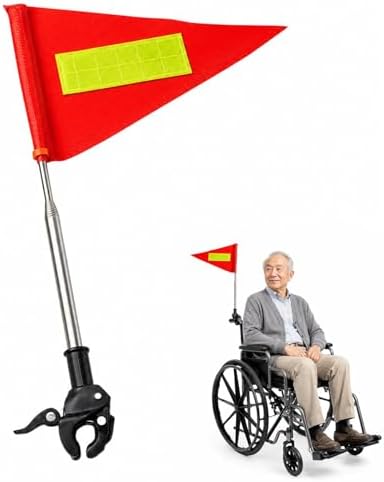
A scooter sits lower than a driver expects in a parking lot, and a tall safety flag or an added light raises the visual profile in exactly the setting where it matters. Flags mount into a socket or clamp to the seat post, and rechargeable clip-on lights are a simple addition for early evenings.
Keeping Weather Off It
Any scooter parked in a carport, a porch, a shed, or an open garage bay is exposed to damp, and damp is what shortens the life of connectors and upholstery. A fitted cover is one of the least expensive things you can add. Our scooter cover guide goes into sizing, venting, and what to check on the seams.

Seat Cushions for a Scooter Seat
Scooter seats are built for a short trip around a store, not for an afternoon out, and the padding reflects that. Adding a cushion changes both comfort and seat height, and seat height is what determines whether feet reach the deck properly and whether standing up at the other end is easy.
Cushion choice runs on the same logic as any other seating cushion. Our wheelchair cushion guide covers foam, gel, and air construction over a long sit, and our seat cushion guide for chairs covers the height and firmness trade-off that also applies here. Check that whatever you choose does not lift the user so high that the tiller sits at an awkward angle.

What Each Accessory Actually Fixes
| Accessory | Problem it solves | Fit check |
|---|---|---|
| Rear bag | Front basket too small and hard to reach | Seat back shape and strap length |
| Cup holder | No way to carry a drink | Tube diameter, clear of throttle |
| Cane holder | Second aid has nowhere to go | Straight run of tube |
| Safety flag | Low profile in parking lots | Socket or clamp point on the frame |
| Cover | Outdoor storage and damp | Overall length, width, tiller height |
| Seat cushion | Hard seat on longer trips | Seat width and resulting seat height |
Accessories to Think Twice About
Oxygen cylinder holders, walker and crutch brackets, and anything that hangs a load off the rear frame are model-specific rather than universal, and the maker’s manual states what a given frame is designed to carry. Adding a bracket the maker did not intend affects balance on slopes, which is the situation where a scooter is least forgiving.
Anything that taps into the scooter’s own wiring belongs in the same category. Self-contained accessories with their own rechargeable batteries avoid the question completely, and anything that needs to be wired in is a conversation with the dealer or a technician rather than a weekend project.
When the Scooter Has to Travel
Getting the scooter itself into a vehicle is where households most often buy the wrong item. A hitch-mounted carrier, a vehicle lift, and a portable ramp all solve it differently depending on the scooter’s weight and whether it comes apart.
Our scooter carrier guide covers the hitch route, our scooter lift guide covers powered lifts, and if the plan is to roll it up into a trunk or a van, our vehicle ramp guide covers measuring the load floor first. Buying a carrier before measuring the scooter is the most common ordering mistake in this whole category.
Common Mistakes When Buying Scooter Accessories
Ordering a universal clamp without measuring the tube is the mistake that fills drawers with unused cup holders. Two minutes with a tape measure prevents it. The second is mounting anything over control cabling, which either pinches the cable or leaves the throttle feeling vague.
The third is buying accessories to paper over a scooter that does not suit the situation in the first place. If the scooter is too heavy to load, too wide for the hallway, or short on range for the trips it actually makes, no accessory fixes that. Our guide on how to choose a mobility scooter covers those questions directly, and the battery guide covers range.
A Note on Seat Height and Setup
Anything that changes seat height, reach to the tiller, or how a user gets on and off the scooter is a setup question rather than a shopping question. If you are unsure what fits your situation, ask your doctor or an occupational therapist, particularly before adding a thick cushion or a bracket that changes how someone transfers on and off the seat.
Frequently Asked Questions
Do mobility scooter accessories fit all scooters? No. Clamp-on accessories are built for a range of tube diameters and scooter frames are not standardized. Measure the outside diameter of the tube where the accessory will mount and compare it against the clamp range on the product page.
What accessories should I buy first for a mobility scooter? Reachable storage and a weather cover cover the two most common gaps, followed by a cup holder and a cane holder if either applies. Everything else is worth waiting on until a few weeks of real use shows what is actually missing.
Can you add a cushion to a mobility scooter seat? Yes, and it is a common addition for longer outings. Check that the cushion suits the seat width and remember that it raises seat height, which changes how the feet sit on the deck and how easy standing up is at the other end.
Where should a bag go on a mobility scooter? Low and behind the seat rather than high on the tiller. Weight ahead of the front wheel moves with the steering and changes the feel of every turn, while a rear bag keeps the load low and leaves the tiller area clear.
Do I need a flag on a mobility scooter? A tall flag raises the visual profile in parking lots and around vehicles, which is where a seated scooter user is easiest to miss. Whether one is required anywhere you ride is a local question, so check with the venue or the local authority rather than assuming.
Is a mobility scooter cover worth it? If the scooter is stored outdoors, in a carport, or in an open garage bay, a cover is one of the cheapest ways to keep damp off the upholstery and the connectors. A scooter that lives indoors generally does not need one.
Can I attach an oxygen tank holder to a mobility scooter? Holders exist, but they are model-specific and they add weight to the frame in a place the maker may not have planned for. Check the scooter manual first and confirm the setup with the clinician who manages the oxygen equipment.
The Bottom Line
Scooter accessories are the cheapest upgrade in the category, and reachable storage, a weather cover, and a cup or cane holder cover most of what owners find missing in the first month. Measure the tube before ordering anything universal, keep weight low and behind the seat, and leave the controls, the seat swivel, and the charging port completely clear. If the accessory is really there to work around a scooter that does not fit the job, start instead with how to choose a mobility scooter.
Related Reading
- How to Choose a Mobility Scooter Step by Step
- Mobility Scooter Batteries: How to Pick a Match
- Mobility Scooter Covers for Outdoor Storage
- Mobility Scooter Baskets, Bags and Storage
- Mobility Scooter Locks and Theft Protection
- Rollator Accessories: What Fits, What Helps, What to Skip
- Wheelchair Cushions: How to Choose for Comfort and Fit
- Threshold Ramps: Sizing a Doorway Ramp That Fits