Last updated: August 20, 2026
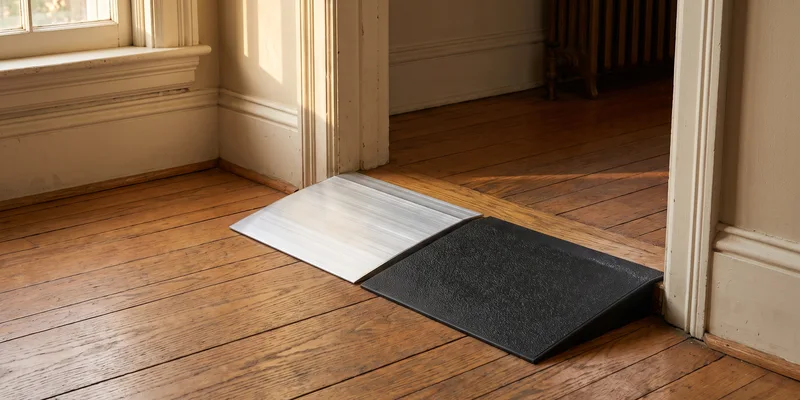
Threshold ramps come in two materials that behave almost nothing alike. Rubber ramps are heavy, dark, and stay where you put them. Aluminum ramps are light, adjustable, and usually need something to stop them sliding. Both solve the same problem, which is a doorsill or a low step that stops a wheelchair, a rollator, or a walking frame.
Which one is right depends less on the product and more on where it goes. This comparison works through the differences that actually show up in daily use: how each one sits on the floor, what happens in winter, whether it can be adjusted, and how each behaves in a rented home where nothing can be fixed down.
This article contains affiliate links. If you buy through them, we may earn a commission at no extra cost to you. Learn more.
Quick Answer
Aluminum or rubber threshold ramp: which should you choose?
- Rubber suits a permanent spot at a fixed sill height: it is heavy enough to stay put on its own, quiet underfoot, and forgiving on an uneven floor.
- Aluminum suits variable or taller rises and anywhere the ramp has to be carried, since adjustable models set to different heights and the material is far lighter.
- Match the ramp to the measured rise first, then pick the material, then check the listed weight capacity on the specific model.
Bottom line: rubber for a fixed interior or back door sill that never changes, aluminum where the height varies, the rise is taller, or the ramp travels.
The Same Job, Two Very Different Materials
Both types bridge a small change in level so wheels roll over it instead of stopping at it. Rubber ramps are molded from solid recycled rubber, which makes them dense and heavy for their size. Aluminum ramps are extruded or welded sections, hollow or ribbed, which makes them light and comparatively easy to move.
That single difference in density drives most of the rest. Weight is why a rubber ramp does not need fixing down and why nobody carries one to the car. Lightness is why an aluminum ramp is portable and why it slides unless something holds it.
How Each One Sits on the Floor
A rubber threshold ramp usually stays in place under its own weight, with a slightly grippy underside that holds on tile, concrete, and vinyl. For most interior doorways that is enough, and for exterior use most manufacturers still supply or recommend fixings on the specific models that need them.
Aluminum is a different story. A light ramp on a smooth floor moves when a caster hits it, especially at the moment somebody is entering. Most aluminum threshold ramps are supplied with a mounting hole pattern, and where drilling is not possible people use heavy duty double sided tape or a non slip mat underneath. Our guide to securing a threshold ramp covers each of those options and the trade with each.
Uneven Floors and Old Sills
Rubber deforms slightly to sit flat on an imperfect surface, which is why it works so well on a weathered concrete step or a slightly bowed sill. Aluminum is rigid, so it bridges rather than conforms, and a rocking aluminum ramp on an uneven surface is a genuine nuisance. Where the surface is old and irregular, rubber is usually the easier fit.
Adjustability and Rise
Rubber ramps are molded at fixed heights, so you buy the one that matches your measured rise. That is simple and it is inflexible: if the sill height changes, or if you measured optimistically, the ramp is the wrong ramp.
Adjustable aluminum threshold ramps are built with a leg or plate arrangement that sets to a range of heights, which is the main reason people choose them. They also reach taller rises than most rubber ramps, and for a doorway with a step below it that range is what makes the difference. Our page on measuring a step for a ramp covers how to get the rise number right in the first place.
Comparing the Two Materials
| Factor | Rubber | Aluminum |
|---|---|---|
| Staying put | Usually stays under its own weight | Needs fixing, tape, or a non slip mat |
| Adjustability | Fixed molded height | Adjustable models cover a range |
| Uneven surfaces | Conforms slightly, sits flat | Rigid, can rock |
| Portability | Heavy, effectively permanent | Light enough to carry and store |
| Winter | Grippy but can stiffen in deep cold | Cold and slick unless the surface is treated |
| Underfoot | Quiet and soft | Hard and noticeably louder |
| Appearance | Black, industrial looking | Silver, low profile |
Where Rubber Wins
The classic rubber case is a back door or a patio door with a fixed sill that will never change, in a household that wants the ramp to be part of the house rather than a piece of kit. It goes down once, it does not move, it is quiet when a rollator crosses it, and it is forgiving if the concrete outside has settled a little.
Rubber also handles a wet surface better than bare metal does, which matters at a door that gets rain. The trade is bulk: these are heavy, they are unmistakably black, and once one is in position it stays there. Our full rubber threshold ramp guide covers sizes and shapes.

Where Aluminum Wins
Aluminum is the answer where the rise is taller than the rubber range covers, where the exact height is uncertain, or where the ramp needs to come up occasionally. An adjustable model with height set by legs or a plate handles a sill and the step below it together, which rubber generally cannot.
It is also the material of choice at a sliding patio door, where the track shape rarely matches a molded rubber profile and an adjustable plate can be set to sit correctly on both sides. Our guide to threshold ramps for sliding glass doors deals with that specific case.

Grip, Weather, and Winter
Both materials come with a surface texture, and both benefit from it being intact. Rubber holds grip well when wet and stiffens in deep cold, though it stays usable. Bare aluminum is slick when wet and slicker when frozen, which is why most outdoor aluminum ramps ship with a grit or punched plate surface rather than a smooth one.
Whichever material is outside, ice is the real issue and neither ramp is exempt. Traction tape, a grit surface, and keeping the ramp clear of leaves and snow all matter more than the material choice. Our pages on non slip ramp surfaces and cleaning and maintaining a ramp go through the upkeep.
Weight Capacity and What the Listing Tells You
Capacity is a property of the specific model rather than of the material. Manufacturers state a figure for each ramp, and it is meant to cover everything crossing at once, meaning the user plus the device plus anyone pushing. Take that number from the listing rather than assuming rubber or aluminum is inherently stronger.
Width matters alongside it. A ramp narrower than the device tracking across it forces careful steering every time, which is tiring at a door somebody uses twenty times a day. Our guide to choosing ramp weight capacity covers how to add the figures up.
Renting, Lease Terms, and Reversibility
In a rented home the question is often not which material performs better but which one leaves no trace. Rubber generally wins here, because it needs no fixings on most interior floors and lifts straight out at the end of a tenancy.
An aluminum ramp can be made reversible too, using a non slip mat or removable tape rather than screws, though it is worth testing that it genuinely does not shift before relying on it. Our page on ramps for rental homes and apartments covers what tends to be acceptable and what needs asking about first.
A Note on Getting Advice
A ramp is a piece of equipment rather than care, and whether a particular slope is manageable depends on arm strength, who is pushing, and how the person moves on a given day. If you are unsure what fits your situation, ask your doctor or an occupational therapist, who can look at the doorway itself and at the device that has to cross it. For the standard slope figures used as a reference point, see our page on ADA ramp slope.
Frequently Asked Questions
Is a rubber or aluminum threshold ramp better? Neither is better in general. Rubber suits a fixed sill in a permanent spot and stays put on its own; aluminum suits taller or variable rises and anywhere the ramp has to be moved or adjusted.
Do rubber threshold ramps slide? Usually not indoors, because they are heavy and have a grippy underside. Outdoors and on very smooth surfaces some models are supplied with fixings, and manufacturers state when those should be used.
Can an aluminum threshold ramp be used without drilling? Many households use heavy duty double sided tape or a non slip mat instead of screws, which suits rented homes. Test that the ramp genuinely does not shift under a loaded wheel before relying on it.
Which material is better in winter? Rubber keeps more grip when wet and stiffens rather than turning slick in the cold. Aluminum needs a grit or punched surface outdoors, and either material needs clearing of ice and snow.
Which one is quieter? Rubber, noticeably. Aluminum rings under hard caster wheels, which is worth thinking about at a bedroom door or in an apartment with neighbors below.
Do adjustable aluminum ramps really fit any sill? They cover a stated range of heights rather than any height at all. Measure the rise first and check it falls inside the range printed on the listing, not at the very edge of it.
What weight capacity do threshold ramps have? It varies by model, and the figure covers everything crossing at once including the user, the device, and anyone pushing. Read it from the specific product listing rather than assuming a material rule.
Can I cut a rubber threshold ramp to width? Some are designed to be trimmed and others are not, and cutting one that is not can affect how it sits. Check the manufacturer’s instructions for that model before taking a blade to it.
The Bottom Line
Measure the rise, then let the location choose the material. Rubber is the honest default for a fixed interior or back door sill: heavy, quiet, forgiving, and reversible in a rented home. Aluminum earns its place where the rise is taller or uncertain, where the profile has to be adjusted, and where the ramp needs to be carried. Capacity and width come from the specific listing either way. For the full range of options at a doorway, start with our threshold ramp overview.