Last updated: August 20, 2026
A standard rollator is built around a fairly narrow set of assumptions about the person using it, and when those assumptions do not hold, the device does not simply feel less comfortable. The seat is too narrow to sit on properly, the handles sit too close together for a natural arm position, and the listed weight capacity may sit below what the manufacturer intends the frame to carry.
Heavy duty and bariatric rollators exist to move all of those numbers at once. This guide covers what actually differs on the frame, which figures on a listing matter and which are easy to misread, and the trade you make in doorway width when you buy one.
This article contains affiliate links. If you buy through them, we may earn a commission at no extra cost to you. Learn more.
Quick Answer
What makes a rollator a bariatric or heavy duty model?
- A reinforced frame, wider seat, wider spacing between the handles, and a higher weight capacity stated by the manufacturer for that specific model.
- Take the capacity from the product listing itself rather than from a category assumption, and check whether the seat carries its own separate rating.
- The trade is width: a heavy duty frame is wider overall, so measure the narrowest doorway in the home before ordering.
Bottom line: match seat width and handle spacing to the person, read the stated capacity from the listing, and check the frame against the doorways it has to pass.
What Actually Differs on a Heavy Duty Frame
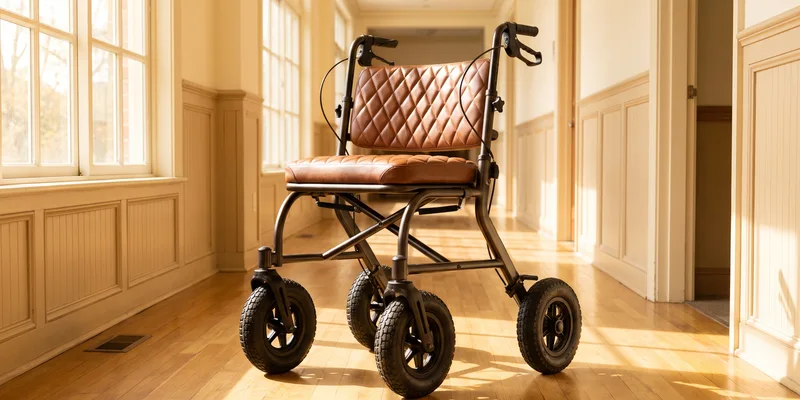
The obvious change is thicker tubing and stronger welds, but the differences that matter day to day are dimensional. The seat is wider and usually deeper, the distance between the hand grips is greater so the arms hang more naturally, and the cross bracing under the seat is heavier.
Wheels and casters are built to match. Larger, wider wheels spread the load and the swivel forks at the front are heavier, which is part of why these rollators roll more steadily and also why they weigh more to lift into a car.
Frame Weight Goes Up Too
A reinforced frame is a heavier frame, and that shows up every time someone loads it into a trunk. If another person does the lifting several times a week, treat frame weight as a specification in its own right and read it separately from the capacity, since the two are listed independently and are easy to conflate.
Weight Capacity: Read It, Do Not Assume It
Standard rollators commonly list capacities in the 250 to 300 pound range, and heavy duty models list higher. That is a general pattern rather than a rule, and figures vary between models within a single brand, so the number on the specific product listing is the only one that counts.
There is a second figure worth hunting for. Some manufacturers state a separate, lower capacity for the seat than for the frame while walking, because sitting concentrates the load differently. Where a listing gives both, the seat figure is the one that matters if the seat will actually be used.
Leave Headroom Rather Than Meeting the Number
Capacity ratings describe what the manufacturer states the device is built for, not a target to approach. Choosing a model with clear headroom above the user’s weight leaves margin for a loaded basket, for leaning heavily on the handles, and for the years of use the frame will see.
Seat Width and Handle Spacing
Measure across the hips while seated on a firm chair and add a few inches of clearance, then compare that with the seat width on the listing. A seat narrower than that measurement is uncomfortable to sit on and can be awkward to get up from, which defeats the purpose of having a seat at all.
Handle spacing is the specification people never think to check. On a frame that is too narrow the arms angle inward, the wrists sit at an awkward angle, and the person tends to hunch over the grips. A wider frame lets the arms hang closer to their natural line, which is the more comfortable position over a long walk.
Heavy Duty Rollators by Situation
The Standard Starting Point
A four wheel heavy duty rollator with a padded wide seat, a storage bag, and loop hand brakes is the broadest first look. It covers indoor use, paved footpaths, and a rest partway through a walk, which is what most households actually need.

When the Seat Is the Priority
Some models are built around an extra wide seat rather than around the frame, which suits someone who sits on the rollator often rather than occasionally. Check the seat depth as well as the width, and check the seat height against the person’s floor to knee measurement so standing back up is manageable.

Outdoor Walks on Uneven Ground
Larger wheels roll over sidewalk lips, driveway seams, and packed dirt instead of stopping short at them, and on a heavy duty frame that combination is noticeably more stable outdoors. It also makes the whole device longer, so it is a poorer fit for tight indoor turns. Our guide to large wheeled rollators covers that trade in full.

Taller Users Who Also Need Capacity
Height and capacity are separate axes, and a heavy duty frame does not automatically come with a taller handle range. If the user is above average height, check the handle height range on the listing against their wrist height rather than assuming the bigger frame covers it. Our tall rollator guide goes through that measurement.

Comparing the Key Numbers
| Specification | What to check it against | Common mistake |
|---|---|---|
| Weight capacity | User weight with clear headroom | Assuming a category figure |
| Seat capacity | Stated separately on some models | Reading only the frame rating |
| Seat width | Hip width seated, plus clearance | Confusing it with overall width |
| Overall width | Narrowest clear door opening | Measuring the door frame, not the gap |
| Handle height range | Floor to wrist crease, standing | Leaving the factory setting alone |
| Frame weight | Whoever lifts it into the car | Mixing it up with capacity |
Doorways Are the Real Constraint
A wider frame is the point of a heavy duty rollator and also its main limitation indoors. Older houses and apartments often have bathroom doors that a standard rollator barely clears, and a wide frame will not. Measure the clear opening with the door standing fully open, not the frame, and leave an inch or two for knuckles.
Where the doorways rule out a wide frame in one part of the house, some households end up with a narrow rollator indoors and a heavy duty one for outdoors. That is a reasonable arrangement if storage allows it, and our narrow rollator guide covers the indoor half.
Brakes and Upkeep Under Higher Load
Loop brakes work the same way on every rollator: squeeze to slow, push down to lock before sitting. Cables stretch with use, and a heavier frame carrying more load gives the brakes more to do, so checking and adjusting them is routine maintenance rather than a repair. The procedure is in the manufacturer’s manual.
Make locking both brakes before sitting an unbreakable habit. Check the wheels and casters periodically too, since hair and carpet fibre wrap around the axles and make the rollator pull to one side long before anyone connects the two.
Common Mistakes When Buying a Heavy Duty Rollator
Buying on capacity alone is the first. A high rating on a frame with a narrow seat and close set handles is still an uncomfortable device to use, and comfort is what determines whether it gets used at all.
The second is skipping the handle height adjustment after delivery. Rollators arrive at a factory setting that suits nobody in particular, and leaving it there is why so many users walk hunched with their shoulders raised. Our handle height walkthrough takes a few minutes to follow.
A Note on Getting the Right Device
A rollator is mobility equipment rather than medical care, and whether a rollator, a standard walker, a cane, or a transport chair is the right device depends on things a product page cannot see. If you are unsure what fits your situation, ask your doctor or an occupational therapist, who can look at gait, balance, hand strength, and the home before recommending a type.
Frequently Asked Questions
What weight capacity does a bariatric rollator have? Higher than a standard model, but the exact figure varies by model even within one brand. Standard rollators commonly list 250 to 300 pounds and heavy duty models list above that. Always take the number from the specific product listing.
Is the seat rated for the same weight as the frame? Not always. Some manufacturers state a lower capacity for the seat than for the frame in use, because sitting concentrates the load differently. Where both figures are published, use the seat figure if the seat will be used.
How wide is a bariatric rollator? Wider than a standard one, which is the point and also the constraint. Overall width is listed per model, and it needs comparing against the clear opening of the narrowest door in the home with the door standing fully open.
How do I measure for the seat width? Measure across the hips while sitting on a firm chair, then add a few inches of clearance. Compare that with the listed seat width, which is a different figure from the overall width of the rollator.
Are heavy duty rollators harder to fold and lift? Generally yes. A reinforced frame weighs more, so if someone else is loading it into a car regularly, check the frame weight on the listing alongside the capacity. The two numbers are listed separately and are easy to confuse.
Do bariatric rollators come in taller handle heights? Not automatically. Capacity and height are separate specifications, so check the handle height range against the user’s wrist height while standing rather than assuming a larger frame covers both.
Can you sit on a bariatric rollator safely? On four wheel models with a seat, yes, provided both brakes are pushed into the locked position first and the rollator is on level ground. Read the manufacturer’s guidance, since seat use and capacity differ by model.
Does Medicare cover a heavy duty rollator? Coverage differs by plan, by situation, and by how equipment is prescribed and supplied, so no general answer applies to everyone. Check the current rules at medicare.gov and with the specific plan.
The Bottom Line
A heavy duty rollator is about four numbers rather than one: the stated weight capacity with headroom above it, the seat width against a seated hip measurement, the handle spacing and height range, and the overall width against the narrowest doorway. Read each of them from the specific listing rather than from the category, and check whether the seat carries its own rating. For the wider picture on types and wheel sizes, start with our rollator walker guide.