Last updated: August 20, 2026
Walker and rollator get used as if they mean the same thing, including by people selling them, and the confusion causes real problems. A family orders what they think is a walker, a rollator arrives, and it turns out to be exactly the wrong device for the person it was bought for, or exactly the right one that nobody would have chosen on their own.
The difference is not cosmetic. A standard walker resists movement and a rollator rolls with you, and those are opposite behaviors serving opposite needs. This comparison lays out what each device does, who each one suits, and where the honest answer is that a clinician should make the call rather than a product page.
This article contains affiliate links. If you buy through them, we may earn a commission at no extra cost to you. Learn more.
Quick Answer
What is the difference between a walker and a rollator?
- A standard walker has four legs with no wheels or two front wheels, is lifted or pushed forward a step at a time, and stays put when weight is put on it.
- A rollator has four wheels, rolls continuously, is stopped with hand brakes, and usually includes a seat and a storage bag.
- Walkers suit users who need to lean their weight onto the frame; rollators suit users who walk steadily but want support, stability, and somewhere to rest.
Bottom line: if the user needs to bear weight on the frame, a walker; if they walk steadily and want continuous support with a rest stop, a rollator. When it is not clear, a physical or occupational therapist should decide.
What a Standard Walker Does
A standard walker is a lightweight metal frame with four legs and hand grips. The user lifts it, sets it down a step ahead, and steps into it, or on a two-wheeled version pushes the front along the floor and sets the rear legs down. Because the rear legs have rubber tips rather than wheels, the frame grips the floor when weight goes onto it.
That grip is the point. A walker gives a stable, stationary frame to lean on with each step, which suits someone who needs genuine weight support from their arms. The cost is rhythm: walking becomes a sequence of lift, place, step, and it is slower and more tiring than a continuous stride.
The Two-Wheeled Middle Ground
Front-wheeled walkers, sometimes called two-wheel walkers, put small wheels on the front legs and keep rubber tips on the rear. The frame glides forward without being lifted but still catches when weight is applied. Many people find this the practical compromise between a stationary walker and a rollator.
What a Rollator Does
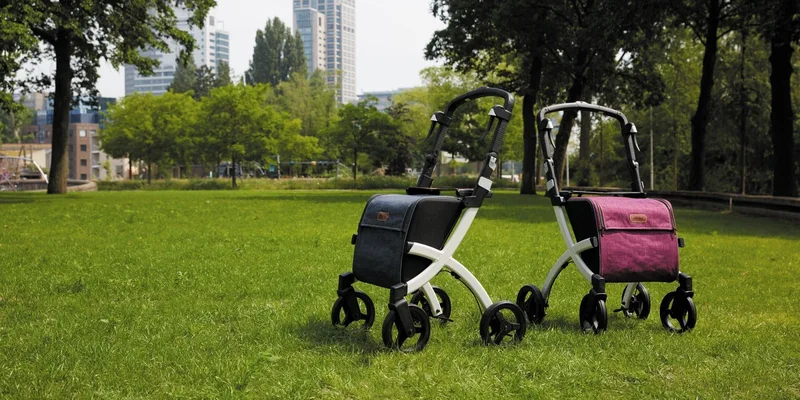
A rollator is a wheeled frame, usually with four wheels and always with hand brakes, that rolls continuously as the user walks. It is never lifted. Braking is done with loop levers that also lock the wheels for parking, and four-wheel models carry a seat for resting partway through a walk.
Because a rollator moves with the user, it suits a natural walking rhythm and covers longer distances more comfortably than a walker. It does not, however, resist movement when leaned on, which is exactly why it is not a substitute for a walker when someone needs a frame that stays put.
Differences at a Glance
| Aspect | Standard walker | Rollator |
|---|---|---|
| Wheels | None or two front wheels | Three or four wheels |
| Movement | Lifted or pushed step by step | Rolls continuously |
| Stopping | Rubber tips grip the floor | Hand brakes and wheel locks |
| Seat | Rarely, only as an accessory | Standard on four-wheel models |
| Walking pace | Slower, deliberate | Closer to a normal stride |
| Hand strength | Grip and lift | Squeezing and locking brakes |
| Storage | Folds very flat | Bulkier folded |
Which Fits Which Situation
Leaning Weight on the Frame
When someone puts substantial weight through their arms on every step, a standard walker is the device built for that, because the rubber tips hold the frame in place. This is the clearest case where the wheeled option is not an equivalent swap.

Steady Walking With a Little Glide
A front-wheeled walker keeps the stationary rear legs while removing the need to lift the frame at every step. Many households land here when a full walker feels laborious and a rollator feels like too much movement.

Longer Distances and a Place to Rest
When walking is steady and the limiting factor is endurance rather than balance, a four-wheel rollator with a seat covers more ground and provides somewhere to stop. This is the most common choice for outdoor walks and errands.

The Hand Strength Question Nobody Asks
Rollators stop when someone squeezes or pushes brake levers, which assumes hands that can do that reliably and quickly. A walker has no such requirement, because the frame stops on its own. This is one of the most practical differences between the two devices, and it rarely appears in comparison charts.
It matters most in the moments where it counts: on a slope, on a smooth floor, or when the rollator starts to get ahead of the user. Anyone considering the switch from a walker to a rollator should be comfortable operating both brakes with either hand, and it is a reasonable thing to check before ordering.
Brake Maintenance Is Part of the Deal
Brake cables stretch with use and need occasional adjustment, described in the manufacturer’s manual for each model. A walker has essentially no maintenance beyond replacing worn rubber tips. Households that will not check brakes periodically should factor that in honestly.
Moving From One to the Other
Going from a walker to a rollator is often framed as an upgrade, and it is not automatically one. It is a change from a device that resists movement to a device that assists it, and whether that suits a person depends on their balance, gait, and hand function. Some people move the other direction, from a rollator back to a walker, and that is not a step backward either.
Households sometimes keep both: a walker indoors where distances are short and stability matters most, and a rollator for outings. That is a legitimate setup rather than an admission of indecision, though it does mean storing and maintaining two devices.
Common Mistakes When Choosing
Buying a rollator because it looks more capable is the most common one. The seat, the bag, and the brakes make a rollator look like the fuller device, but a user who needs to lean their weight on the frame is not served by something that rolls away from that pressure.
The second is choosing a walker for someone who walks steadily over long distances, then watching it sit unused because the stop-start rhythm makes every trip exhausting. Our rollator walker guide covers wheel sizes and frame types if a rollator is where you land.
When the Answer Should Come From a Clinician
This comparison explains what the devices do, not which one a specific person should use. If you are unsure what fits your situation, ask your doctor or an occupational therapist. Physical and occupational therapists assess gait, balance, arm strength, and hand function, fit the device to the user’s height, and teach how to use it, and none of that can be done from a product listing.
Frequently Asked Questions
Is a rollator better than a walker? Neither is better in general. A walker stays put when leaned on and suits users who bear weight through their arms; a rollator rolls continuously and suits steadier walkers who want support and a rest stop. The right one depends on the person.
Can you lean on a rollator like a walker? Not in the same way. A rollator rolls unless the brakes are held or locked, so leaning weight onto it without braking moves the frame. That difference is the main reason the two devices are not interchangeable.
Which is safer, a walker or a rollator? Safety depends on matching the device to the user rather than on the device type. A rollator used by someone who cannot operate the brakes reliably, or a walker used by someone who needs continuous support over distance, are both poor matches.
What is a two-wheel walker? It is a standard walker with small wheels on the front legs and rubber tips on the rear. The frame glides forward without being lifted but still grips when weight is applied, which many people find a useful middle ground.
Do walkers have seats? Standard walkers usually do not. Some accept an add-on seat accessory, but compatibility is model specific. Seats are standard equipment on four-wheel rollators, which is one of the main reasons people choose them.
When should you switch from a walker to a rollator? That is a question for a physical or occupational therapist rather than a rule of thumb, since it depends on balance, gait, endurance, and hand strength. Being able to operate both brakes confidently is one practical prerequisite.
Which is easier to store, a walker or a rollator? Walkers fold much flatter and take up less space in a car or a closet. Rollators are bulkier folded because of the wheels and seat, though folding models and compact travel versions narrow the gap.
Does Medicare cover walkers and rollators? Coverage depends on the plan, the situation, and how the equipment is prescribed and supplied, so no single answer applies to everyone. Check the current rules at medicare.gov and confirm with the specific plan.
The Bottom Line
The walker versus rollator question comes down to whether the device needs to stay put or move along. A walker holds still when weight goes onto it, which is what someone leaning on their arms needs. A rollator keeps a natural walking rhythm and carries a seat, which is what someone with steady balance and limited endurance needs. Hand strength for the brakes is the practical check most comparisons skip. If the situation is at all unclear, a physical or occupational therapist is the right person to decide, and that appointment is quicker than a return shipment.