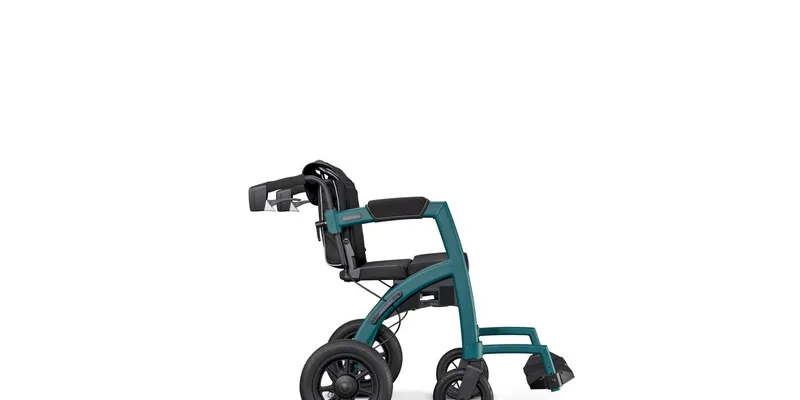
Last updated: August 20, 2026
The seat is the reason most families choose a rollator over a standard walker. It turns a trip to the grocery store, the mailbox at the end of a long driveway, or a grandchild’s soccer game into something that does not have to be planned around where the benches are. Being able to stop and sit down for two minutes is often what keeps someone going out at all.
What surprises people is how much the seat itself varies between models: height off the ground, depth front to back, padding, whether there is a backrest, and how the seat behaves when the frame folds. This guide covers what to check on a rollator with a seat, and how to use that seat in a way the manufacturer actually intends.
This article contains affiliate links. If you buy through them, we may earn a commission at no extra cost to you. Learn more.
Quick Answer
What should you check on a rollator with a seat?
- Seat height off the floor, since standing back up from a low seat is harder than sitting down onto it, and seat height is rarely adjustable.
- Seat width and depth against the user’s build, plus whether a padded backrest is included or sold separately.
- Brake type and how the brakes lock, because a seat is only usable once both wheels on the ground are locked in place.
Bottom line: seat height and a working brake lock matter more than seat padding, and both are listed on the product page if you look for them.
Why Seat Height Matters More Than Padding
Getting up from a seated position takes more effort than lowering into one, and that effort scales sharply with how low the seat is. A rollator seat that sits low relative to the user’s leg length turns every rest stop into a small workout, which defeats the point of resting. Seat height is listed on most product pages as a measurement from the floor.
Padding is comfortable but secondary. A firmer seat at the right height is more useful than a plush seat that is too low, and a thin cushion pad can be added to a firm seat later if comfort is the only gap. Handle height is separately adjustable on nearly every rollator; seat height usually is not, which is why it belongs at the top of the checklist.
Measuring for Seat Height
Have the user sit on a dining chair with feet flat on the floor and knees at roughly a right angle, then measure from the floor to the top of the chair seat. That number is a workable reference point. A rollator seat close to it will feel natural; one several inches below it will feel like sitting on a curb.
Backrests, Straps, and Padded Bars
Rollator backrests come in three broad forms: a padded bar, a fabric strap, or a rigid padded backrest. A padded bar or strap keeps the frame light and folds easily, and it gives something to lean against rather than genuine back support. A rigid backrest offers more support and adds bulk and weight.
One detail worth checking is which way the backrest faces. On many rollators the user sits facing backward relative to the direction of travel, with the backrest behind them. On some models the backrest flips or the seat is designed for a specific seating orientation, and the manual will say which.
Rollators With a Seat by Situation
The Standard Setup
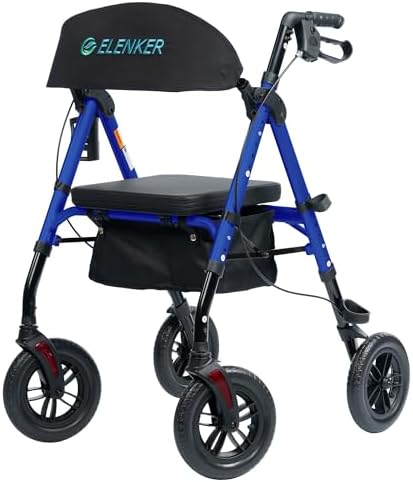
A four-wheel rollator with a padded seat, a backrest strap, loop brakes, and an under-seat bag is the mainstream configuration and suits most first-time buyers. It rolls indoors, works on paved outdoor surfaces, and gives a resting spot without adding much complexity.
Taller Users
Tall-frame rollators exist specifically because a standard model puts both the handles and the seat too low for a taller user. Look for models that state a taller handle height range and a higher seat height, rather than assuming the adjustable handles alone will solve it.

Wider Seats and Higher Capacity
Heavy duty rollators are built with wider seats, reinforced frames, and higher listed weight capacities. Take the seat width and the capacity figure from the specific listing, since both differ by model even inside a single brand’s range.

Outdoor Walks With Rest Stops
If the seat is mainly for pausing during outdoor walks, wheel size becomes as important as the seat itself. Larger wheels roll over sidewalk seams and packed dirt without stalling, which is what makes the walk long enough to need a rest in the first place.

Seat Features Compared
| Feature | What to check | Why it matters |
|---|---|---|
| Seat height | Listed floor-to-seat measurement | Decides how hard standing back up is |
| Seat width | Listed width, not photo appearance | Comfort and usable capacity |
| Backrest | Strap, padded bar, or rigid | Leaning support versus fold-down bulk |
| Brake lock | Push-down loop brakes on both sides | Seat is only usable when locked |
| Under-seat bag | Removable or fixed | Access to storage while seated |
| Fold style | Whether the seat folds with the frame | How it loads into a car |
Using the Seat the Way It Is Designed to Be Used
Both brakes go into the locked position before anyone sits down, every time. Loop brakes squeeze to slow the rollator while walking and push down to lock; the locked position holds the rear wheels. Sitting on an unlocked rollator is the single most common way people get into trouble with one, and it is entirely avoidable.
The seat is designed for resting, not for being pushed around while occupied. A rollator is not built or rated as a wheelchair, and manufacturers state this in their manuals. If someone needs to be pushed while seated, that is what a transport chair is for, and the two devices are not interchangeable.
Level Ground and a Second Look
Locked brakes hold best on a flat, firm surface. On a slope, on gravel, or on wet grass, a locked rollator can still shift. It is worth building the habit of glancing at the ground before sitting, and of choosing a level spot rather than the nearest one.
Common Mistakes When Buying a Rollator With a Seat
Buying on seat padding alone is the most frequent one. A generously cushioned seat photographs well, but if it sits low, the user will avoid using it. Check the listed seat height first and let padding be the tiebreaker between two models that both fit.
The second is overlooking how the seat interacts with folding. Some rollators fold side to side with the seat folding along a hinge, others fold flat with a rigid seat that stays in place and takes up trunk space. If the rollator travels by car regularly, read the folded dimensions rather than just the weight.
A Note on Whether a Seat Is the Right Answer
Wanting to sit down partway through a walk can mean several different things, and a product page cannot tell which one applies. If you are unsure what fits your situation, ask your doctor or an occupational therapist before settling on a device. They can also confirm whether a rollator, a cane with a seat, or something else suits the person’s balance and endurance.
Frequently Asked Questions
How high is the seat on a rollator walker? Seat height varies by model and is listed on the product page as a floor-to-seat measurement. Compare that number against the height of a dining chair the user gets up from comfortably, since rollator seat height is usually not adjustable.
Can you be pushed while sitting on a rollator? No. Rollators are built and rated as walking aids with a resting seat, not as wheelchairs, and manufacturers say so in their manuals. If someone needs to be pushed while seated, a transport chair is the device designed for that.
Do you have to lock the brakes before sitting on a rollator? Yes, both of them, every time, and on level ground. Loop brakes push down into a locked position that holds the wheels. This is the single most important habit to build with a seated rollator.
Which way do you face when sitting on a rollator? On most four-wheel rollators the user sits facing backward relative to the direction of travel, with the backrest strap or bar behind them. Check the manual for the specific model, since seat and backrest designs differ.
Are rollator seats comfortable enough to sit on for long? They are designed for short rests rather than extended sitting, and most are firm rather than plush. A thin cushion can be added, but seat height and a locked brake matter far more than padding for whether the seat gets used.
Is there a rollator with a seat for tall people? Yes. Tall-frame models list a higher handle height range and a higher seat height. Adjustable handles alone will not fix a seat that sits too low, which is why the tall-specific models exist as a category.
What weight can a rollator seat hold? Take the figure from the specific product listing, since capacities differ by model and heavy duty versions list higher maximums than standard ones. The listed weight capacity applies to the device as a whole, including seat use.
Can I add a seat to a walker I already own? Some standard walkers accept an add-on seat accessory, but compatibility is model specific and not universal. Check the manufacturer’s accessory list for that walker rather than assuming a generic seat will fit safely.
The Bottom Line
A rollator with a seat earns its place when someone actually uses the seat, and that comes down to two unglamorous things: a seat height that makes standing back up easy, and brakes that get locked before sitting. Read the floor-to-seat measurement, check the backrest style, and confirm the listed weight capacity on the exact model. Padding, bag design, and color can be decided after that. For the wider view of rollator types, our main rollator walker guide puts the seated models in context.