
Last updated: August 21, 2026
Walking assist device is a broad phrase, and the breadth is the problem. It covers a single-point cane, a four-wheeled rollator with a seat, an upright walker with forearm platforms, a knee walker for one leg, and now a battery-powered wearable. Those are five different answers to five different questions, and shopping across them at once is how households end up with equipment that sits in a hallway unused.
This guide lays the options out side by side, describes what each one asks of the person using it, and points you at the detailed guide for whichever category turns out to be the right one. It does not tell you which device you need, because that depends on how somebody moves, which is a question for a clinician rather than a website.
This article contains affiliate links. If you buy through them, we may earn a commission at no extra cost to you. Learn more.
Quick Answer
What are the main types of walking assist device?
- Canes give a light point of contact and need one hand; walkers and rollators give a wider base and need two.
- Rollators roll and carry a seat, standard walkers are lifted or slid and give a more solid base, and upright rollators change the posture and the arm position.
- Knee walkers and powered wearables are specialist answers to specific situations rather than general-purpose aids.
Which one suits a person, and at what height, is a question for a doctor or an occupational therapist who can watch them walk.
Start With the Situation, Not the Product
The useful first question is what the difficulty actually is. Needing something to lean on occasionally is a different situation from needing a wide stable base at every step, which is different again from being able to walk fine but running out of endurance after a block.
Those three situations point to different equipment, and getting them mixed up is the usual reason a device goes unused. Write down where the difficulty happens, over what distance, and what the person says about it, then take that description to an appointment rather than to a shopping cart.
Canes: One Hand, Light Contact
A cane provides a single point of contact and works for people who need a modest amount of steadying rather than substantial support. It occupies one hand, is easy to carry and store, and is the least intrusive option in a house with narrow spaces.
Within canes the variations matter: a standard single tip, a quad base with four feet for a wider contact patch, an offset handle that changes where the weight lands, and folding designs for a bag. Our guides to quad canes, offset and standard canes, and measuring cane height cover the choices, and height is the detail that most often goes wrong.

Walkers: Two Hands, Wider Base
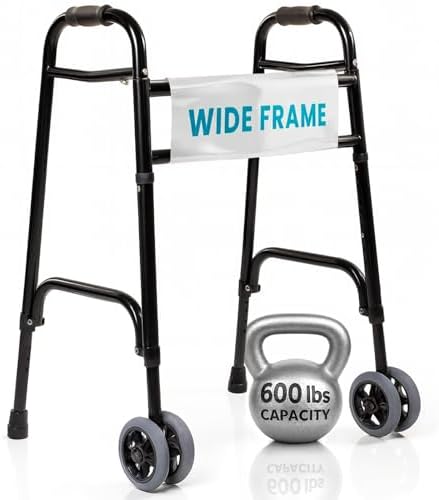
A standard walker gives a much wider base of support than a cane and needs both hands. In its simplest form it is lifted and set down with each step, which is stable but slow. Front-wheeled versions slide forward on two wheels while the rear legs grip, which many people find easier to move with.
Walkers suit indoor use and shorter distances, and they fit through doorways better than most rollators. Our guides to front-wheeled walkers, measuring for a walker, and moving through doorways cover the practical side.
Rollators: Wheels, Brakes, and a Seat
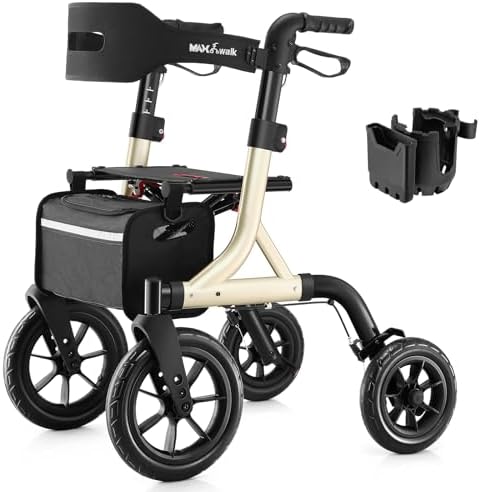
A rollator rolls on three or four wheels, has hand brakes, and usually carries a seat and a bag. It is built for covering distance rather than for maximum stability, and the seat is why it opens up outings that had been getting shorter: there is always somewhere to sit.
Wheel size is the specification that decides how it behaves outdoors, since small indoor casters stop at cracks that larger wheels roll over. Our guides to choosing a rollator walker, rollators with large wheels, and narrow rollators for indoors cover both ends of that.
Upright Rollators
An upright rollator puts forearm platforms at roughly elbow height, so the arms rest on supports rather than gripping handles down at hip level. People who find the standard posture uncomfortable often prefer it. Our guide to upright rollators covers the differences, including the extra length that matters in a tight home.

Comparing the Categories
| Device | Hands needed | Best suited to |
|---|---|---|
| Cane | One | Light steadying, easy to carry |
| Standard walker | Two | Wide base indoors, short distances |
| Rollator | Two | Distance, outdoors, and a seat to rest on |
| Upright rollator | Two, on forearms | Those who find the standard posture uncomfortable |
| Knee walker | Two | One leg that cannot bear weight |
| Powered wearable | Neither | A new and largely untested category |
Specialist Answers
Some situations do not fit the general categories. A knee walker supports the lower leg on a padded platform and is steered like a scooter, which suits somebody who cannot put weight through one foot but is otherwise steady. It is a temporary answer to a specific circumstance rather than a general aid, and our guide to the knee walker for home use covers it.
Powered wearable exoskeletons are the newest arrival and the least established. They are sold openly and marketed largely to active users, and the consumer category has little independent published evaluation behind it. Our guides to exoskeletons for walking and powered walking aids set out what is and is not known.
Height and Setup Decide More Than the Model
An aid set at the wrong height changes posture and effort noticeably, and it is the single most common thing that is wrong with equipment already in a house. Handle height, grip type, and brake reach all get adjusted at a fitting, and they can drift out over months of use.
If there is already a cane or rollator in the house, check its setup before buying anything else. Our guides to adjusting rollator height and brake adjustment and maintenance take a few minutes and occasionally solve the whole problem.
Common Mistakes When Buying
The first is buying on price and dimensions alone without anyone assessing what kind of support is needed, which is how a rollator arrives for somebody who needed a solid base rather than wheels. The second is ignoring the house: a rollator that does not fit the hallway will be abandoned within a week, regardless of how good it is.
The third is skipping the fitting. Equipment supplied without adjustment, or adjusted once and never rechecked, is common and easily fixed. Our guide to what an occupational therapist home assessment involves covers what a proper look at this actually includes.
Get the Choice Assessed
Which device suits a person depends on balance, strength, grip, endurance, and how they move, and none of that is legible from a product listing. If you are unsure what fits your situation, ask your doctor or an occupational therapist, who can watch the person walk and set the equipment up properly.
If the limit turns out to be distance rather than steadiness, that points somewhere else entirely, and our guides to moving from a rollator to a scooter and choosing a mobility scooter cover that route.
Frequently Asked Questions
What counts as a walking assist device? Canes, standard walkers, front-wheeled walkers, rollators, upright rollators, knee walkers, and the newer powered wearables. They differ in how many hands they need, how wide a base they give, and how far they are built to travel.
Is a cane or a walker better? They answer different problems. A cane gives light steadying with one hand; a walker gives a wide base and needs two. Which one suits a person is assessed by a clinician rather than chosen from a description.
What is the difference between a walker and a rollator? A standard walker is lifted or slid and gives a very stable base; a rollator rolls on wheels with hand brakes and usually carries a seat. Rollators cover distance; walkers give more support.
What is an upright rollator? A rollator with forearm platforms at roughly elbow height, so the arms rest on supports rather than gripping handles at hip level. Some people find the posture more comfortable over longer walks.
When is a knee walker the right answer? When one leg cannot bear weight but the person is otherwise steady. It is a temporary, situation-specific device rather than a general walking aid.
Are powered exoskeletons a real option yet? They are real products you can buy, but the consumer category is young and has little independent published evaluation, particularly for older users. Treat them as a separate conversation to have with a clinician.
How do I know what height to set? Have it fitted rather than estimated, and recheck it periodically. Handle height, grip, and brake reach all affect posture and effort, and a setup that has drifted is very common.
What if the difficulty is distance rather than balance? That points toward a rollator with a seat, or toward a mobility scooter for longer outings. It is a different problem from unsteadiness and it has different answers.
The Bottom Line
Walking assist devices span a wide range, and the right one follows from the situation rather than from the catalog: light steadying points at a cane, a need for a wide base points at a walker, distance and a place to sit point at a rollator, and a leg that cannot bear weight points at a knee walker. Check the setup of whatever is already in the house first, measure the hallway before ordering, and have the choice assessed by a doctor or an occupational therapist. Our rollator guide and cane and walker comparison go deeper on the two most common answers.